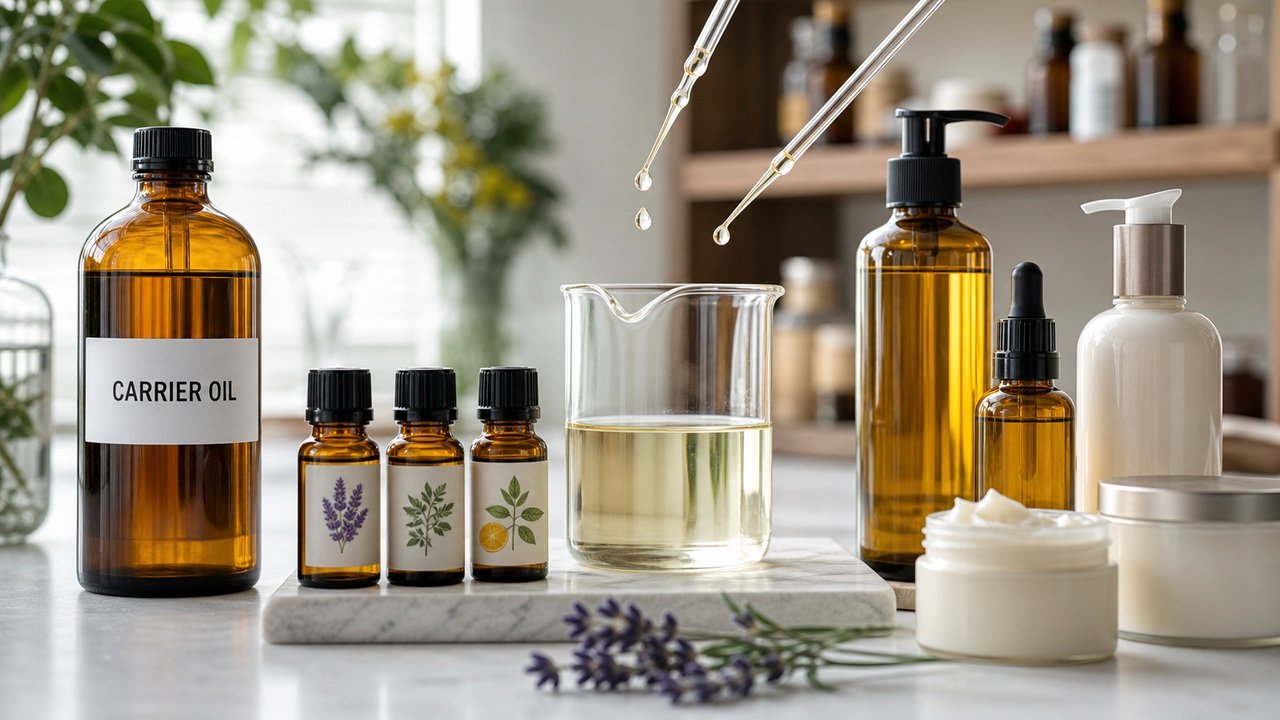

Your Reliable Carrier Oil Supplier
WJOIL base oils are produced from plant fruits, seeds and nuts using cold-pressing or refined pressing processes. They can reduce your oils’ irritation and evenly disperse active ingredients, improve the formula stability and the skin sensation. Meanwhile, our carrier oils can provide you with additional values such as moisturizing, nourishing, and repairing for the product.
We can offer you many mainstream and high-end carrier oil options, including sweet almond oil, shea butter oil, grape seed oil, fractionated coconut oil and other maturely applied raw materials. In addition, we also support organic and cosmetic-grade standards and bespoke formulation development solutions.
Whether you need it for diluting single essential oils, developing massage oils, producing body care products, designing scalp care formulas, or creating a complete aromatherapy product line, we can give you one-stop carrier oil solutions from raw material supply, compounding suggestions to OEM/ODM customization.
Carrier Oil Product by Features
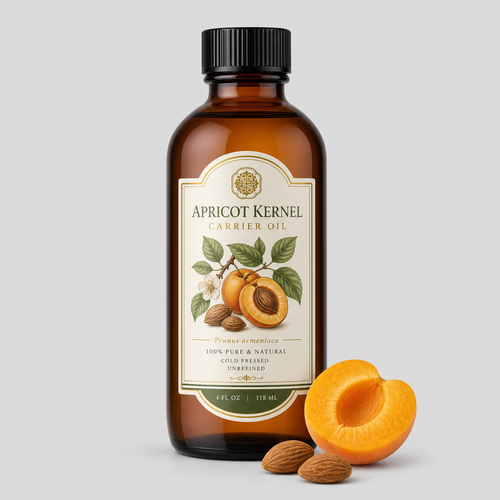
Rich in fatty acids and vitamin E and has a light texture to provide gentle moisturizing and soothing feel for the skin, particularly suitable for developing daily moisturizing or soothing products.
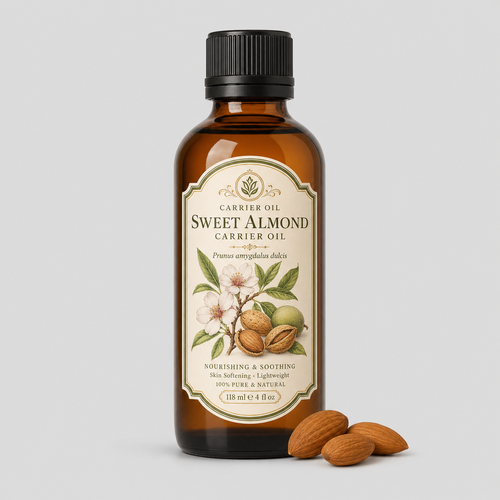
Offers good value for money while having strong extensibility, moisturizing properties, and skin affinity, and is suitable for most skin types. However, it has a certain natural nutty smell.
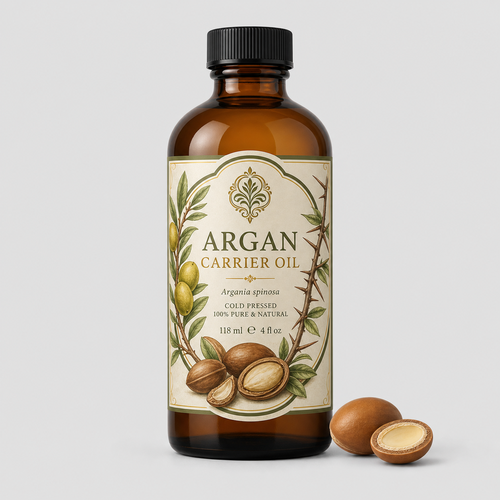
It has a good supporting effect on dry, rough and early-aged skin, which is widely used in anti-aging care, hair repair, body care and the development of premium beauty products.
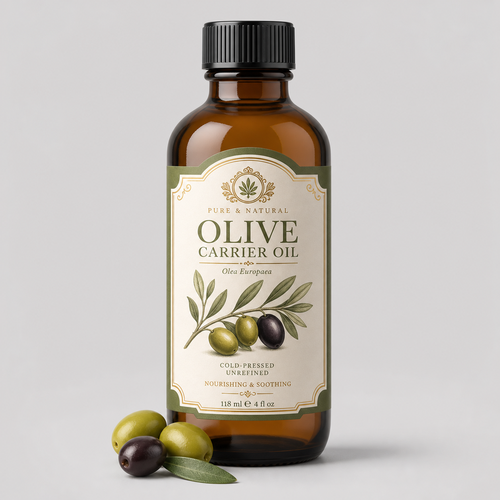
Rich in oleic acid, phytosterols and natural antioxidants, it provides you with excellent moisturising and hydrating properties, commonly found in dry skin care and body care products.
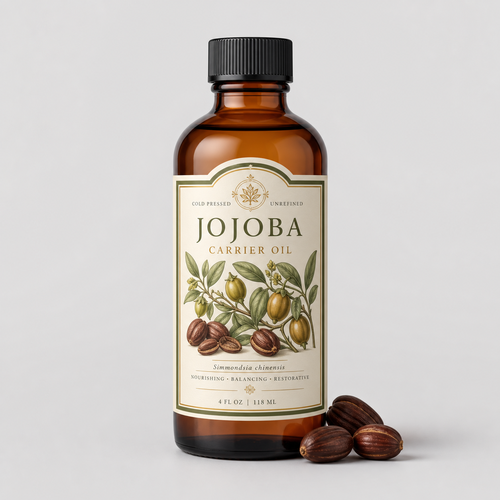
Its structure is very close to human sebum, so jojoba carrier oil has good skin affinity and penetration. With resistance to oxidation and clog pores, it is an ideal multi-purpose base oil.
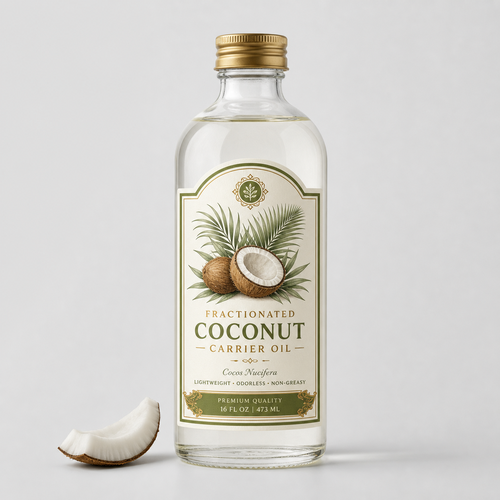
With colourless, odourless, light in texture and offering excellent oxidative stability. It does not interfere with your oils’ aroma, particularly suitable for use with rose, sandalwood and jasmine.
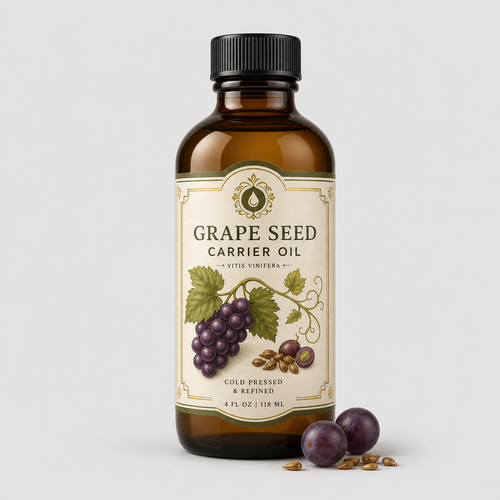
With a light, refreshing texture that absorbs quickly and leaves no greasy residue, it offers you with an excellent skin feel, suitable for oily and for the summer skincare products’ development.
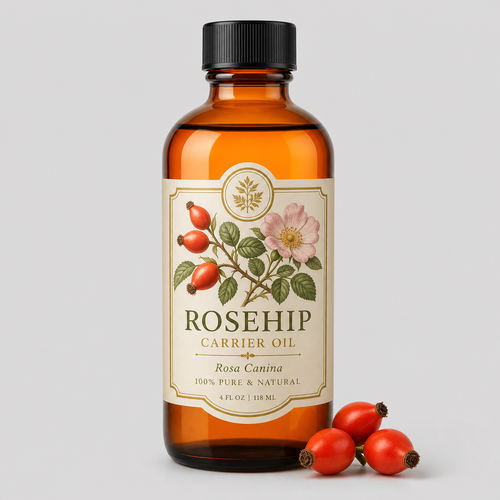
It has a lot of natural vitamin A, vitamin C and many different essential fatty acids. And our rosehip carrier oil has high market recognition in the fields of repair, nourishment and antioxidant care.
High Compatibility & Safe Dilution System
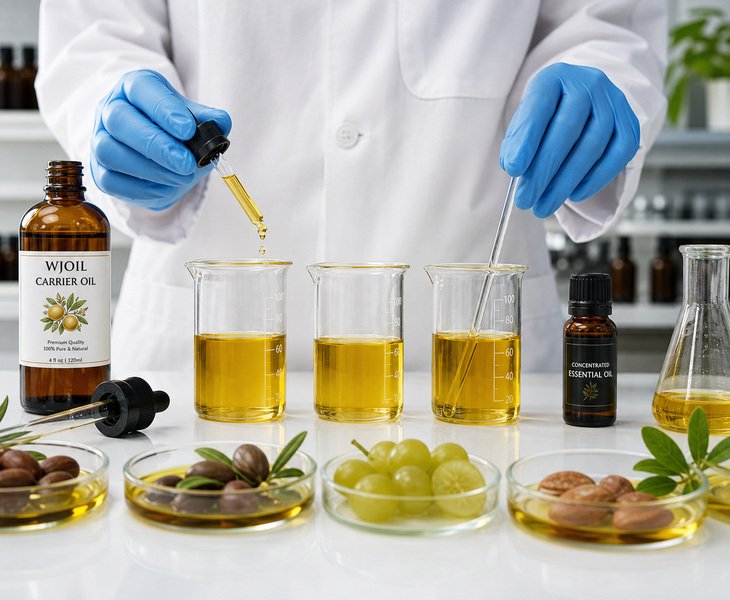
WJOIL carrier oils are produced according to strict manufacturing standards without any artificial additives or solvent residues. Whether it is a plant oil system or most single essential oils, they can be stably mixed in any proportion. They remain undisturbed, undissolved, undissolved into clumps, and undiluted at room temperature.
Our carrier oils help you achieve higher formula flexibility and development efficiency across different product lines. It can safely dilute highly irritating essential oils. This effectively avoids the burning sensation, redness, or allergies caused by high-concentration essential oils, which enhances your products’ safety and consumer experience.
Natural Skincare Benefits and Formulation Stability
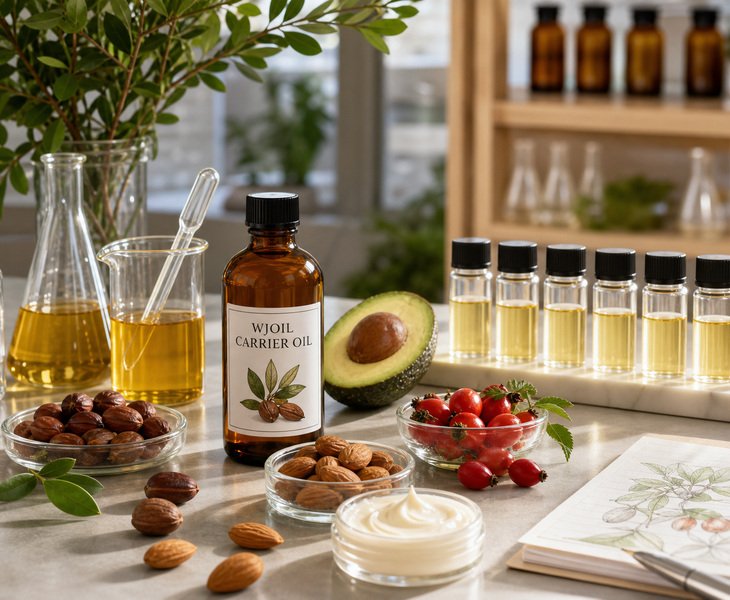
WJOIL carrier oils derived from different plants are naturally rich in vitamin E, unsaturated fatty acids, phytosterols, and many different natural antioxidant components. They can offer additional benefits such as moisturizing, nourishing, repairing the barrier, and soothing dryness for your products.
Meanwhile, our high-quality base oils can also enable your entire formulation system to be more stable. Their antioxidant components in natural plant oils allows to slow down the essential oils’ oxidation rate, which can reduce problems such as rancid smell, color change and fragrance attenuation in the finished product. This allows you to extend the product’s shelf life and improve batch consistency.
Why Choose WJOIL as Your Partner for Carrier Oil?


- WJOIL has extensive experience in the production of essential oil raw materials, and can provide you with various specifications and types of carrier oils.
- All of our carrier oils are produced in accordance with cosmetic raw material standards and support international certification systems including ISO 22716, GMPC, USDA Organic and ECOCERT.
- Each batch of raw materials undergoes strict testing and data verification. Acid value fluctuation controlled within 0.1%, peroxide value fluctuation within 1 meq/kg, and color difference (Lovibond) controlled within 5%.
- We support OEM/ODM integrated services and provide you with a more complete carrier oils solution from basic raw material supply to collaborative product development.
Different plant-derived carrier oils have differences in fatty acid structure and natural antioxidant capacity, so the shelf life is not exactly the same.
Generally speaking, carrier oils with higher oxidation stability can be stored for more than 24 months under sealed, light-shielded, and low-temperature storage conditions, such as shea butter oil and fractionated coconut oil.
While products rich in polyunsaturated fatty acids are more prone to oxidation reactions and are usually recommended for you to be used within 12 to 24 months like grape seed oil, rosehip oil and flaxseed oil.
This mainly depends on its type, the product formula structure and the expected shelf life requirements.
Some carrier oils with relatively high stability have good antioxidant properties of their own, such as shea butter and fractionated coconut oil. So they generally do not need to add extra antioxidants under normal storage conditions. However, for base oils rich in polyunsaturated fatty acids like grape seed oil and rosehip oil, it is common to add natural vitamin E (also known as Tocopherol) and other natural antioxidant systems to extend product stability and shelf life.
In actual project development, we will conduct a comprehensive assessment based on your product type, packaging specifications, sales regions, and expected storage period to help you determine whether an additional antioxidant system is necessary. This reduces the occurrence of oxidation rancidity, color changes, and abnormal odors in the product for you.
There are certain differences in comedogenic rating (causing acne) among different Carrier Oils. Therefore, it is suggested for you to choose based on the target consumer group when developing facial care products.
If the product is mainly targeted at oily skin, acne-prone skin, or young consumers, it is usually recommended for you to prioritize shea oil, fractionated coconut oil, grape seed oil, and those that have a light texture, fast absorption, and lower risk of causing breakouts. Because they can provide good moisturizing effects while avoiding excessive burden on the skin, and are more likely to gain market recognition. There are exceptions such as sweet almond oil, avocado oil and wheat germ oil. Although these are also emollient carrier oils, they are more suitable for use on dry or mature skin, or in the formulation of body care products.
There is no absolutely “the safest” base oil. The key lies in choosing the appropriate raw material system based on your target market, product positioning and consumer skin.
What Are the Differences Between Carrier Oil and Essential Oil?
Although carrier oil and essential oil are often used together, their roles in product development are completely different.
Carrier oil usually comes from plant seeds, fruits, or nuts. It has good skin compatibility and nourishing properties and can be directly applied to the skin. It also serves as a carrier for essential oils, plant extracts, and oil-soluble active ingredients, helping to evenly disperse and absorb the active ingredients in the formula.
While essential oil is a high-concentration aromatic active ingredient extracted from plant flowers, leaves, fruit peels, resins or roots. Due to the high concentration of active ingredients, most single essential oils are not suitable for direct use on the skin and need to be diluted with carrier oil before use.
How to Produce Carrier Oil?
Raw Material Selection
Their quality is primarily determined by the raw materials. We usually extract oils from high-quality plant seeds, nuts or fruits, ensuring that each batch of raw materials contains natural active ingredients and stability.
Cold Pressed
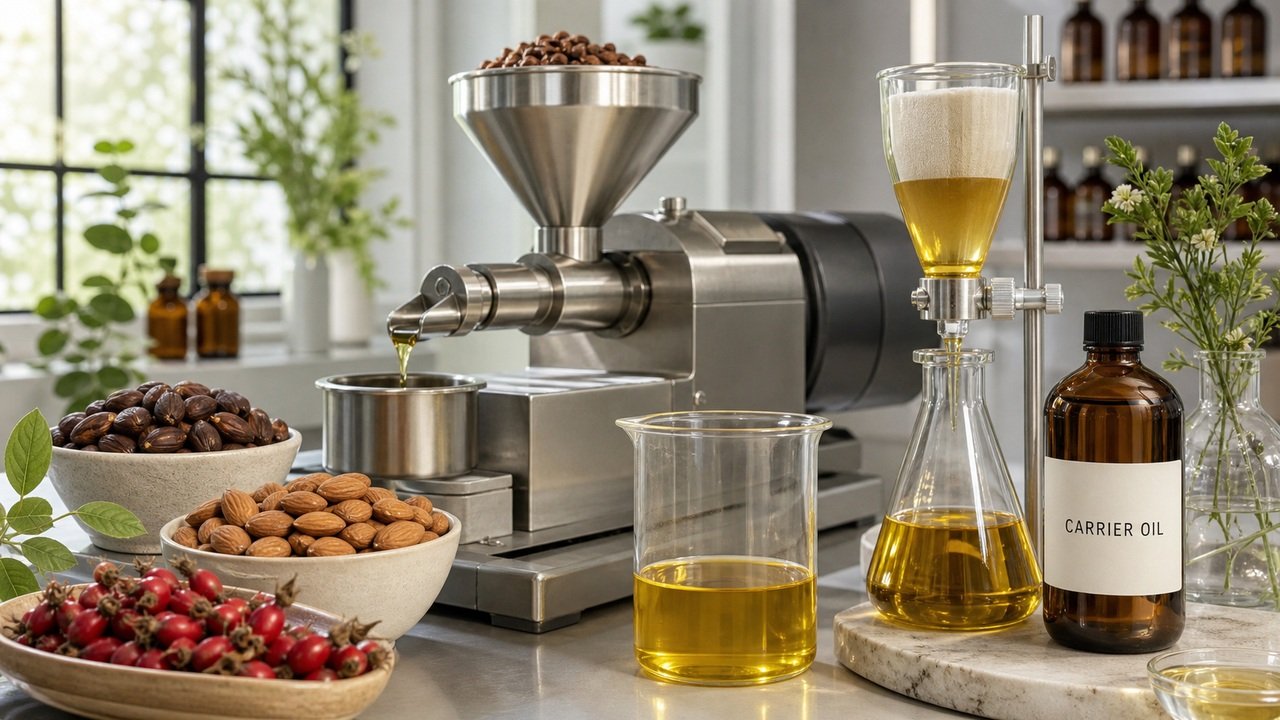
The cold pressing process completes the pressing at a lower temperature without undergoing high-temperature decolorization, deodorization, and chemical refining treatments. This can retain the natural vitamin E, phytosterols, unsaturated fatty acids, and other natural active components to the greatest extent.
Such carrier oils have higher nutritional value which are more suitable for the development of natural skin care products, organic products, and high-end aromatherapy products. However, cold-pressed oils are usually darker in color and have a smell closer to that of the plants, and their oxidation stability is relatively lower.
Refined Oil
The refining process usually involves steps such as degumming, desalination, decolorization and deodorization. This can remove free fatty acids, pigments, odors and other impurities. After the refining treatment, the carrier oil becomes lighter in colour and milder in odour with improved oxidative stability. And it is less prone to rancidity, allowing it easier to produce consistently and store for long periods. However, some of the active ingredients are lost in the process.
Filtering and Purification
The oil undergoes multiple levels of filtration and purification to remove residual plant fibers, suspended particles and other impurities. This step improves carrier oils’ purity and enhances the appearance and skin feel.
Quality Inspection
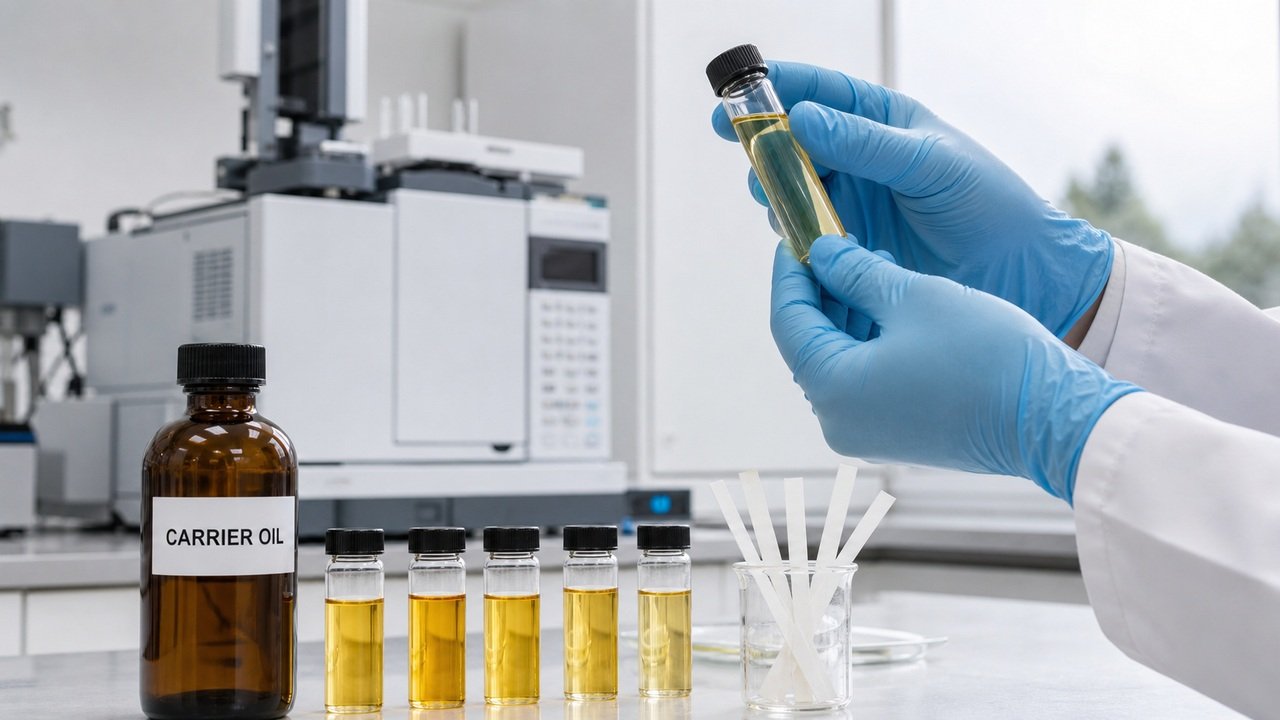
Each batch of our carrier oil will go through a complete quality inspection process. The inspection items typically include acid value (FFA), peroxide value (POV), moisture content, microbial indicators, heavy metal indicators, and sensory indicators, which can ensure that your product meets the quality requirements for cosmetic raw materials and international markets.
How to Choose Carrier Oil?
Smell
Different base oils have varying degrees of a natural gas-like odor, so you need to choose based on the product positioning.
For example, fractionated coconut oil is almost colorless and odorless, and will not interfere with the aroma presentation of high-value essential oils. Plant oils like sweet almond oil and olive oil have relatively obvious natural plant odors, and in some formulations, they may have certain effects on the final fragrance, so odor compatibility tests need to be conducted in advance.
Product Benefits
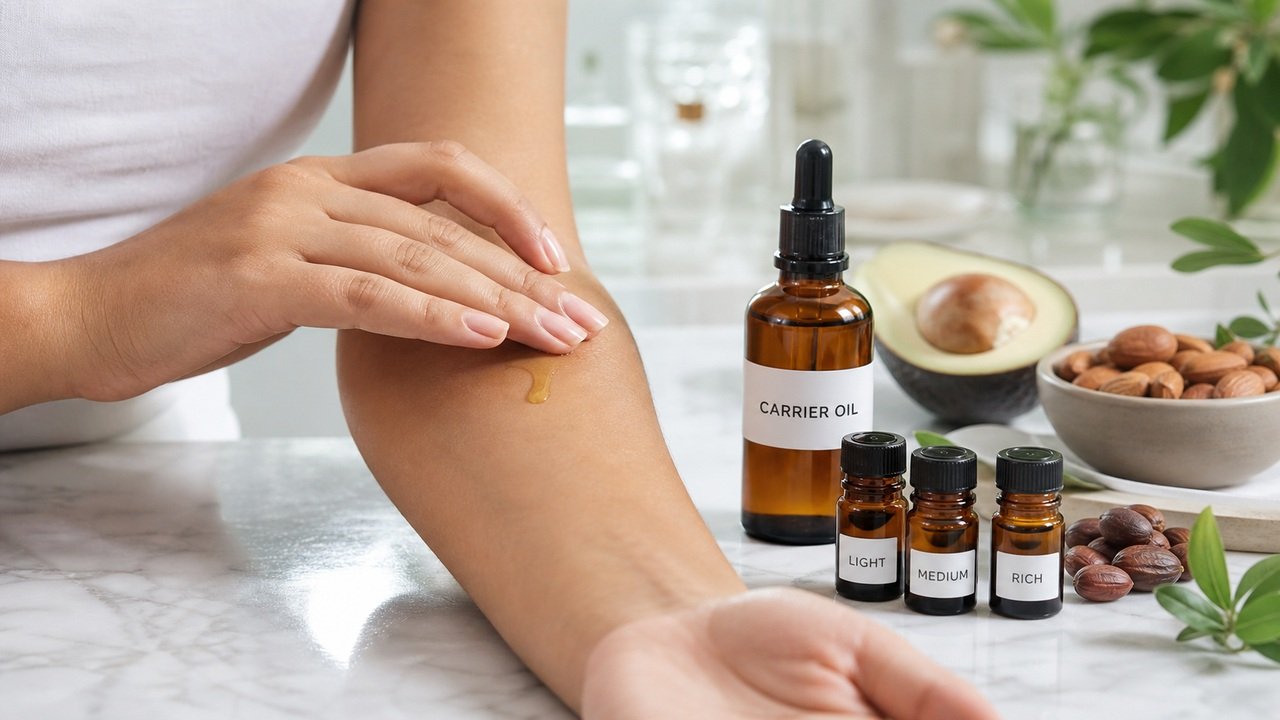
If your product focuses on moisturizing, nourishing, repairing the barrier, and caring for dry skin, you can give priority to sweet almond oil, avocado oil, and Moroccan nut oil. These carrier oils are rich in unsaturated fatty acids and natural vitamins, which can enhance your products’ moisturizing effect and repair ability.
Skin Feel and Absorption Speed
Consumers’ requirements for product skin feel are getting higher and higher, so their absorption speed often directly affects the product’s repeat purchase rate.
Shea butter carrier oil has a structure very close to human sebum, and it absorbs quickly with a refreshing skin feel. It is one of the common carrier oils in high-end facial care products. Sweet almond oil, almond kernel oil, and Moroccan nut oil can provide you with stronger moisturizing and extensibility, more suitable for massage oils, body care oils, and SPA products.
Common Dilution Ratio Recommendations for Carrier Oil
WJOIL carrier oil helps you to achieve a safe, stable, and compliant usage concentration for high-concentration single essential oils. The actual addition ratio needs to be comprehensively adjusted based on the product type, target market regulations, and the essential oils characteristics.
- For facial care oils, it is usually recommended to control the essential oil concentration at 0.1% – 0.5%, and prioritize paired with light carrier oils such as jojoba oil, sweet almond oil, or grape seed oil to achieve better absorption and mildness.
- For body care oils and massage oils, it is usually recommended to control the concentration at 0.5% – 1.5% and often combine with medium-feeling base oils such as grape seed oil, almond oil, and fractionated coconut oil.
- For scalp care oils, it is usually recommended to control the concentration at 0.8% – 2%. Among them, fractionated coconut carrier oil and jojoba carrier oil are popular choices due to their light texture and low risk of clogging hair follicles.
- For infant care products, you must adopt a more conservative ratio strategy. The essential oil concentration is typically controlled at 0.1% – 0.3%, and mild base oils such as cold-pressed sweet almond oil should be preferred to lower the irritation risk.
It is particularly important to note for you to further reduce the addition amount and increase the carrier oil proportion based on the regular ratio when highly irritating essential oils such as peppermint, rosemary, cinnamon and cinnamon. This enhances the safety and consumer comfort of the final product.