Your Reliable Essential Oils for Hair Supplier
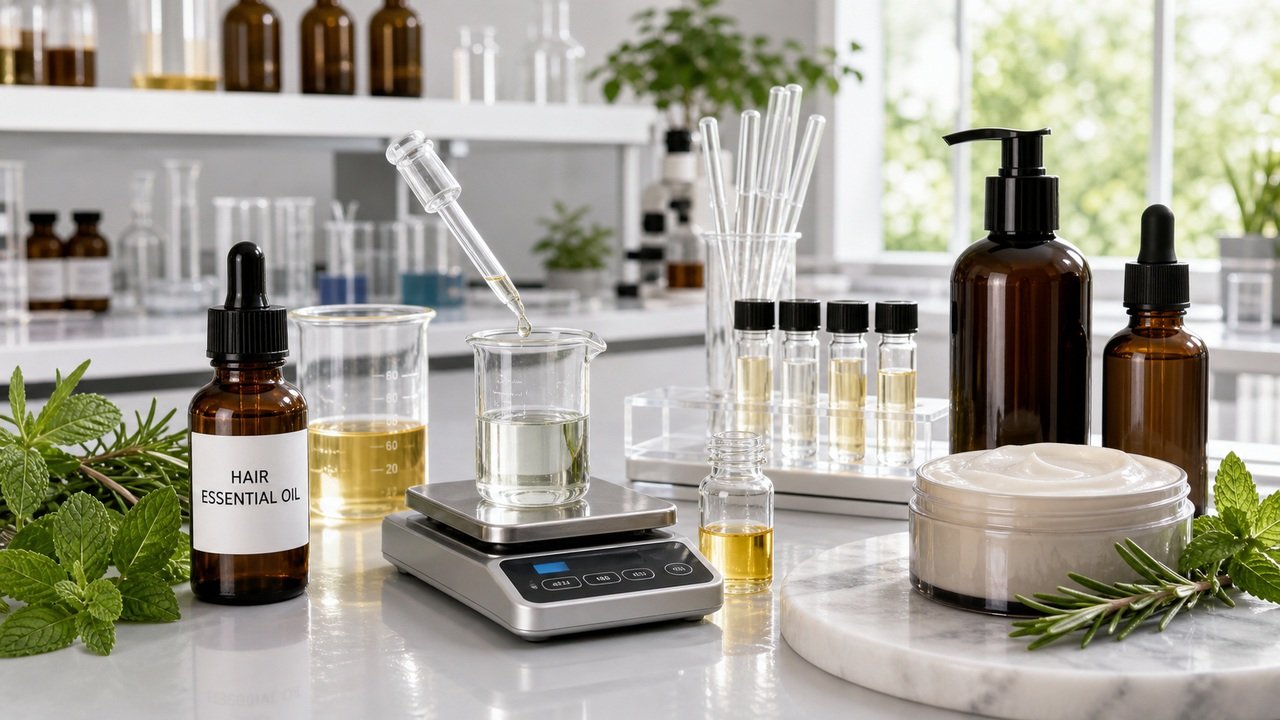
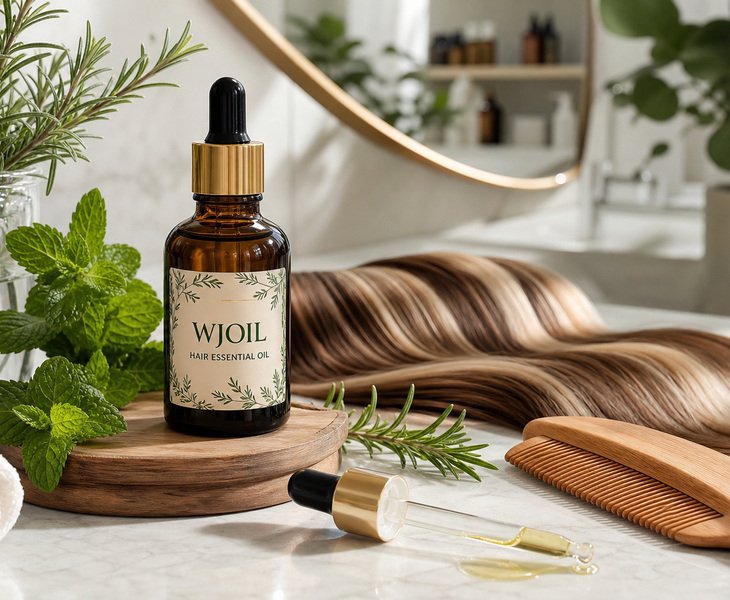
WJOIL essential oils for hair are natural aromatic plant essences extracted from the flowers, leaves, fruit skins, seeds, roots or resins of plants. They can soothe the scalp, control oil and eliminate dandruff, repair hair strands, provide scalp care, and improve dry, frizzy hair.
We strictly follow the production standards for cosmetic raw materials for production and quality management, and have established a complete quality control system from raw material to finished product testing. And WJOIL also supports technical materials to help you meet the market access and regulatory requirements of different countries and regions.
At the same time, we support in-depth customization according to your needs. Whether you need to develop anti-hair loss care, scalp care, natural hair care products, or high-end shower head hair therapy products, we can give a one-stop hair essential oil solutions from raw material selection, formula optimization to packaging customization based on your target market, efficacy positioning, fragrance requirements and cost budget.
Essential Oil for Hair Product by Features
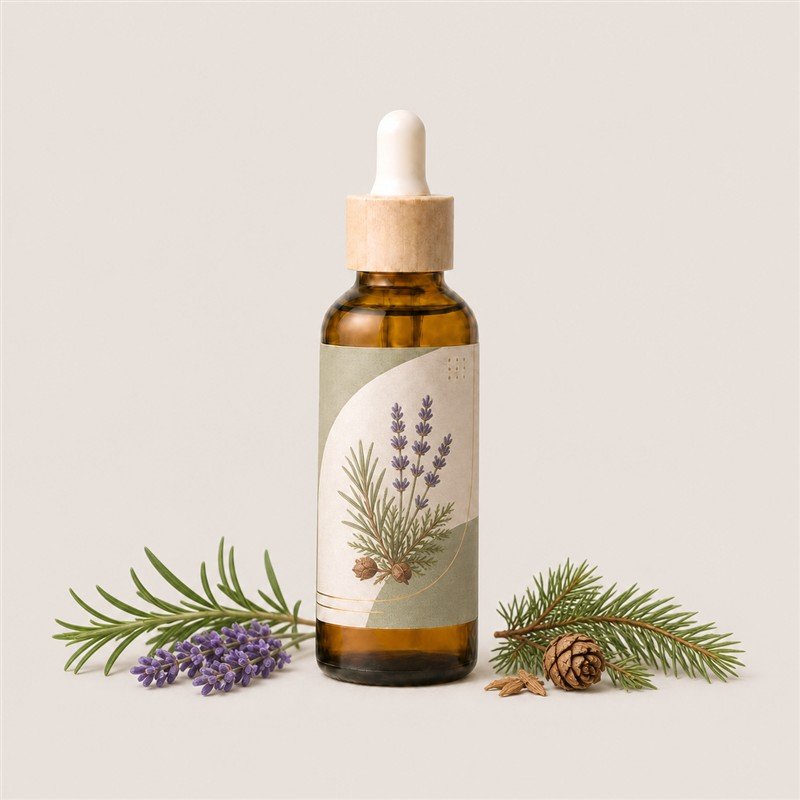
Offer greater formulation flexibility, enabling you to develop differentiated products based on the target market demands. Additionally, it can also serve as core functional ingredients.
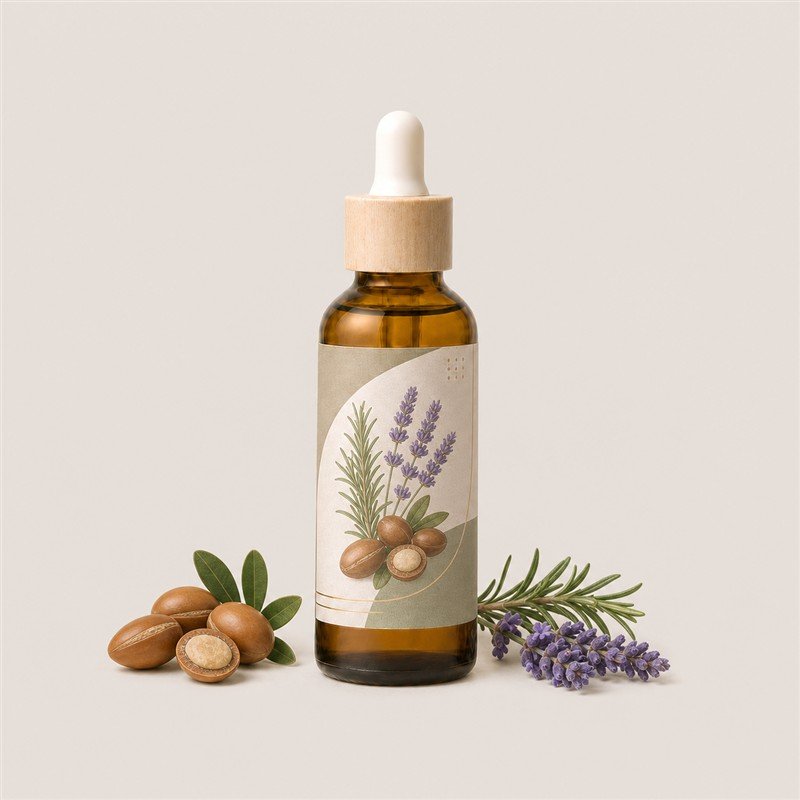
It is developed formulation, pre-blended in precise proportions, which shortens the R&D cycle and reduces testing costs. Caters to different needs, including repair, nourishment and oil control.
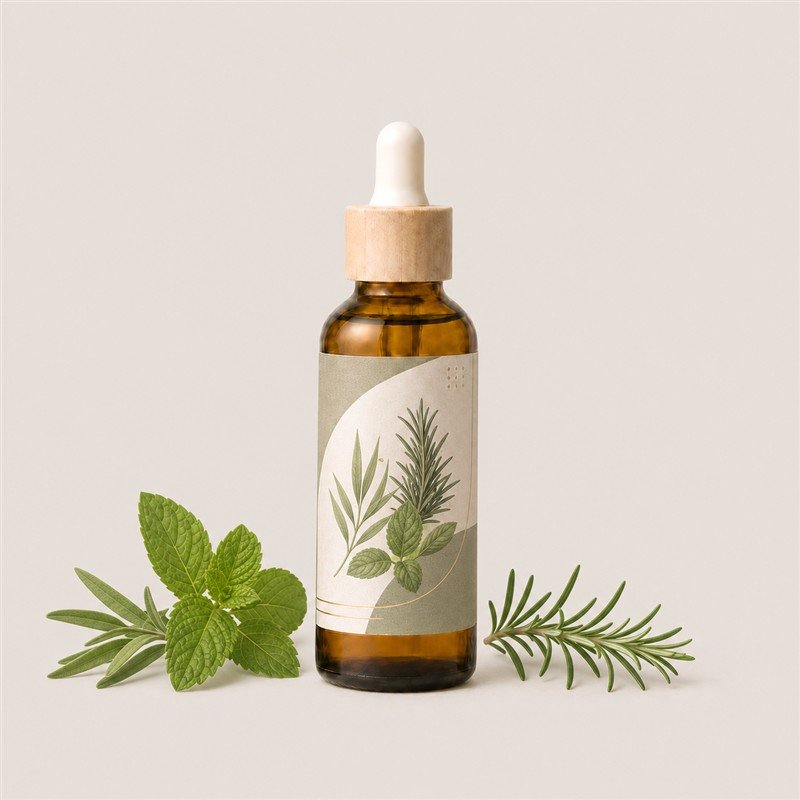
It does not require modifying the original formula structure. Just add functional essential oils to the system, and you can achieve functions such as oil control and repair.
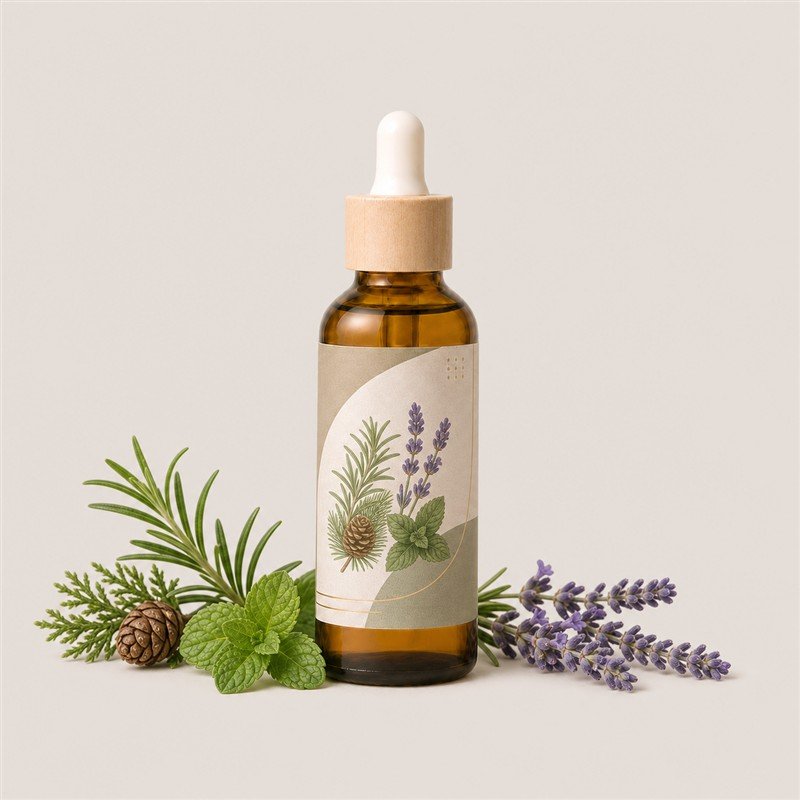
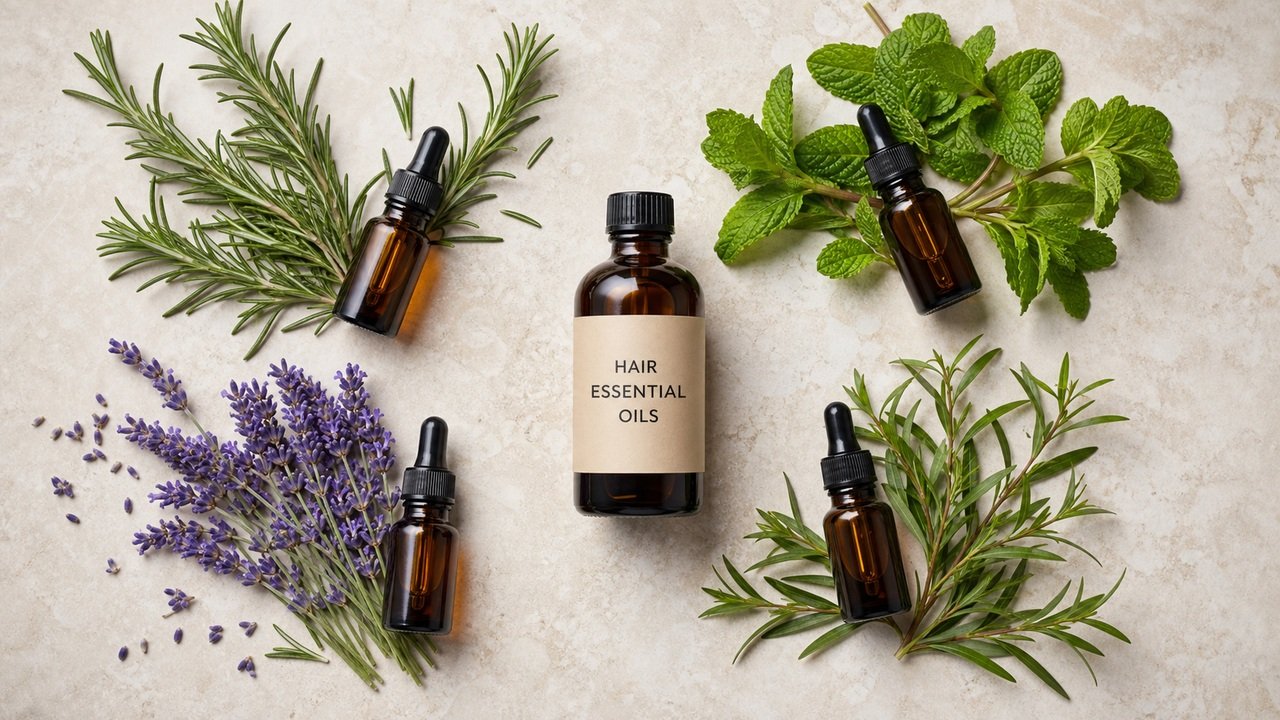
Common core ingredients include rosemary essential oil, cedar essential oil, peppermint essential oil, lavender essential oil, and happy sage essential oil and so on.
Safe Essential Oils for Hair
All of WJOIL hair care essential oils are sourced from pure plants without any mineral oil and synthetic industrial fragrances. Each batch of raw materials and finished essential oils for hair can provide GC-MS component analysis reports, COA quality inspection reports, and MSDS safety technical specifications. They also undergo multiple tests for pesticide residues, heavy metals, microorganisms, and so on to ensure the quality traceable and the date verifiable.
Whether you are developing shampoo, scalp essence, hair care oil, hair mask, or professional salon care products, we can provide corresponding technical materials and testing support, helping you reduce compliance risks during product registration, export, and market entry.
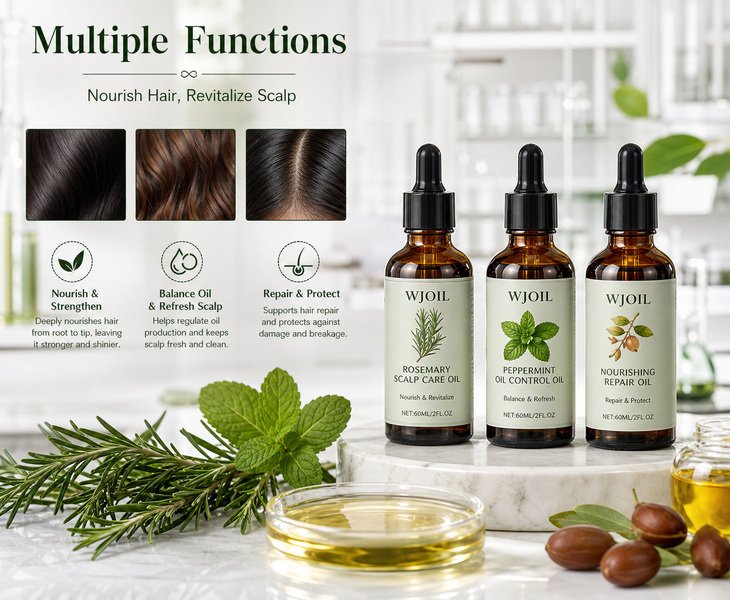
Multiple Functions
WJOIL essential oils for hair are rich in natural terpenes, alcohols, esters and various plant active ingredients, providing precise efficacy support according to different hair care needs. Whether it’s hair loss prevention care, scalp conditioning, oil control and dandruff removal, or hair strand repair and nourishment, our essential oils can offer many different directional functional expansion for your product line.
And through standardized raw material procurement and strict process control, we ensure the stable key component contents and high consistency in each batch of essential oils for hair. In addition, we can assist in optimizing its formula structure and fragrance scheme based on your needs, making your products comprehensive in efficacy and also more competitive in the market.
Why Choose WJOIL as Your Partner for Hair Care Essential Oils?


- Our professional team is involved throughout the process from sample development, small-scale testing to large-scale production.
- We offer flexible OEM, ODM and formula customization services, which can be optimized for essential oil ratios, fragrance styles, usage experience and functional directions.
- WJOIL has obtained ISO22716 and GMPC cosmetics production certifications, and can provide you with organic raw material solutions such as ECOCERT and USDA Organic.
- Our products have been exported to 80+ countries and regions including US, EU, Russia, Japan, Southeast Asia. We can provide you with stable and continuous supply support.
No. As long as the addition ratio is controlled reasonably and the appropriate emulsification system and solubilization system are selected, essential oils for hair usually do not have a significant impact on the shampoo.
However, if the addition amount is too high or the formulas’ compatibility design is insufficient, problems such as stratification, turbidity, fragrance rapid loss, and changes in viscosity may occur.
Therefore, during the product development process, we can help you complete compatibility tests, stability tests, and long-term storage tests to reduce quality risks after product launch.
The recommended addition range varies depending on the product type.
For example, shampoo usually recommends a control range of 0.2%–1%, conditioners and hair masks are generally 0.3%–2%. High-value products such as scalp essence and scalp care oil can appropriately increase the addition ratio based on the formulation requirements. While scalp therapy massage oil and scalp SPA care products are usually specially designed in combination with the base oil system.
It should be noted that natural essential oil is not added in larger quantities for better results. Excessive concentration increases production costs and may also affect product stability, odor balance, and the consumer’s usage experience.
Essential oils derived from different plants vary in color and composition of natural ingredients. Therefore, some essential oils for hair may indeed have an impact on the final products’ appearance.
For example, some resin-based essential oils for hair, dark woody essential oils for hair, and unbleached natural essential oils may affect the final color or light-colored formulations. If your product has strict requirements for color consistency, we can give a more suitable essential oil ingredient solution based on the packaging form, target consumer group and product positioning.
Currently, the most popular essential oils for hair formulas in the global hair care market mainly focus on scalp care, hair loss prevention and maintenance, oil control and cleaning, as well as hair strand repair.
The combination of rosemary oil and peppermint oil is one of the fastest-growing and most popular formulas in recent years, and is widely used in scalp care and hair root maintenance products. The combination of tea tree oil and peppermint oil is more commonly found in oil control, cleaning, and oily scalp care products. And lavender oil and rosemary oil can give you a balance between soothing care and scalp maintenance, and are suitable for natural plant hair care series. While peppermint oil and eucalyptus oil are often used in scalp SPA, sports care, and summer limited product development due to their prominent cooling effect.
Why Use Essential Oils for Hair Care Products?
Adapt to Market Demands
Compared with traditional hair care products, more and more consumers prefer to choose care products with clear ingredient sources and stronger plant properties, hoping to reduce their reliance on highly irritating ingredients.
While our plant essential oils originate from natural plant tissues such as flowers, leaves, fruit peels, resins, or roots and stems. They have high natural recognition and market acceptance and can also better align with the current development directions of the global Clean Beauty, Natural Beauty, and Wellness markets.
Satisfy Both Scalp Care and Hair Care Needs
Many plant essential oils for hair improve hair condition and at the same time help regulate the scalp environment as well. For example, essential oils like rosemary, tea tree, peppermint, and cedarwood have been widely adopted in scalp care, hair loss prevention, oil control and anti-dandruff products and hair therapy product development.
By reasonably combining different essential oil combinations, you can develop more targeted product series around scalp environment regulation, hair repair, oil balance, and other different directions.
Rich Sensory Experience
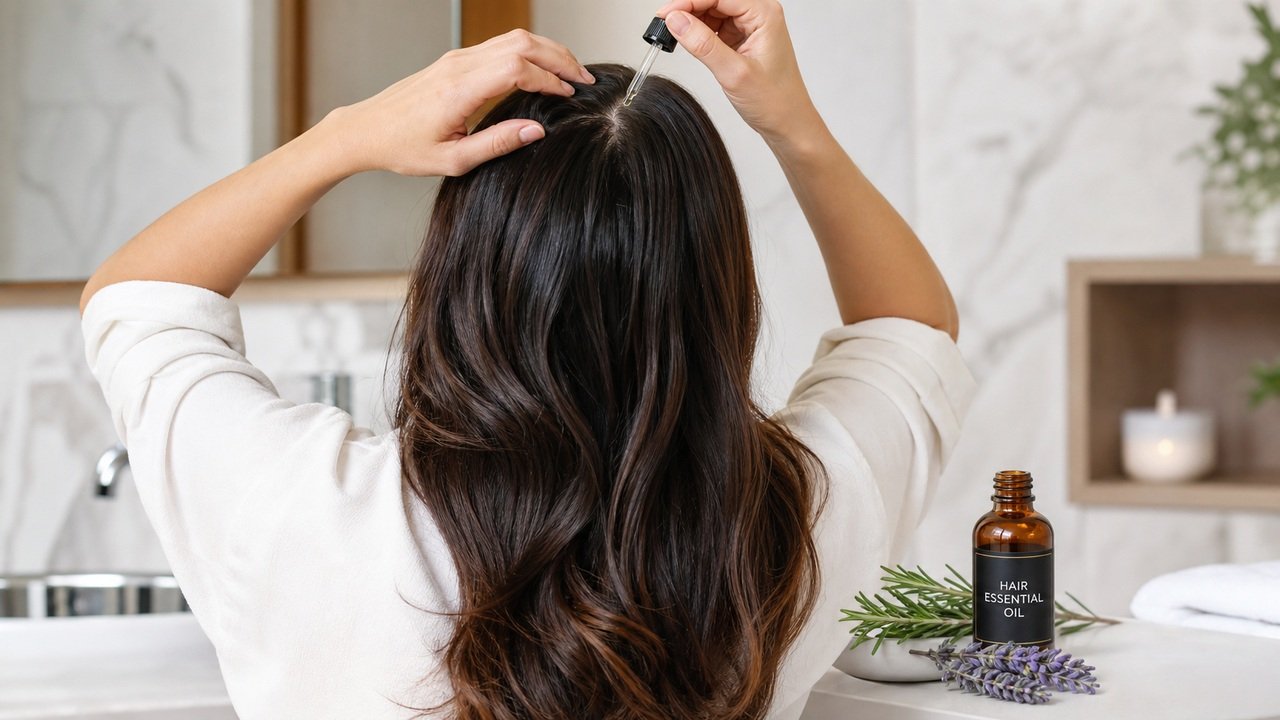
Plant essential oils can also bring a richer sensory experience for your customers to the products. Natural essential oils contain rich aromatic components, which can give a more natural and more layered aroma performance. This can enable your brands to get rid of the homogenization problem brought by traditional fragrances. At the same time, different essential oils can also bring unique usage sensations.
Suitable for Development Across a Wide Range of Product Types
Plant essential oils for hair have good formula compatibility and can be widely applied in different categories such as shampoos, conditioners, hair masks, scalp essences, scalp sprays, hair care oils, non-wash care products, and professional salon care products.
No matter if you plan to develop hair loss prevention products, scalp management products, oil control and anti-dandruff products, or hair repair and high-end care products, we can give you the best suitable plant essential oils that can provide corresponding functional support.
More importantly, the same basic formula can often achieve different efficacy positioning and market positioning through adjusting the types of essential oils, adding proportions, and aroma structure. This reduces your research and development costs and also improves the product line expansion efficiency, making you launch new products that meet market demands more quickly.
Common Ingredients in Essential Oils for Hair
Rosemary Hair Care Essential Oil
Rosemary essential oil is currently one of the most highly regarded plant-based hair care ingredients in the international hair care market. Its main active ingredients include eucalyptol, α-pinene, and camphor. They can promote scalp microcirculation, improve the environment around hair follicles, which can enhance scalp vitality.
Due to its balanced functionality and market recognition, rosemary essential oil has become a core ingredient in hair loss prevention, scalp care, and the developing high-end hair therapy products.
Peppermint Essential Oil
Peppermint essential oil is rich in active ingredients such as menthol and menthone, and is one of the most common cooling-type functional ingredients in the hair care field.
When added to shampoos, hair conditioning serums, scalp sprays, and hair therapy massage oils, it can provide you with a significant cooling experience and enhance consumers’ perception of product efficacy. Moreover, peppermint essential oil helps to improve the hair scalp environment and enhance scalp comfort, widely found in oil control care, summer hair care, and men’s care products.
Lavender Essential Oil
Lavender essential oil is one of the most widely used soothing plant essential oils in hair care products. Its main active components are linalool and linalyl acetate. In hair care products, lavender essential oil is often used to relieve scalp discomfort, improve dry scalp problems, and at the same time, it can give the product a soft and natural plant aroma, enhancing the overall user experience.
Tea Tree Essential Oil
Tea tree essential oil has high market acceptance and has a clear efficacy positioning. It is an important functional raw material for creating oil-control and anti-dandruff products.
They are rich in natural active ingredients such as terpinen-4-ol, and is one of the most representative plant essential oils in the field of oily scalp care. It can help improve excessive scalp oil secretion and maintain a clean scalp condition. Therefore, it is widely used in anti-dandruff shampoos, oil-control shampoos, scalp purification essences, and men’s care products.
Common Carrier Oils in Essential Oils for Hair
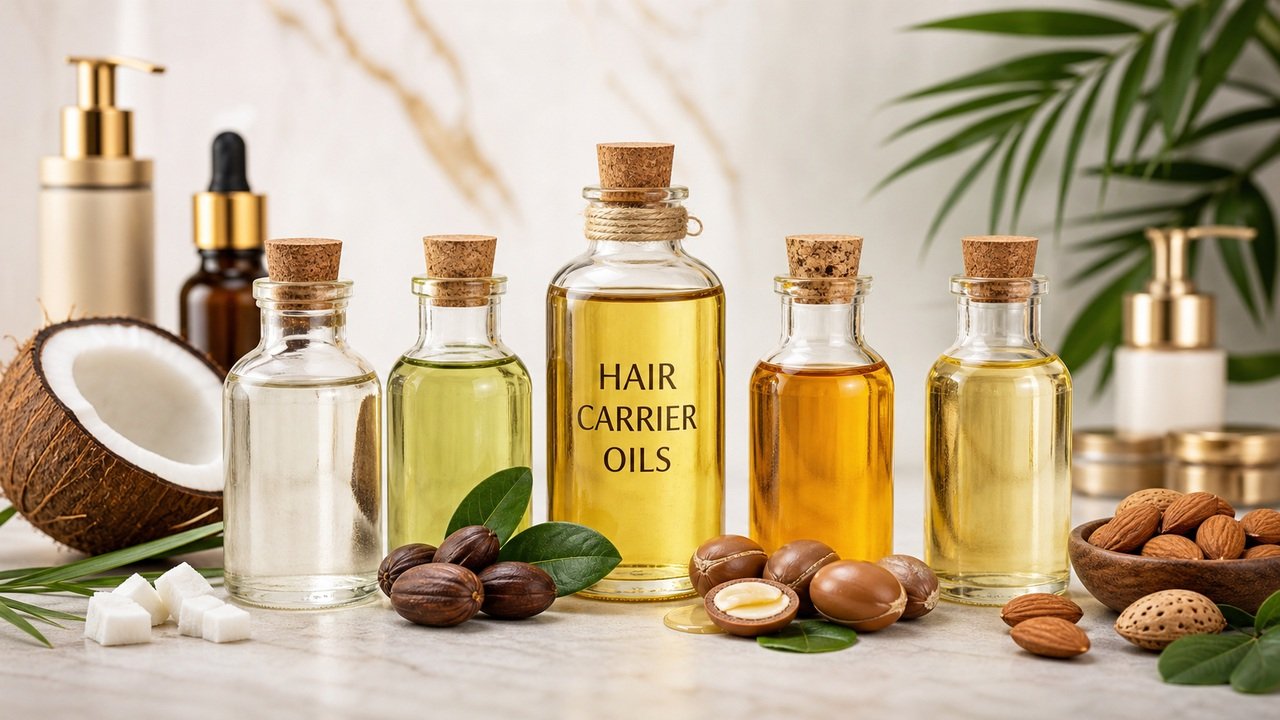
Coconut Oil
With excellent penetration ability, it can help reduce the hair protein loss and enhance the hair’s moisture retention capacity. It is widely used in hair care oils, hair masks, and deep repair products, especially suitable for developing repair products for people with damaged hair from dyeing and perming, dry damaged hair, and those who frequently style their hair.
Jojoba Oil
Jojoba oil has a structure similar to human natural sebum, absorbs quickly, and has a refreshing sensation. It is not prone to causing greasiness. Therefore, it is commonly used in scalp care essences, scalp sprays, and light care hair products, especially suitable for oily scalps, sensitive scalps, and the developing daily care products.
Considerations for Formulating Hair Care Essential Oils
When developing the essential oils for hair products, not all essential oils are suitable for high-concentration use. Some highly active ingredients, if used improperly, can easily make the product more irritating and increase the risks associated with after-sales service.
For example, cinnamon leaf essential oil and cinnamon bark essential oil are rich in cinnamaldehyde and have strong irritancy. They are usually not recommended for hair care products.
Clove flower bud essential oil contains a high clove oil proportion and it is recommended for you to strictly control the addition amount, usually not exceeding 0.1%.
For cold-pressed citrus essential oils such as bergamot essential oil may contain furanocoumarin compounds, carrying a certain risk of photosensitivity. It is recommended to preferentially use the FCF (de-furanocoumarin) version when developing daytime care products.
In addition, although peppermint essential oil has high market recognition, high-concentration use may cause irritation to sensitive scalps. So it is recommended to balance the overall irritancy through the blended plant essential oils for hair and complete the corresponding stability tests and safety evaluations, especially in children’s care, sensitive scalp care, and high-frequency use products.