
WJOIL: Your Reliable Jojoba Oil Manufacturer in China
Our jojoba oil is extracted from jojoba plant seeds. Its chemical structure is highly similar to human sebum, which can quickly penetrate the skin without leaving a greasy feeling. As an excellent moisturizer, base oil, and carrier oil, jojoba oil can help alleviate dry skin, barrier damage, and other issues. It is widely used in facial moisturizers, hair care, massage oils, and various skincare and cosmetic products.
As a professional base oil manufacturer, WJOIL’s jojoba oil has consistent transparency and works well across different formulation systems. With stable supply capacity and flexible packaging options, we can provide OEM and ODM customization services for you. Welcome to inquire about customizing jojoba oil that matches your product formula.
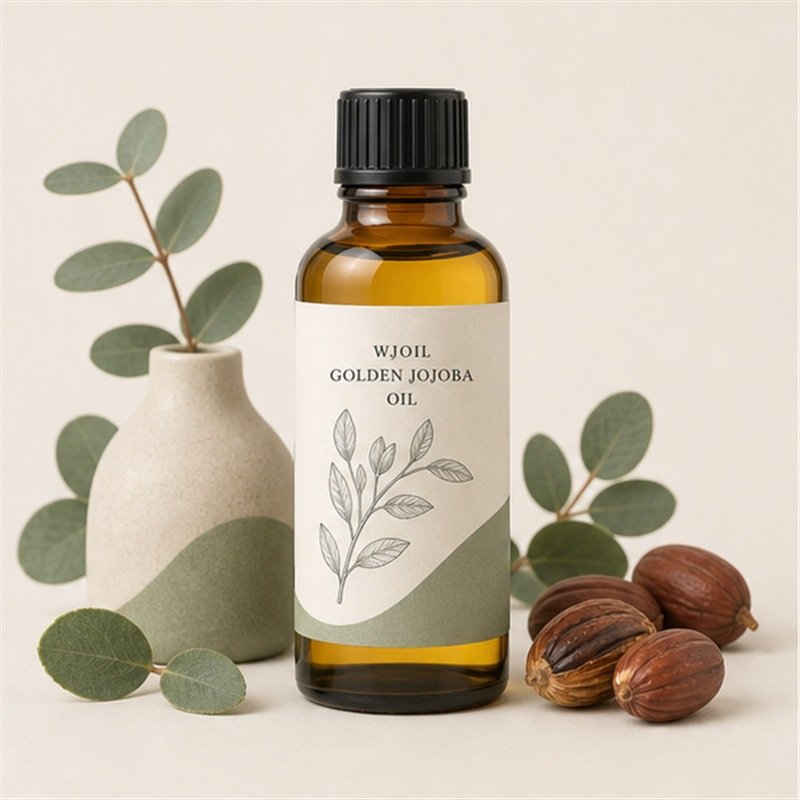
Extracted through a cold-pressed process, retaining more natural ingredients and amber color, with a light nutty aroma.
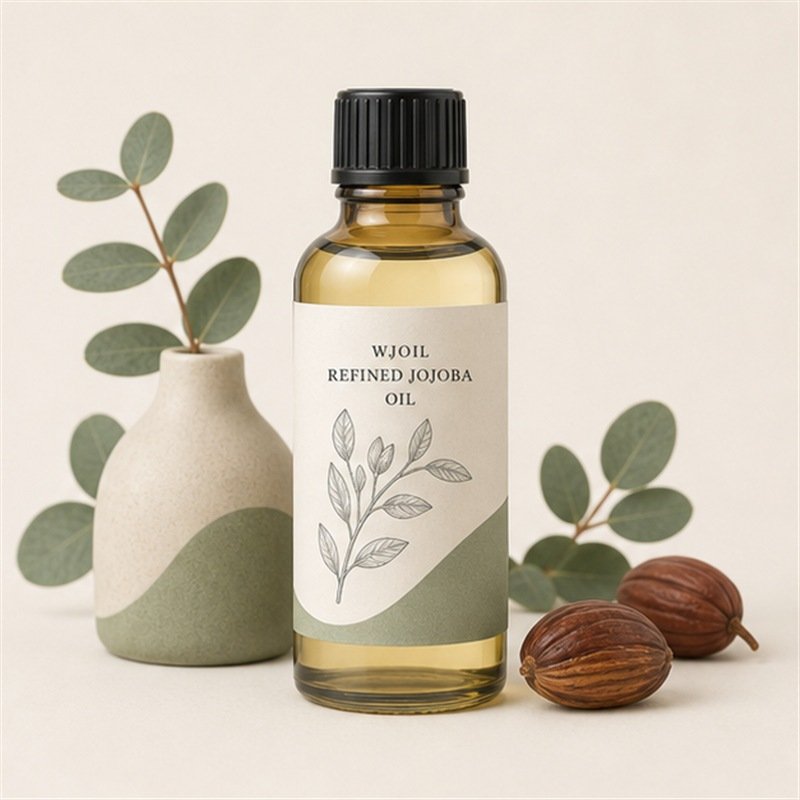
After multiple purification processes, the color is lighter and more transparent, suitable for skincare and cosmetics with high requirements for appearance and odor.
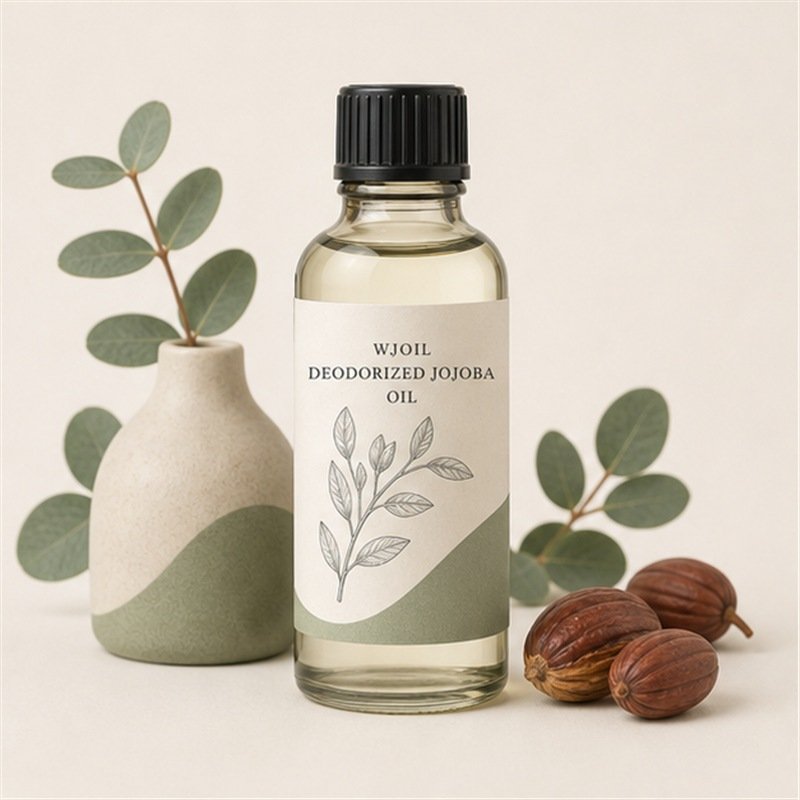
Further reducing the odor and color of plant raw materials, more suitable for fragrances and essential oils, without affecting the final aroma and color of the finished product.
Lightweight Texture
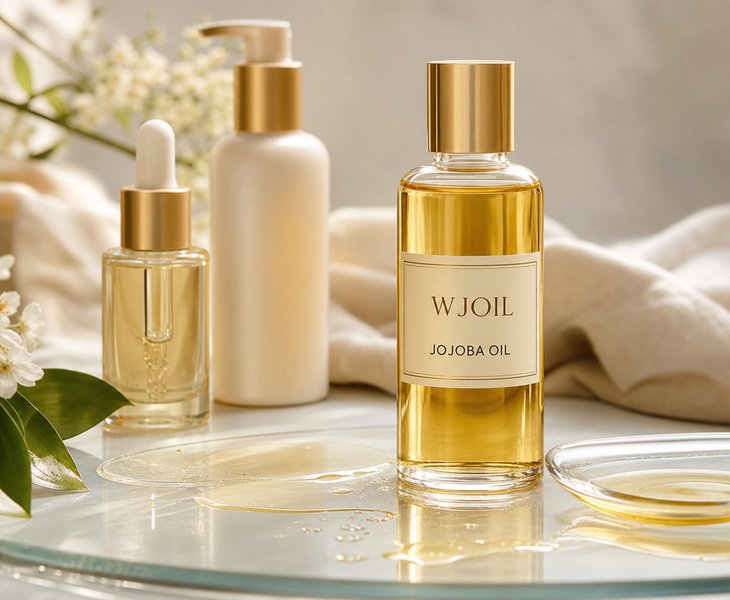
The main component of jojoba oil is liquid wax ester. This unique chemical structure gives it excellent spreadability. After being applied, jojoba oil does not form a thick and sticky residue on the skin surface, providing a dry and smooth skin sensation. For facial essences, body care oils, and lightweight lotion products, it can achieve a lighter and fresher texture without sacrificing the moisturizing power of the product.
Good Formula Compatibility
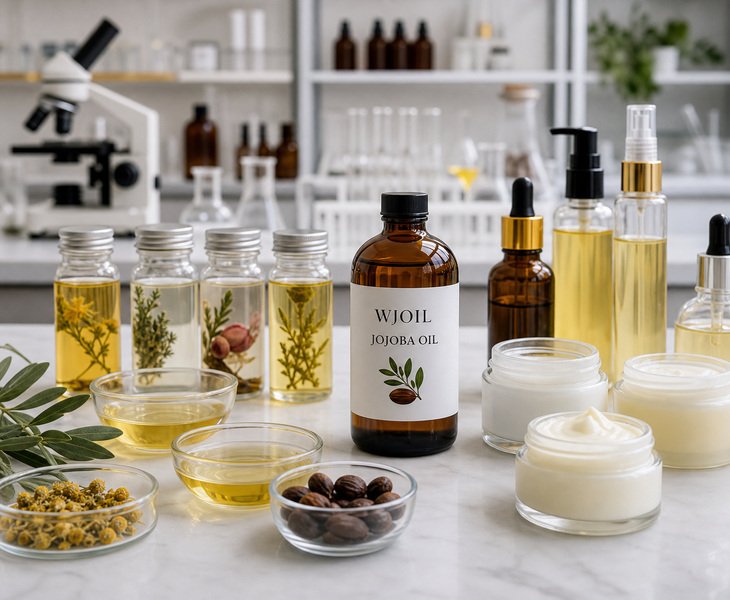
Jojoba oil can be well combined with plant extracts, essential oils, emulsification systems and various oil-based raw materials, without affecting the overall stability of the product. This means that when developing skin care oils, hair care products or massage care products, you can adjust the raw material proportions more flexibly. It reduces the costs of formula testing and rework due to incompatible raw materials while improving the new product development efficiency.
Ingredient Stability
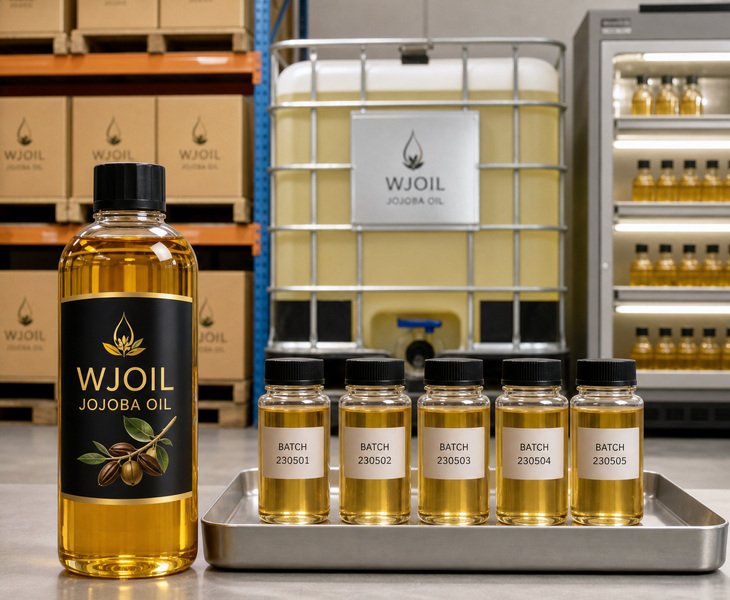
Compared to some natural vegetable oils that may experience odor changes or oxidation problems, jojoba oil has better stability during long-term storage and transportation. It is more suitable for your large-scale purchasing and long-term production plans. For cosmetics that need to maintain consistent product color, odor, and formula, this stability feature can help you reduce raw material loss risks and minimize product quality fluctuations caused by oil changes.
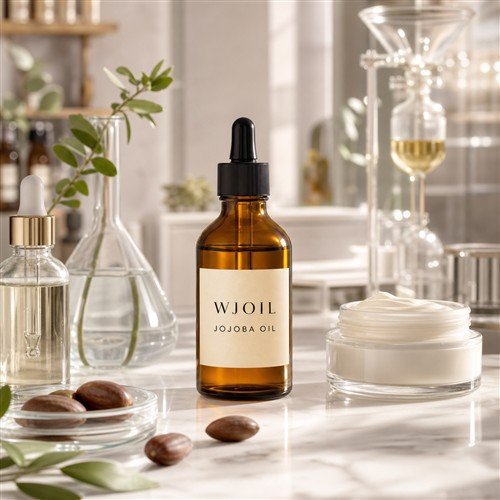
Jojoba oil is commonly used in facial serums, skin care oils and lightweight lotion product formulas. It can help improve the product’s spreadability and overall skin feel. It is more suitable for skincare products that aim for a refreshing texture and quick absorption.
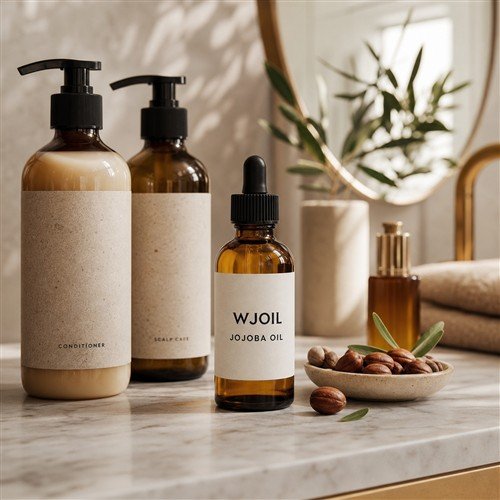
In hair care products such as hair conditioner, scalp care products and hair end repair products, jojoba oil can help enhance the product’s smoothness and reduce the heavy residue caused by traditional vegetable oils. It is more suitable for the development of lightweight hair care formulas.
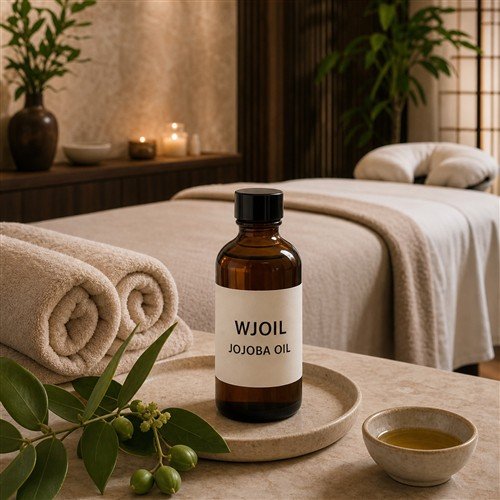
Jojoba oil has good extensibility and is suitable for massage oil, body care oil, and SPA care products. It can help improve the smooth touch during the massage process and enhance the user experience of the product.
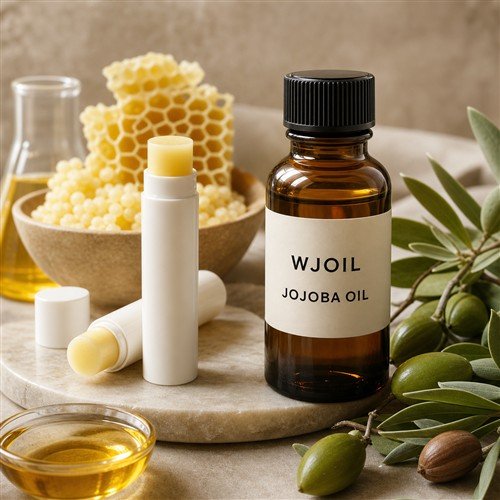
In lip balms and lip care products, jojoba oil can be used together with beeswax, vegetable oils and various care ingredients. It helps enhance the stability of the formula and provides a comfortable touch to the lips.
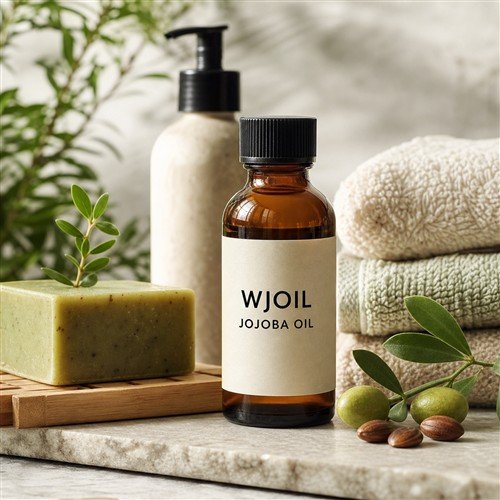
Jojoba oil can be used in plant soaps, facial cleansers and natural cleansing care products. It can help improve the dry and tight feeling of the skin after cleansing and enhance the overall smoothness and balance of the product formula.
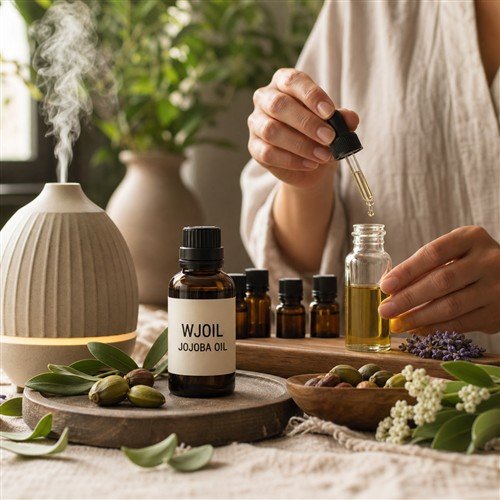
As a common base carrier oil, jojoba oil can be blended with various plant essential oils. It is suitable for aromatherapy care and massage compound oils. It is convenient to be applied stably in different formulation systems.
Jojoba Oil is an oil-soluble raw material. It usually needs to be used in combination with an emulsification system before it can be stably applied in emulsions, creams or spray products. If you are developing an oil-in-water or water-in-oil formula, you should select an appropriate emulsifier according to the texture requirements of the product to ensure the stability and uniform feel of the final product.
To maintain the stable state of Jojoba Oil, it is recommended that you store it in a cool, dark and sealed environment, and avoid prolonged exposure to high temperatures. For long-term storage or cross-border transportation projects, we will use stable sealed packaging. This can help reduce the loss of raw materials caused by oxidation or contamination during transportation.
Yes. Jojoba oil has good thermal stability. Therefore, it can be used in the conventional heating processes during the production of lotions, creams and hair care products. However, we still recommend avoiding prolonged high-temperature treatment to reduce the risks of color, odor and natural component changes. If you are conducting large-scale production, you can first conduct a small-scale stability test to confirm the compatibility of Jojoba Oil in the actual process.
Since the jojoba oil is essentially a liquid wax ester, it is normal for it to become cloudy or partially solidify at low temperatures. After being heated and cooled back to room temperature, it usually can return to a uniform liquid state. This will not alter the molecular structure or the activity of the components. Before processing the jojoba oil, it is recommended that you first restore its fluidity.
Jojoba oil can be used in wood furniture care oils, wood maintenance waxes, and the development of natural wood care products. It can help improve problems such as wood drying, loss of luster, and rough surface. Due to its good stability, jojoba oil is less likely to produce unpleasant odors on wood surfaces like some plant oils do during wood surface care.
Jojoba Oil vs Other Carrier Oils
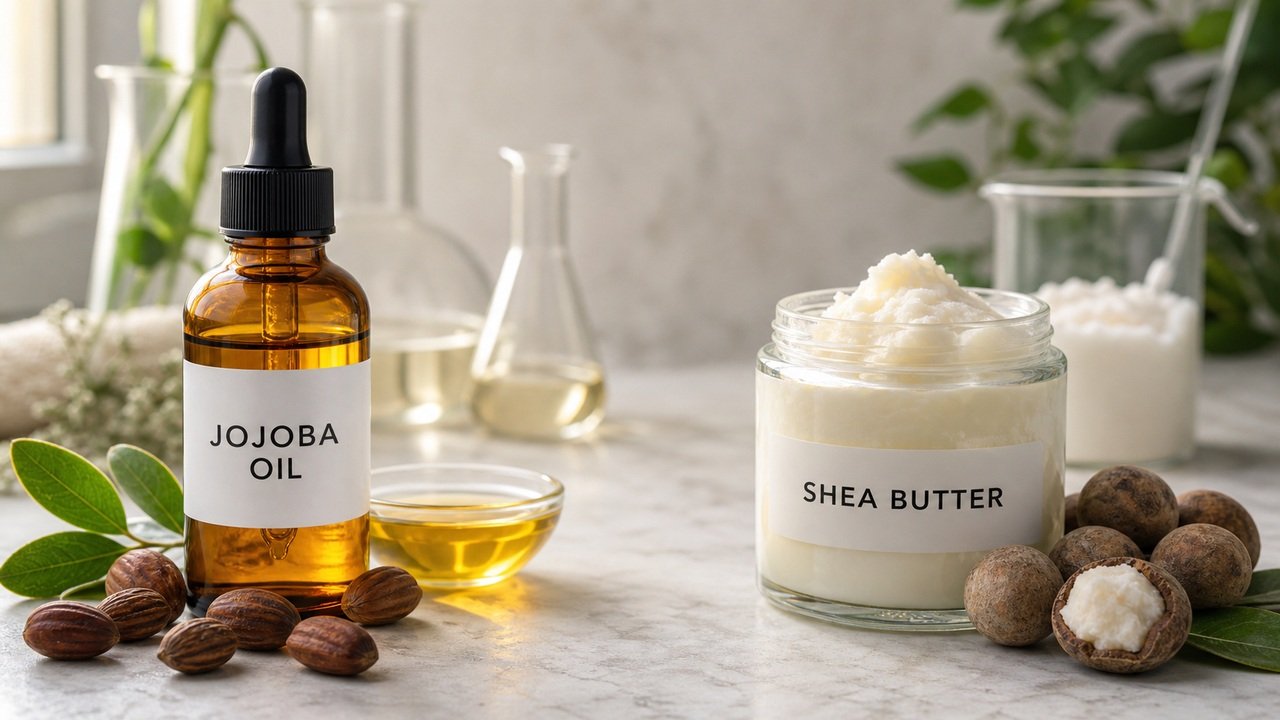
Jojoba Oil vs Shea Butter
Jojoba oil remains in a liquid state at room temperature, which makes it easier to be used in lotions, skin care oils, and quick-absorbing products. If you aim to create a light and moisturizing product without being heavy, jojoba oil has more advantages in skin sensation control and flexibility in the formula.
Shea butter is more suitable for highly moisturizing body care products, such as body creams, thick lotions and repair creams. Due to its semi-solid state at room temperature, it usually needs to be heated and melted before emulsification in the formula. Therefore, shea butter has higher requirements for production processes and formulations.
You can also use them together to balance moisturizing properties and the usage experience.
Jojoba Oil vs Castor Oil
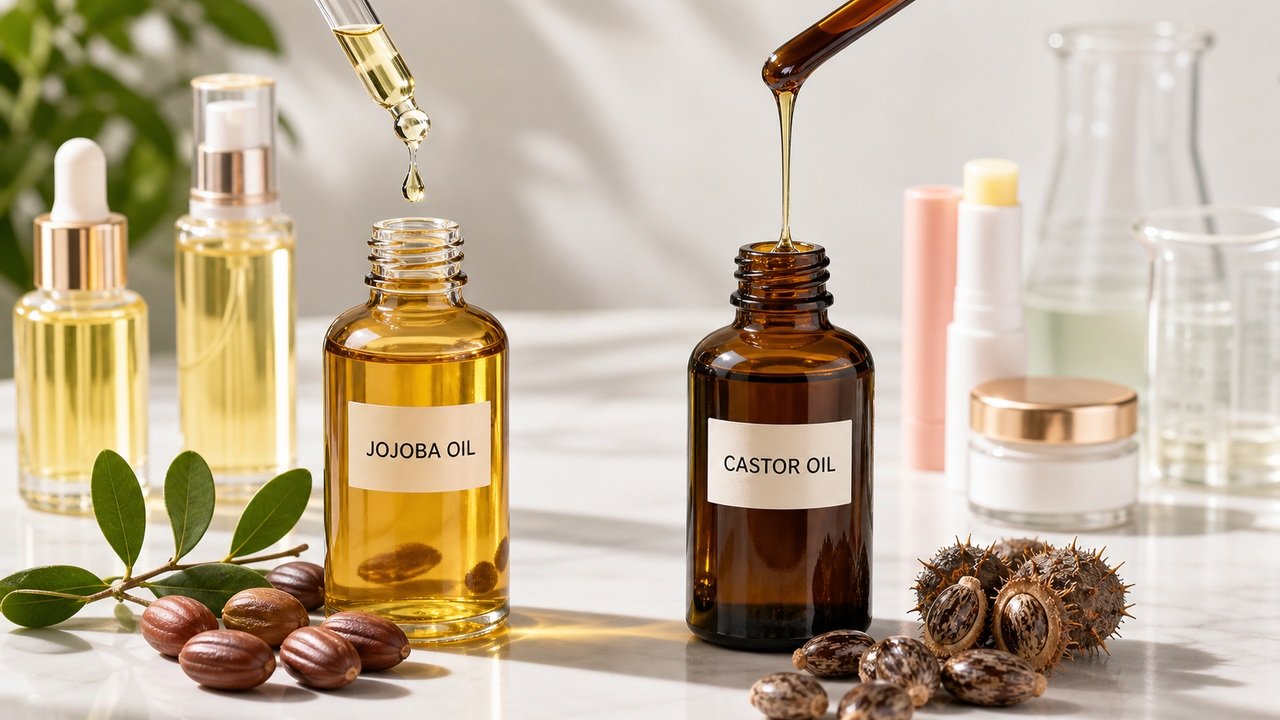
The fluidity and spreadability of jojoba oil make it more suitable for light skin care products. It can provide you with a uniform and refreshing sensation in skin care essences, scalp care and hair care oils.
Castor oil has a relatively high viscosity. It is commonly used for film-forming purposes and can adhere well to the surface of hair and skin. It is typically used in high-adhesion care products such as mascara, lip balm, and hair care essential oils. However, the skin feel of castor oil is rather thick and greasy, and its oxidation stability is lower than that of jojoba oil.
If you need to increase the viscosity and adhesion of the product, castor oil is an appropriate choice. If you want to maintain the care effect while achieving a refreshing and breathable skin feel, jojoba oil is a more ideal carrier oil.
Jojoba Oil vs Sweet Almond Oil
Sweet almond oil is relatively light in texture, suitable for basic moisturizing and cost-effective. It is commonly used in facial care, body massage, baby oil and other product formulas. However, sweet almond oil is prone to oxidation. In long-term storage and large-scale production, it requires higher packaging and storage conditions. And the sweet almond oil has a risk of nut allergy.
Jojoba oil has stronger oxidative stability. This means that your jojoba oil formula products have a longer shelf life and lower oxidation risk.
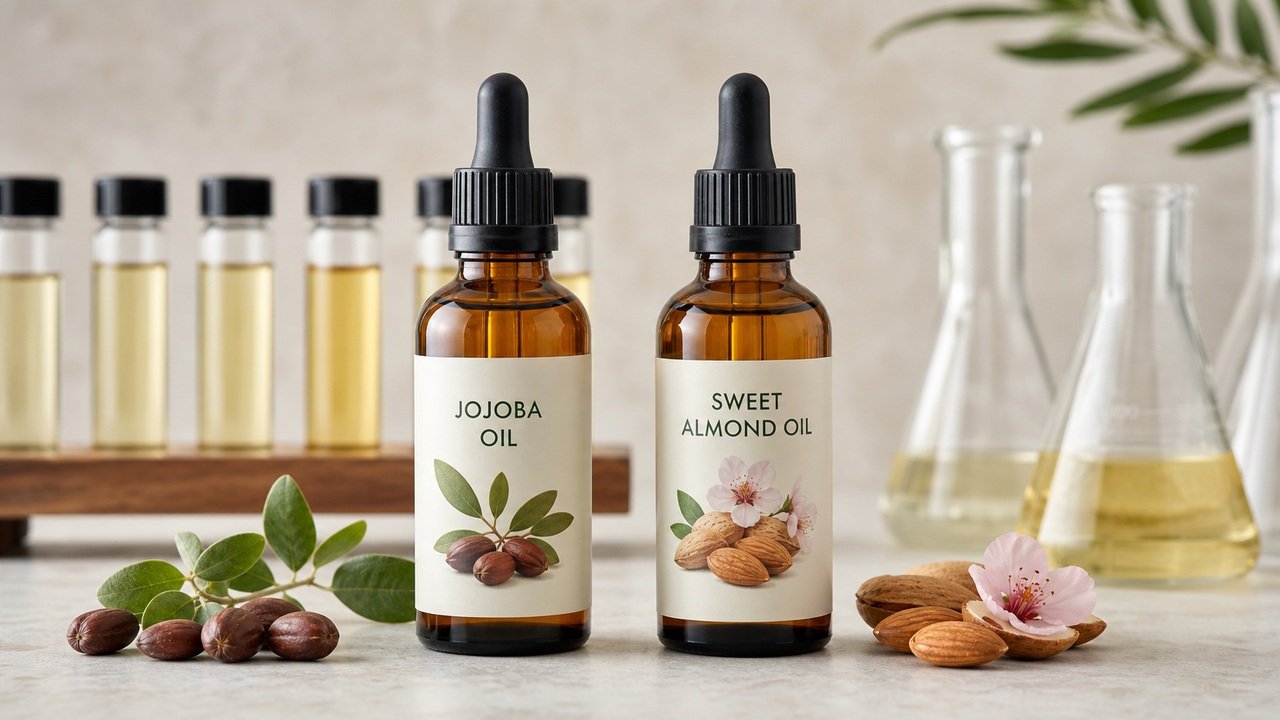
Combining sweet almond oil with jojoba oil is also a common solution that balances cost, skin feel, and stability.