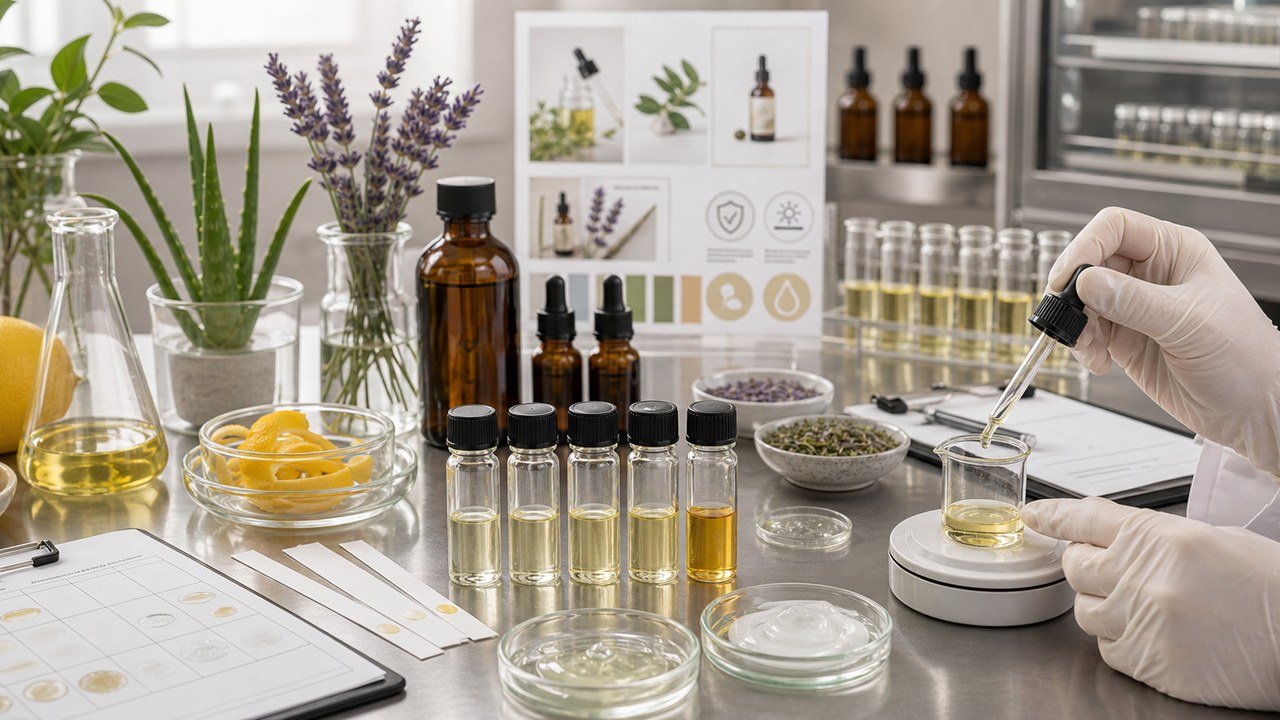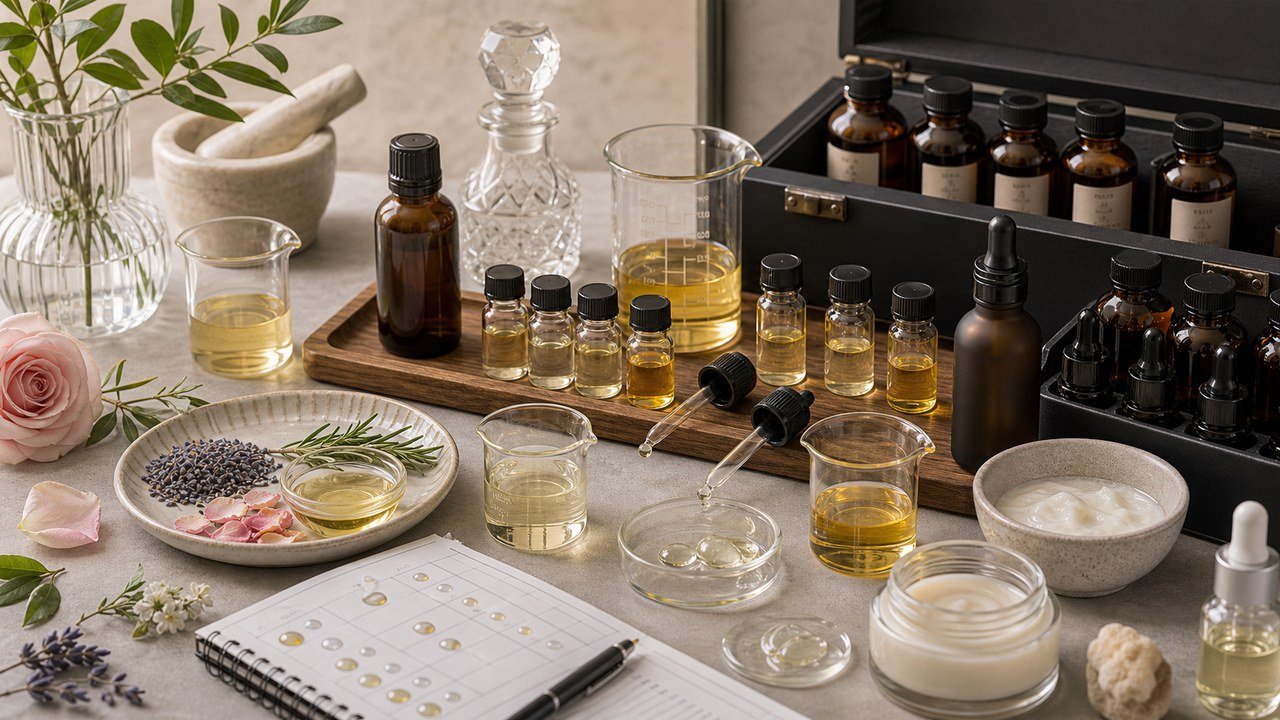
Your Reliable Essential Oils for Skin Supplier
WJOIL essential oils for skin are produced in accordance with cosmetic safety standards and are specifically intended for use on the skin. They can improve conditions such as acne, hormonal acne, scars, fine lines and wrinkles, oily skin, dry skin, uneven skin tone, sunburn, and many other skin problems.
We can provide standard essential oils for skin that have been pre-mixed and can be directly used in skin care formulas. Meanwhile, we also support customized development based on your brand and target market demands, including essential oil ratio adjustments, active ingredient concentration optimization, fragrance intensity improvement and skin type adaptation plans.
Whether you are targeting the clean beauty market in Europe and America or the functional skin care market in Asia, we can provide more secure, stable, and more competitive essential oils for skin customized solutions for your skin care products according to the different country regulations and market preferences.
Essential Oils for Skin Product by Features
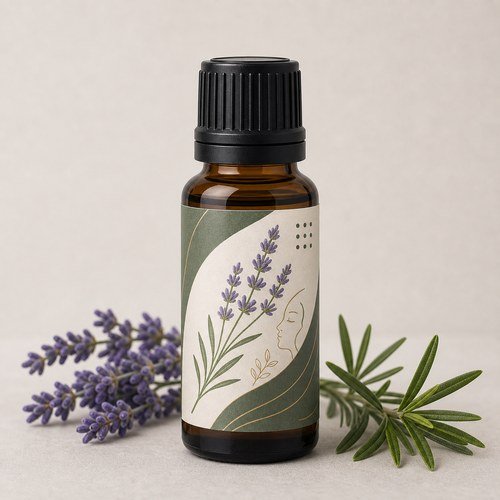
Extracted from a single plant, it retains the plants’ natural activity and aroma characteristics. It has extremely strong versatility and can be flexibly combined with different formulas.
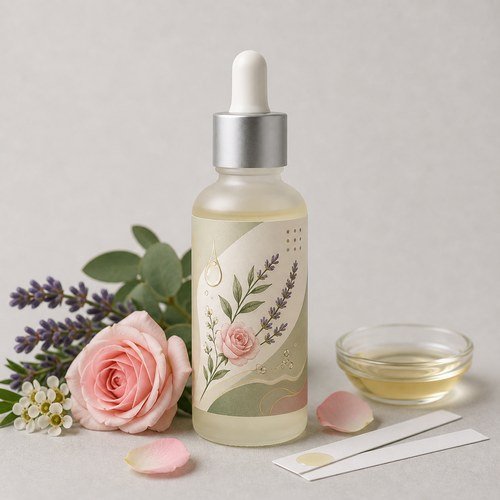
It is formulated by scientifically blending a lot of ingredients to meet different skincare needs. This significantly reduces your time and expense involved in trial and error.
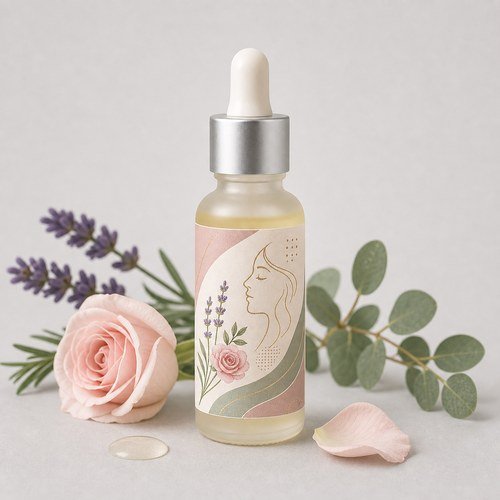
Carefully blended in precise proportions of essential oils and plant-based carrier oils with an optimised concentration, it is suitable for direct application to the face.
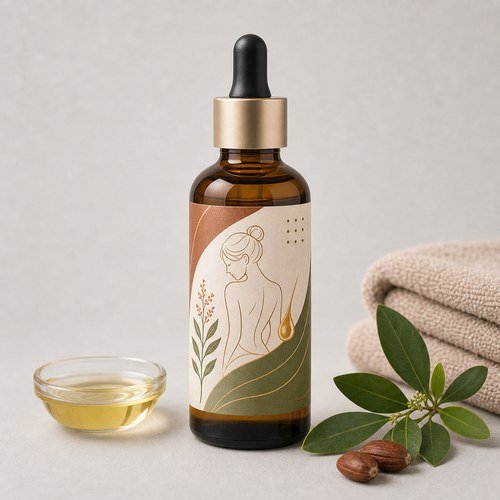
This is designed for body care and massage with excellent scalability and controls the concentration within the safe range which allows it to be used directly.
Multiple Skin Care Benefits
WJOIL offers a comprehensive range of skincare essential oils, providing professional, natural botanical solutions for a wide variety of skincare needs. Our essential oils for skin are widely used in a range of skincare applications, including acne treatment and skin purification, soothing and repair, anti-ageing and brightening, oil control, sensitive skin care, dry skin repair and post-sun care.
At the same time, WJOIL essential oils for skins have a fast penetration speed and a light texture. They can give you a refreshing and non-greasy usage experience and are compatible with many skincare formulation systems. You can add them as functional raw materials to serums, massage oils, creams, shampoos and other products.
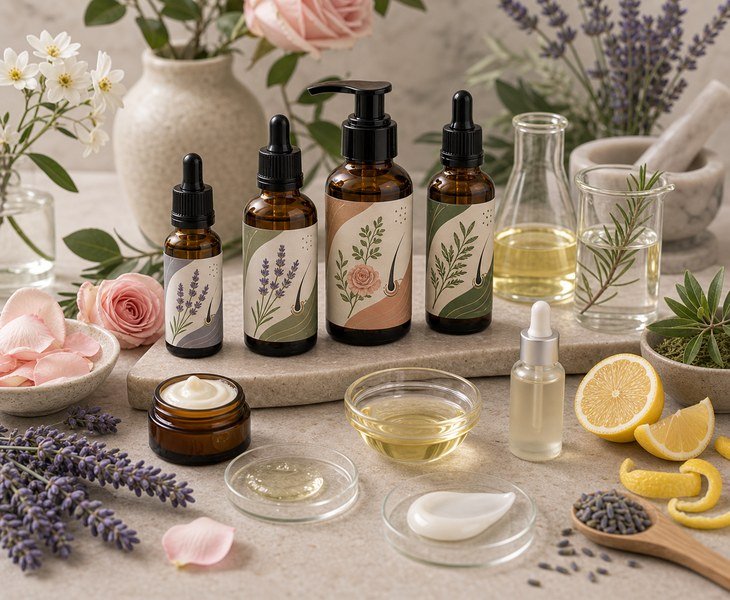
Safe and Reliable
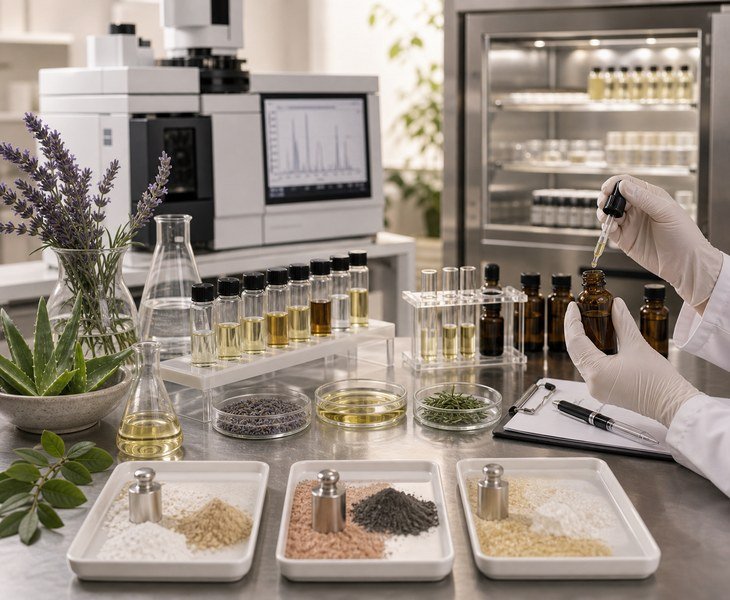
Our essential oils for skin specifically selects raw materials for skin care, strictly controls irritants, photosensitizing components, and allergenic substances. At the same time, their overall pH system will be as close as possible to the human skin environment. All of our skincare essential oils undergo pesticide residue, heavy metal, and related quality tests. We will conduct GC-MS component detection and stability management for each batch to ensure your essential oils’ purity, odor, and key components are consistent.
For customized projects, WJOIL can also cooperate in conducting skin irritation tests, sensitization evaluations, and toxicological support to help you lower product development and market compliance risks. We can enable you to make skincare products more stable and reassuring when entering the global markets.
Why Choose WJOIL as Your Partner for Skincare Essential Oils?
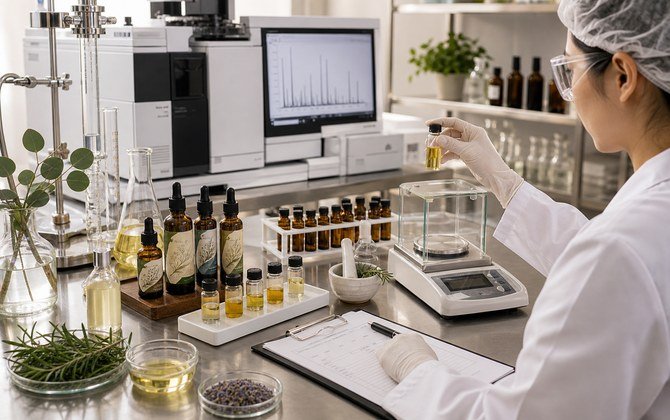
- We have established a strict quality control system. Each batch of products undergoes purity, key component tests, GC-MS component analysis and so on.
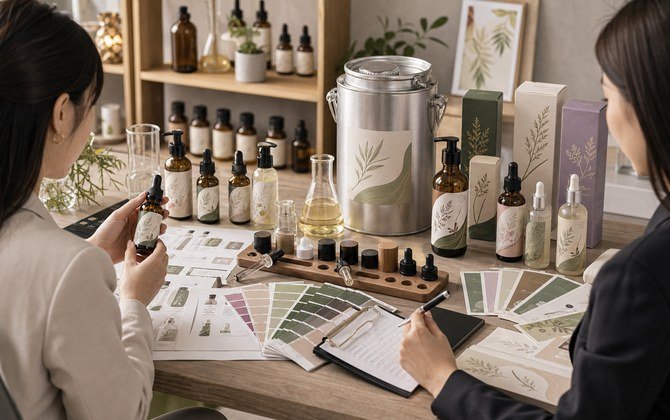
- WJOIL offers one-stop customization services, including formula adjustments, optimization of active ingredients, deodorization treatment, and customized packaging.
- We manage in accordance with international cosmetic standards and can provide complete technical and compliance documents such as COAs, MSDS.
- Whether you require ready-made skincare essential oils in small bottles or in large drums, we can provide corresponding specifications and ensure consistent production and a reliable supply.
Ordinary fragrance essential oils are mainly used for diffusing fragrance, creating aroma, or in aromatherapy scenarios, emphasizing the smell experience. While essential oils for skin are specifically developed for skincare products, which must comply with stricter cosmetic standards and can be used in products such as creams, essences, body lotions, massage oils that come into direct contact with the skin.
Therefore, compared to ordinary fragrance essential oils, essential oils for skin must undergo testing for pesticide residues, heavy metals, microorganisms and other relevant factors, and stricter controls must be applied to irritants, photosensitising agents and substances with a high allergenic risk.
Different essential oils are suitable for different skincare directions. There is no single “best essential oil”. What’s more important is whether it suits your product positioning and target skin type.
With high market acceptance and excellent formulation compatibility, tea tree, lavender and frankincense are popular essential oils widely used in the skincare industry and are common ingredients for major brands and manufacturers as well.
During the actual development process, we can also give you a more suitable essential oils formulation plan for skin based on your product direction.
The OEM customization cycle usually depends on your products’ complexity, testing requirements and packaging customization content.
Standard projects typically begin with sample development and formulation adjustments, followed by stability testing, fragrance confirmation and the relevant documentation preparation. If your essential oil for skin involves specific functional claims, bespoke fragrances or export regulatory requirements, the development cycle will be extended accordingly.
So it is recommended for you to clearly define the target market, product positioning, and functional requirements in advance, which can more effectively shorten the overall development cycle.
The shelf life of different types of essential oils for the skin varies. This is usually related to the plant source, active ingredients and its oxidative stability.
Generally speaking, citrus essential oils for skin are more easy to oxidate due to their natural active ingredients, and it is recommended for you to use them within 6-12 months. While most woody, resinous, or herbal essential oils for skin can typically be preserved for about 2-3 years under reasonable storage conditions.
It is usually suggested for you to store them in a dark place, sealed, and at a low temperature to reduce the impact from air contact and oxidation on the fragrance, color, and active ingredients’ stability.
How Essential Oils for Skin Are Produced?
Raw Material
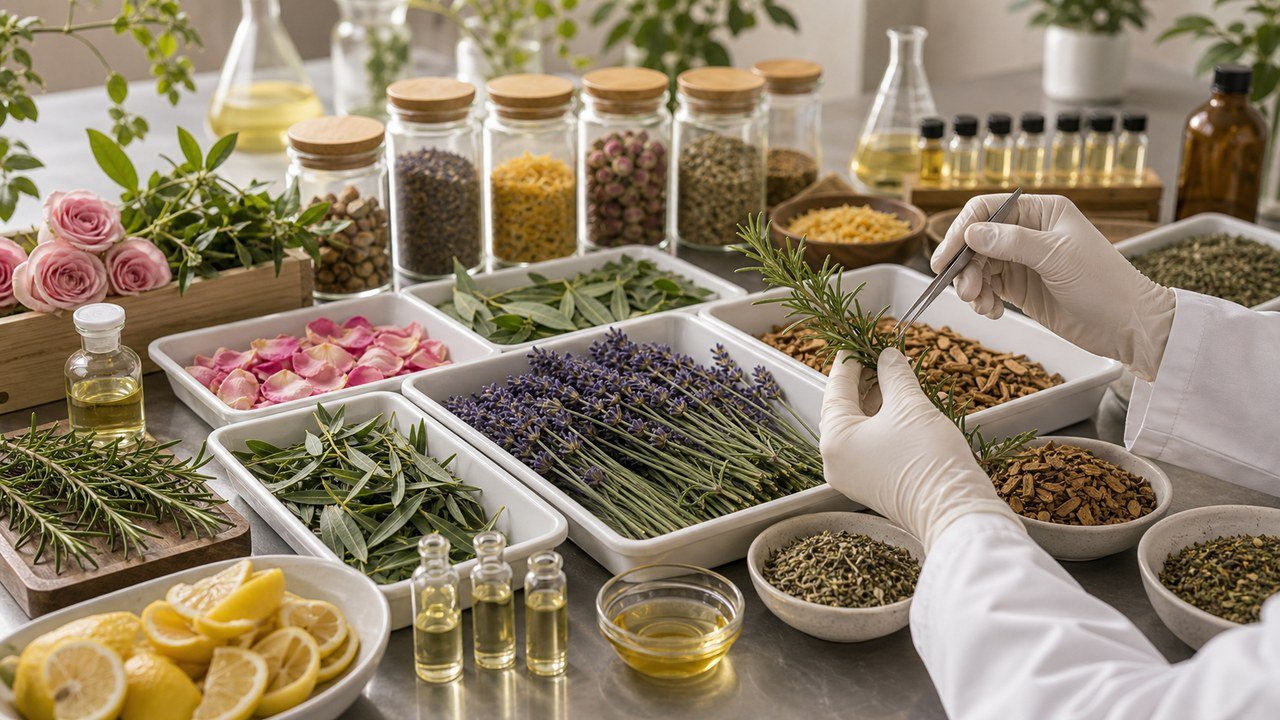
We prioritize using natural raw materials from high-quality plant-growing areas and fix procurement systems from these areas. This can avoid fluctuations in ingredients due to changes in climate, soil, and harvest seasons.
At the same time, all raw materials are subject to unified acceptance standards. We screen plant-based raw materials for purity, odour profile and key activity indicators to ensure product stability right from the source.
Extraction
Compared to high-temperature rapid extraction processes, our low-temperature process is better able to preserve the natural aromatic active compounds in plants and it can minimize damage to heat-sensitive components at the same time. Common extraction methods include low-temperature distillation or cold pressing and the specific method chosen depends on each plant’s characteristics.
Homogenization (For Compound Formulas)
We standardize the formula’s homogenization treatment according to different product directions. It allows different ingredients to blend more evenly and consistently to give you a uniform essential oils for skin, avoiding problems such as uneven local concentrations or excessive differences in individual bottles.
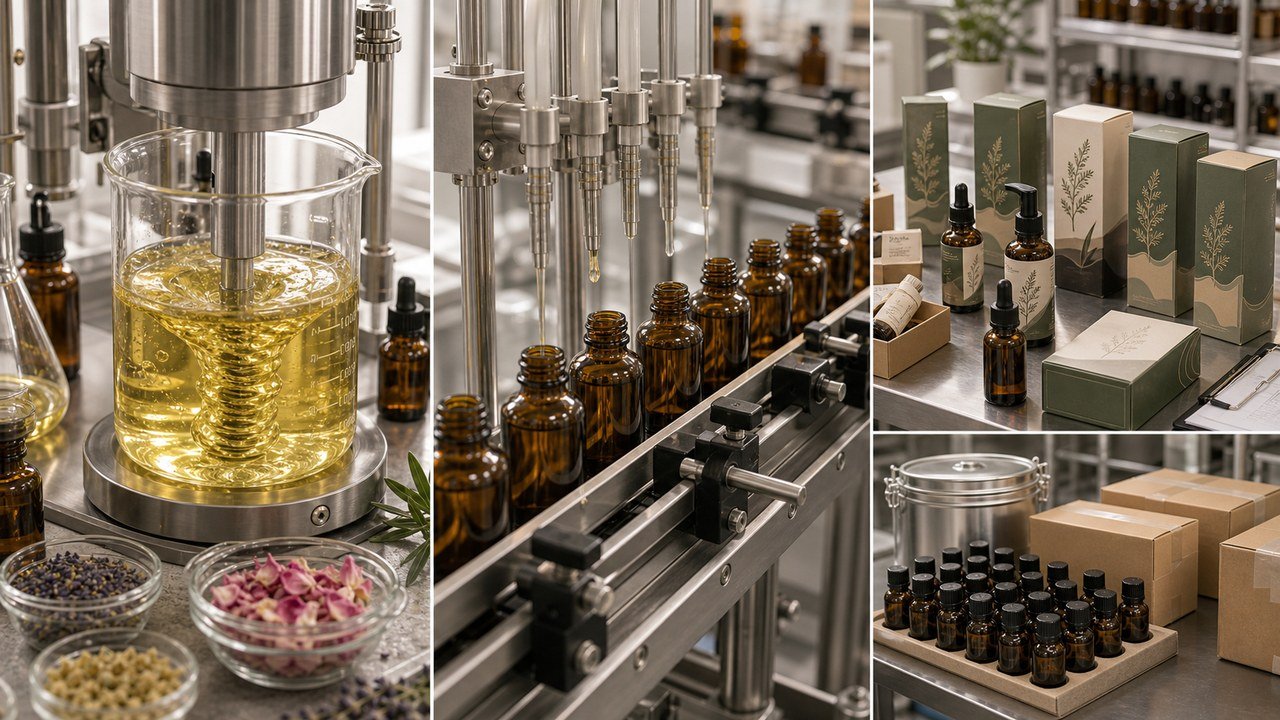
Filling and Packaging
We adopt hermetic filling, light-proof packaging and airtight storage to minimise prolonged exposure of the essential oils to air and reduce the oxidation.
Common Raw Materials of Skincare Essential Oils
Lemon
With fresh and natural aroma and skin brightening effects, lemon essential oil for skin has a high application rate in the anti-aging skincare market. It is rich in natural skin brightening active ingredients, which can help to improve dark skin tone, acne marks and rough skin texture caused by oil accumulation. At the same time, lemon also has a certain cleansing ability.
But it is necessary to note that lemon essential oils usually have a certain photosensitivity risk, so in skincare product development, they are usually used at low concentrations and the relevant usage recommendations are clearly indicated.
Lavender
Lavender is one of the most widely used and most accepted plant essential oils in the skincare industry. Its main active ingredients include linalool and linalyl acetate with the content typically reaching over 60%.
In skincare product development, lavender essential oils for skin is often used for soothing and repairing, moisturizing care, and for sensitive skin. Its overall skin sensation is relatively mild, which can help alleviate redness and dryness problems. It also has certain natural moisturizing capabilities and does not cause excessive oiliness on the skin.
Happy Sage
Happy sage essential oil for skin contains natural active ingredients such as linalyl acetate and geraniol. And it is a commonly used essential oil for controlling excessive oil secretion, which can improve excessive oil secretion, enlarged pores, and rough skin texture, and is therefore often used in oily skin care and balanced skincare products. Meanwhile, it can also realize improving fine lines and sagging in mature skin, suitable for light anti-aging product systems.
Rose
Rose essential oil for skin is one of the most representative plant essential oils in the high-end skincare market. Its main active ingredients include citronellol and geraniol. It can give you a high-level aroma and also has strong moisturizing and antioxidant capability. Due to its rich in natural antioxidant components , it is often used in mature skin care, brightening essences, and high-end anti-aging products, helping to improve dryness, dullness, and fine lines.
Cinnamon
The cinnamon essential oil for skin contains key antioxidant components such as cinnamic acid which are also regarded as a potent anti-inflammatory agent. This may alleviate symptoms of inflammatory acne such as cysts, nodules and pustules.
However, cinnamon essential oil is quite irritating, so it is usually recommended to use only very low concentrations (less than 0.1%) in skincare products and its application needs to be combined with safety assessment.
Tea Tree
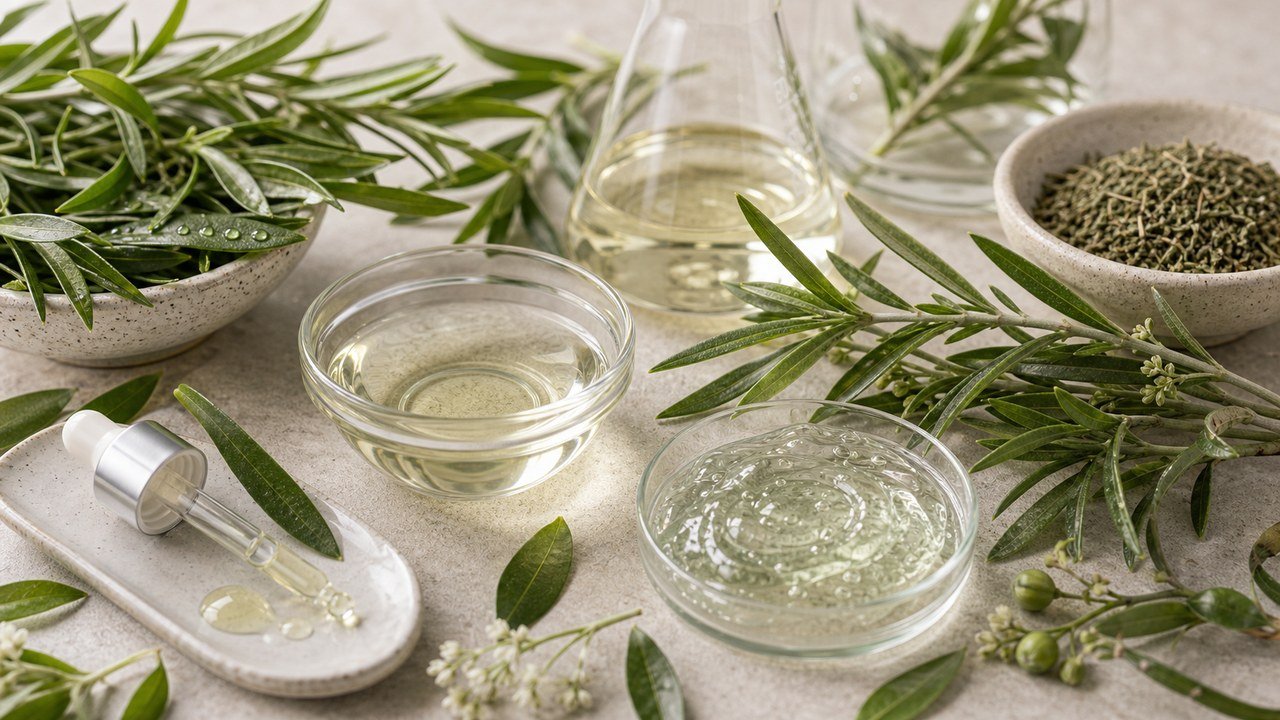
Tea tree essential oil is one of the most common plant essential oil for skin in acne care and cleansing products. Its core active ingredient, terpinen-4-ol, usually accounts for more than 30%, so it has strong cleansing and oil-regulating capabilities. It can help improve skin problems caused by excessive oil secretion and also relieve some mild skin discomfort and redness.
Factors Affecting the Skincare Essential Oils’ Efficacy
Safety Control the Ingredients
Some essential oils ingredients naturally contain strong photosensitivity or high sensitization risk components. If they are directly used in facial products without treatment, they may cause redness, stinging, skin discomfort, and even post-sun reactions. Therefore, special skin care essential oils usually strictly control photosensitive components, highly irritating aromatic components, and sensitization risk substances.
Logical Formulas Combination
The skin care formula is not stacking effective ingredients. There are synergistic effects (1+1>2) and antagonistic effects (1+1<2) between the complex chemical components, as well as between essential oils and carrier oils.
So when your essential oils for skin have conflicting efficacy directions or the ratio is unbalanced, it will not only weaken the overall skin care effect and also may lead to irritation.
Storage
Essential oils for skin are natural plant active raw materials and are sensitive to light, high temperature, and air contact. If the storage conditions are improper, it is easy to accelerate oxidation, resulting in loss of active ingredients, change in aroma, and abnormal skin sensation.
It is important for you to control shading, sealing, and temperature in the product development and subsequent storage process.
Dilution Ratio
Pure essential oils usually need to be diluted reasonably with base oils or formula systems. If the concentration is too high, it may increase irritation and even cause skin discomfort. But if the concentration is too low, it may not achieve the expected skin care performance. Therefore, different essential oils for skin have different dilution ratios and base oil pairing schemes.
Raw Material Grade and Active Ingredient Content
The essential oils for skin have strict requirements for active ingredients. If the active ingredients in the raw materials are insufficient or low-quality components such as mineral oil and synthetic fragrances are added, this will diminish the skincare benefits and also compromise the consumer experience.