Your Reliable Peppermint Essential Oil Supplier
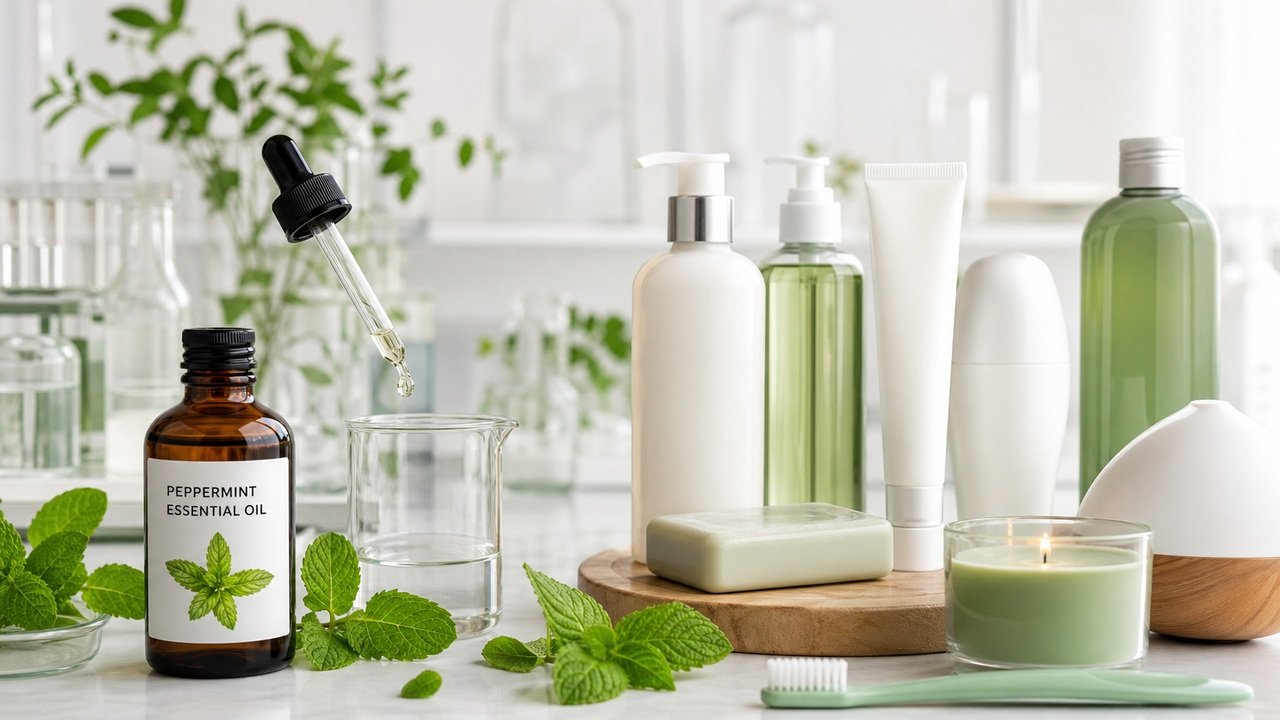
Peppermint essential oil is a high-concentration natural plant essential oil extracted from the high-quality peppermint leaves. Its rich natural menthol content provides you a distinct cooling sensation and fresh aroma. Meanwhile, it can boost mental alertness, relieve muscle tension and alleviate nasal congestion as well. So it is widely used in skincare, scalp care, oral care, massage treatments, aromatherapy, functional cleansing products and health care products.
WJOIL peppermint essential oil adheres to 100% plant extraction and is produced in strict accordance with cosmetic and functional care raw material standards. In addition, we support providing GC-MS test reports and can offer different packaging specifications and OEM/ODM customization services according to your needs.
Whether you need small sample tests, medium sample tests, or large-scale raw material purchases and OEM/ODM customization, we can give you more suitable peppermint essential oil solutions based on your product positioning, sales market and regulatory requirements.
Peppermint Essential Oil Product by Features
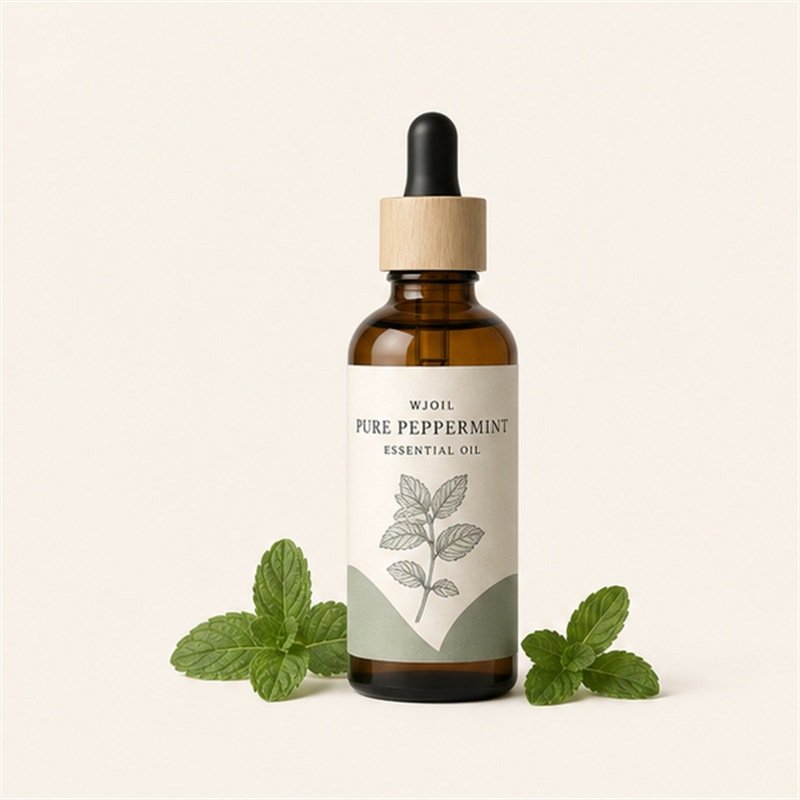
With stable menthol content and pure aroma, support small sample, medium and large barrel packaging, convenient for you to flexibly combine with your existing formula system.
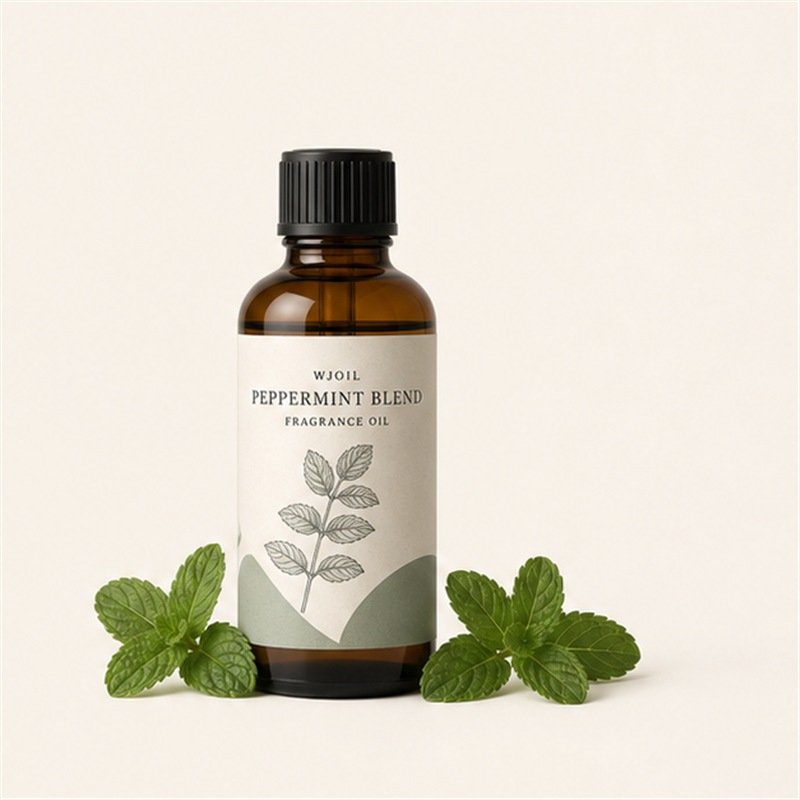
Provide many mature commercial blends designed to deliver various benefits, including oil control, cooling and soothing, and invigoration and relaxation.
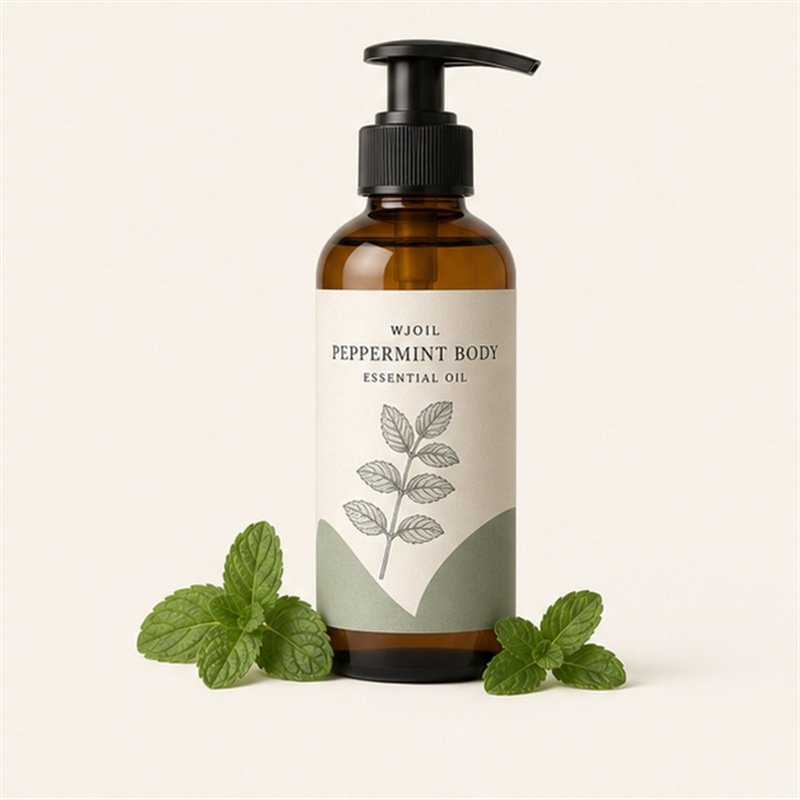
Dilute the mint essential oil with plant base oil to enable a concentration that meets skin use safety standards. It can be directly used in massage oil or body care products.
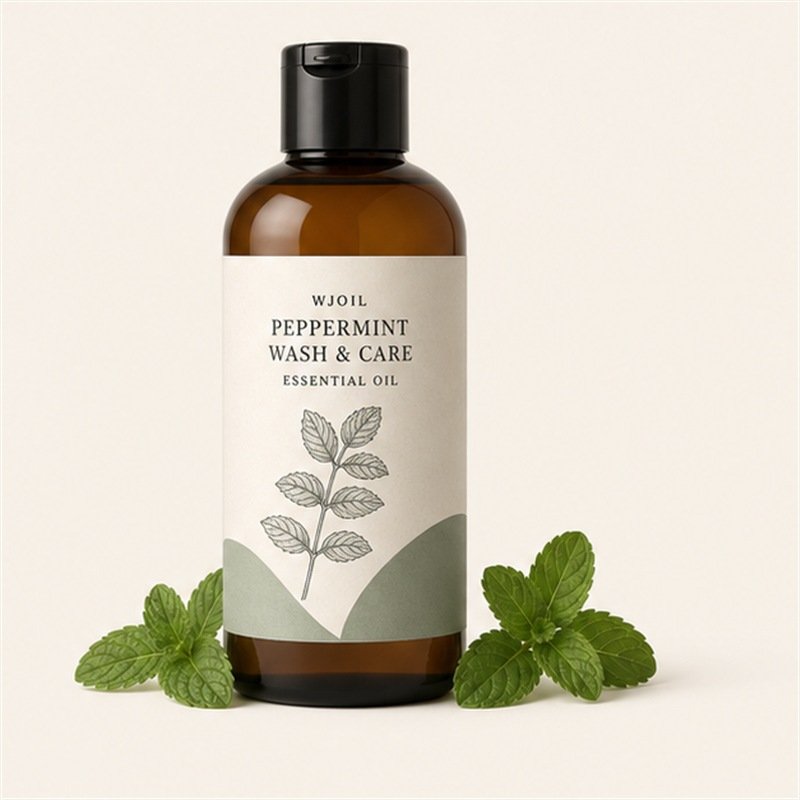
Formulated specifically for shampoos, shower gels, hand washes and oral care products, making it easier for you to control ingredient ratios and ideal for large-scale production on assembly lines.
High Purity
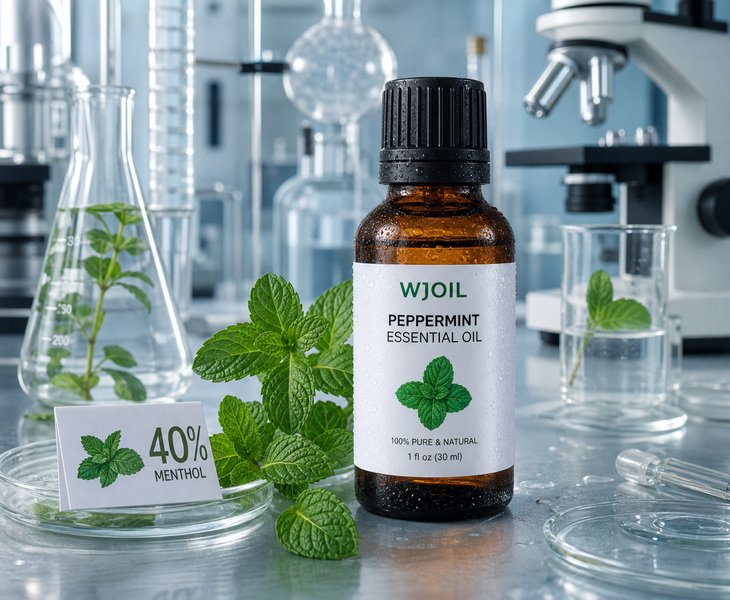
WJOIL peppermint essential oil is 100% extracted from mint and is produced strictly in accordance with cosmetic-grade and functional care raw material standards. Compared with conventional peppermint essential oils on the market, our product has higher core active ingredients with a menthol content over 40%. It has more sufficient effective components for cooling effects.
This means you can achieve the desired cooling and soothing effects without increasing the dosage in the formula. And all component indicators in peppermint essential oils can be detected through GC-MS and provide complete data reports.
Good Compatibility
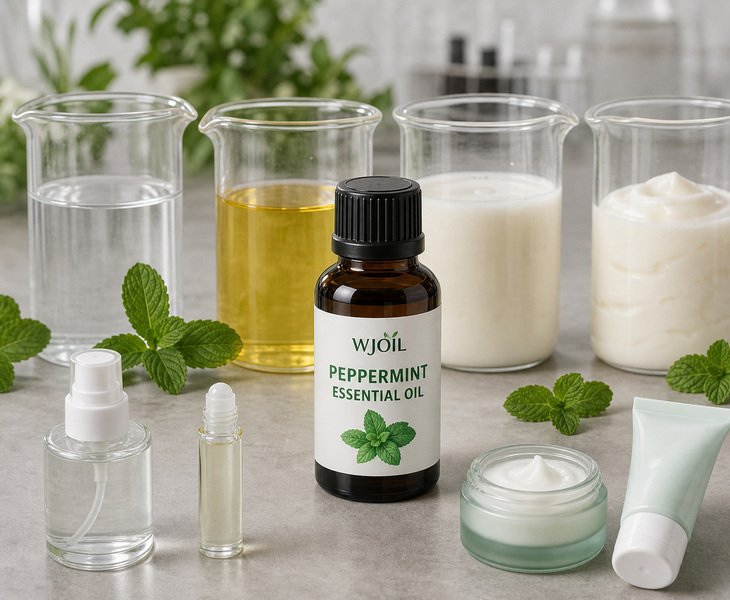
Peppermint essential oil has excellent compatibility in commercial formulations and can be adapted to many different product systems and production processes. Whether it is a water-based system, an oil-based system, an emulsion system or a cream system, you can flexibly apply according to product directions.
At the same time, WJOIL will optimize the peppermint essential oils’ aroma intensity, cooling performance and formulation stability based on different applications. When using it, you don’t need to repeatedly adjust the formula, and can quickly achieve the product functions and aromas’ standardization. It can lower your development time and improve production efficiency.
Why Choose WJOIL as Your Partner for Peppermint Essential Oil?
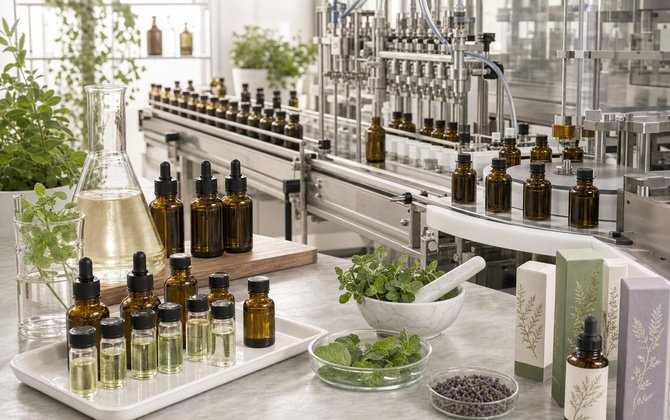
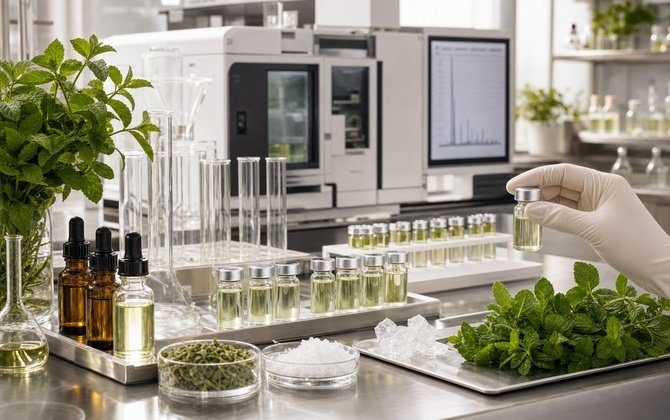
- We ensure that each batch of peppermint essential oil remains consistent menthol content with compositional variations less than 3%, and control variations in aroma and cooling sensation within 5%.
- Our peppermint essential oils have a complete international certification system including ISO, GMP, USDA Organic, IFRA and CE standards. It can meet the regulatory and entry requirements from different markets.
- We support from sample testing, small batch trial orders, to large-scale raw material procurement and long-term framework supply. We can flexibly coordinate the supply rhythm according to your needs.
- WJOIL has rich OEM/ODM customization experience and can provide a one-stop solution from raw materials, formulas, scents to packaging based on your brand positioning and market demands.
Applications of Peppermint Essential Oil
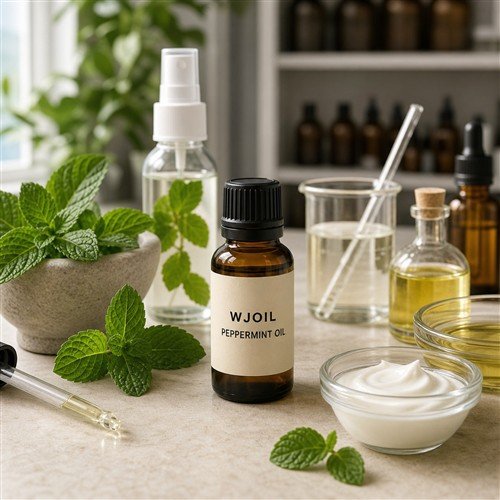
The peppermint essential oil has extremely high odor recognition and market acceptance. It is widely used in the development of fragrance oils, fragrance sprays and creams. Meanwhile, it is also very suitable for blending to develop functional compound essential oils or massage oils.
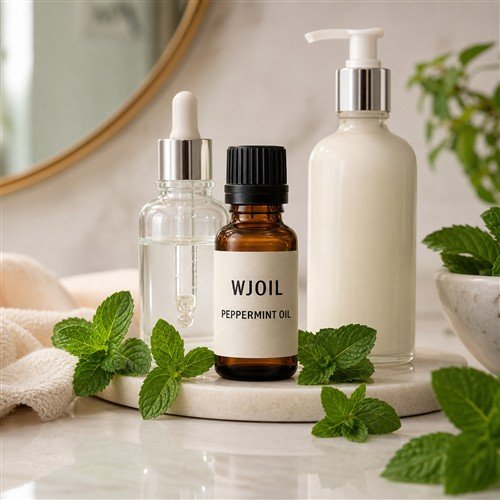
Peppermint essential oil is commonly used in the skincare market for oil control and revitalising the skin. It can provide a refreshing experience which can enhance your products’ skin sensation, so it is often used in skincare products such as essential oils, serums and lotions.
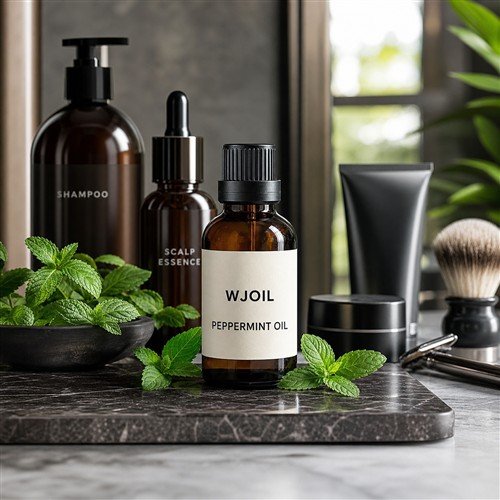
Its immediate cooling sensation can help consumers quickly feel intuitive perceptions such as hair cleaning, oil control and oil-free feeling. At the same time, it is rich in ingredients that nourish the hair and is adopted in shampoos, scalp essences, hair care products and men’s care products.
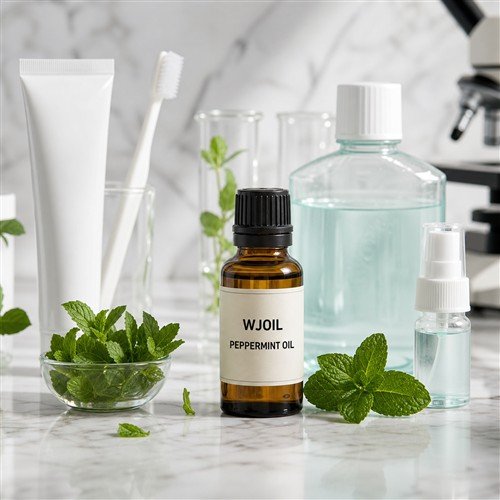
Peppermint essential oil is one of the most widely used natural plant-based ingredients in the global oral care market. It is widely found in toothpaste, mouthwash, and breath sprays, not only enhancing the freshness but also improving the overall user experience.
Peppermint essential oil is essentially a natural plant extract. Natural plant raw materials are influenced by factors such as climate, soil, sunlight, rainfall, harvest time, and the environment of different production areas. So slight differences in aroma between different batches are a normal phenomenon.
We control the key active components and overall aroma by fixing the raw material production areas, standardizing the harvest process, and conducting GC-MS component detection. This can give you highly consistent peppermint essential oils from different batches.
High-quality peppermint essential oil usually has a more highly pure aroma and transparency. The oil color is naturally clear and transparent without obvious turbidity, sedimentation or stratification. At the same time, it can release the cooling sensation more evenly and there will be no obvious pungent or chemical sensation in the aftertaste.
Our raw materials undergo multiple purification and filtration processes, and are also analyzed for key active ingredients through GC-MS testing. We can provide you with high quality peppermint essential oils which enables you to develop skincare, haircare, oral care and functional products with greater confidence and consistency.
Highly pure peppermint essential oil is generally not recommended for you to direct contact with the skin, especially on the face, around the eyes, and sensitive skin areas.
In practical commercial applications, our peppermint essential oil is more often used as a functional plant ingredient. You need to properly dilute and compound it according to different product types.
For example, in directions such as oil control, scalp care, post-sun relief, and body care, it is usually combined with base oils or soothing plant ingredients to reduce irritation and optimize the overall skin sensation.
If you plan to develop skincare products, we can also help you to adjust the essential oil concentration, control the stimulating components, and provide more suitable cosmetic grade formulation solutions for skin care based on different market regulations and target consumer groups.
The natural peppermint essential oil may contain a small amount of natural allergenic components, so the regular high-concentration version is usually not suggested for direct use on highly sensitive skin or products for mothers and infants.
It is common to develop more gentle functional products by reducing the proportion of menthol, optimizing the compound structure, and controlling the overall irritation.
For the sensitive skin, children’s care, and mother-and-infant markets, we can give you optimized formula solutions in a low-irritation direction, and provide corresponding limit recommendations, warning instructions and related testing support based on national markets.
Compared to citrus essential oils, peppermint essential oil has relatively lower phototoxic risk. However, in high addition ratios, you still need to pay attention to the use safety in daytime skincare products. Especially in facial care, post-sun protection care, and sensitive skin products, it is necessary to control the additional concentration to avoid excessive stimulation that may affect your consumer’s usage experience.
If the raw materials have a high moisture content, have not been sufficiently purified, or are incompatible with the existing formulation system, this may lead to separation, cloudiness or reduced stability in real productions. Moreover, the peppermint essential oil’s dispersion behaviour in a product is influenced by factors such as the floral system, the surfactant system and temperature.
It is recommended for you to let the raw materials stand for 24 hours after storage before they are put into production. At the same time, you can combine suitable emulsifiers or additives with the product system, which can improve the problem of oil layering and turbidity as well.
If you encounter formulation compatibility issues during actual production, we can also assist in providing detailed suggestions to help you complete the product stability adjustment more quickly.
The Core Component of Peppermint Essential Oil
Menthol
Menthol is one of the most crucial functional active ingredients in peppermint essential oil. It is also an important indicator that determines the cool sensation, the refreshing effect, and the overall odor profile.
When menthol comes into contact with the skin or is inhaled, it stimulates the body’s cold receptors, resulting in a noticeable cooling experience. In order to balance this “cold sensation stimulation”, the body will increase local blood circulation. Therefore, it can give you a relaxation sense accompanied by a slight warm sensation.
Menthone
Menthone is an important component in forming the mint natural aroma profile. Compared to the more direct cooling stimulation of menthol, menthone can make the overall odor softer, more natural, and enhance your product’s aroma’s integrity and sophistication.
If the proportion of menthone fluctuates greatly, it can easily cause problems such as excessive medicinal sensation, stuffy aroma, or sharp cooling sensation in the finished product.
So it is also important for you to adjust the ratio of menthol to menthone according to the end use during product development.
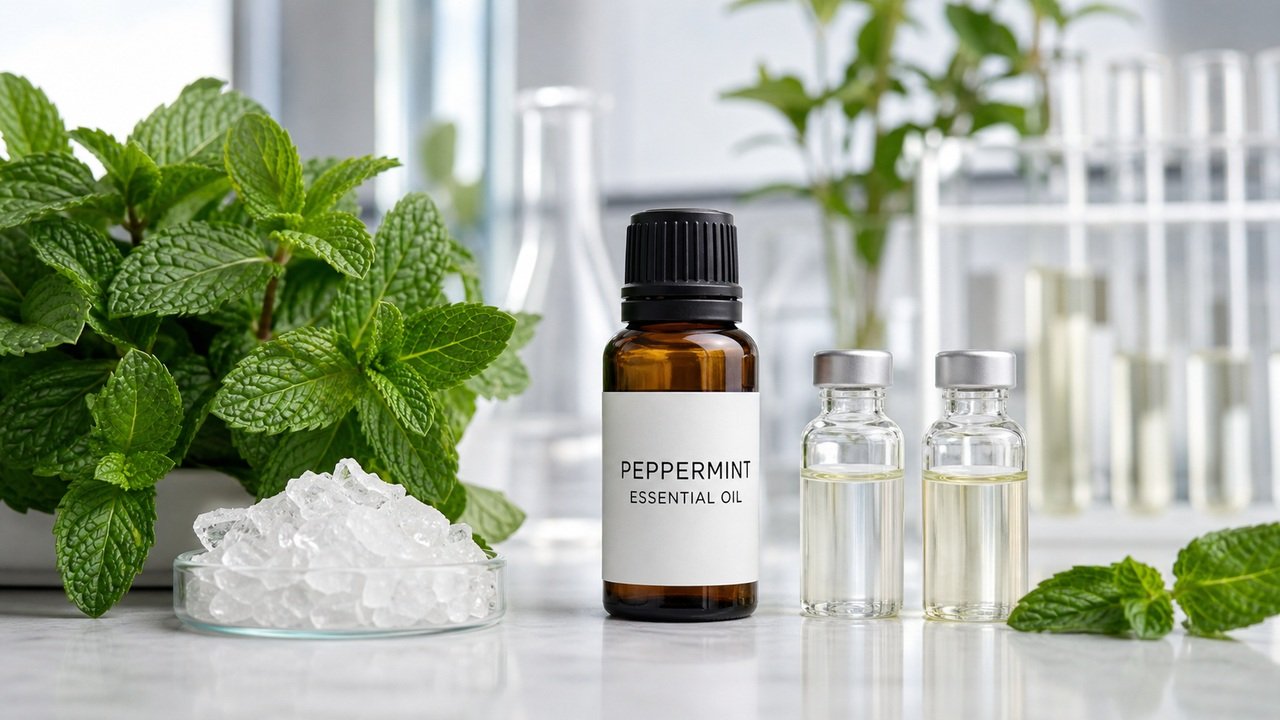
How to Produce Peppermint Essential Oil?
Select Raw Materials
The peppermint essential oils’ quality is largely determined by the quality of the plant raw materials themselves.
We will prioritize choosing natural peppermint plants from high-quality production areas, and use mature peppermint leaves and the above-ground parts of the plants as the main raw materials. This can offer you a more stable overall aroma structure and natural active ingredients. At the same time, all raw materials support source traceability, convenient for you to achieve long-term supply chain management and brand compliance construction.
Extract
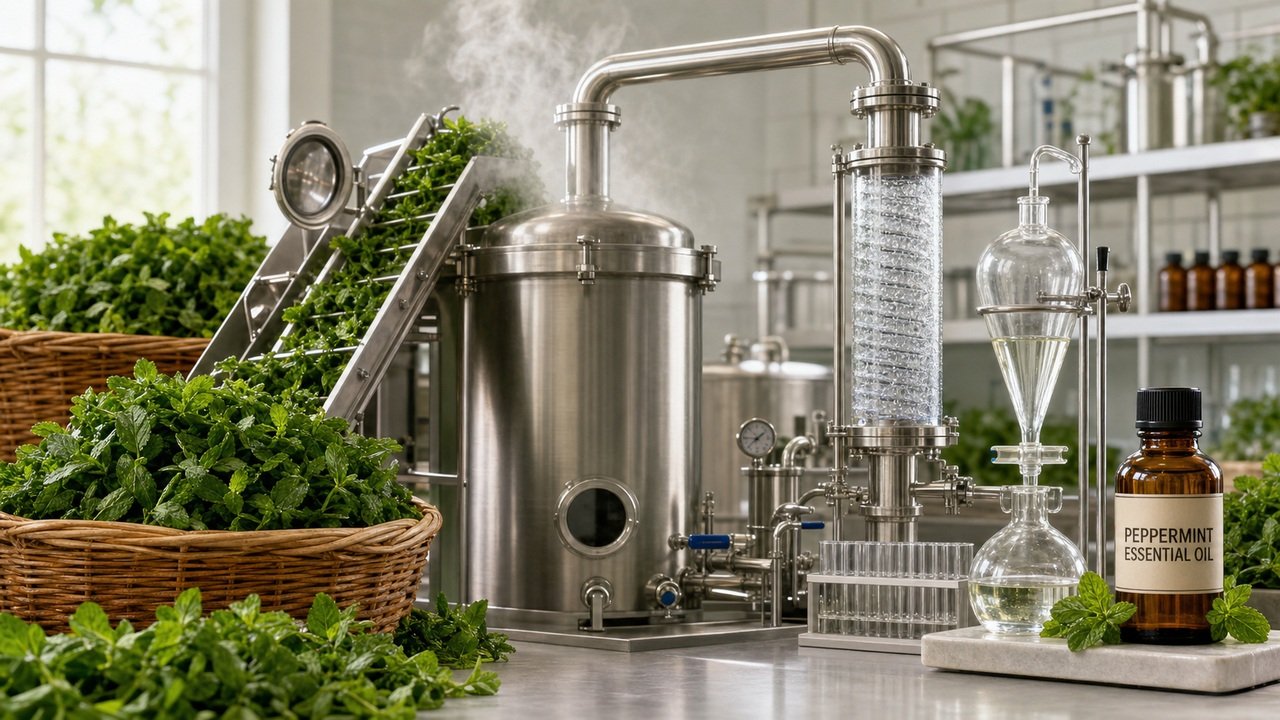
The current mainstream extraction method for peppermint essential oil in the industry is steam distillation. The steam passes through the mint plant raw materials, releasing the natural aromatic molecules and active ingredients. Then, through the condensation system the oil and water are separated and finally obtain a high-concentration peppermint essential oil.
As no chemical solvents are used throughout the extraction process, we can guarantee the resulting essential oil is pure and free from residues and better meet the safety requirements from cosmetics, personal care and functional skincare products.
Purification
Our peppermint essential oils usually need to undergo filtration, settling, and purification processes to remove impurities, water, and unstable components.
This process can effectively avoid problems such as oxidation, turbidity, stratification, and odor changes that may occur during later storage for you.
Testing
We will conduct a comprehensive GC-MS analysis for each batch of peppermint essential oil and issue the corresponding test report. The report will clearly indicate the content of core active ingredients such as menthol and menthone.
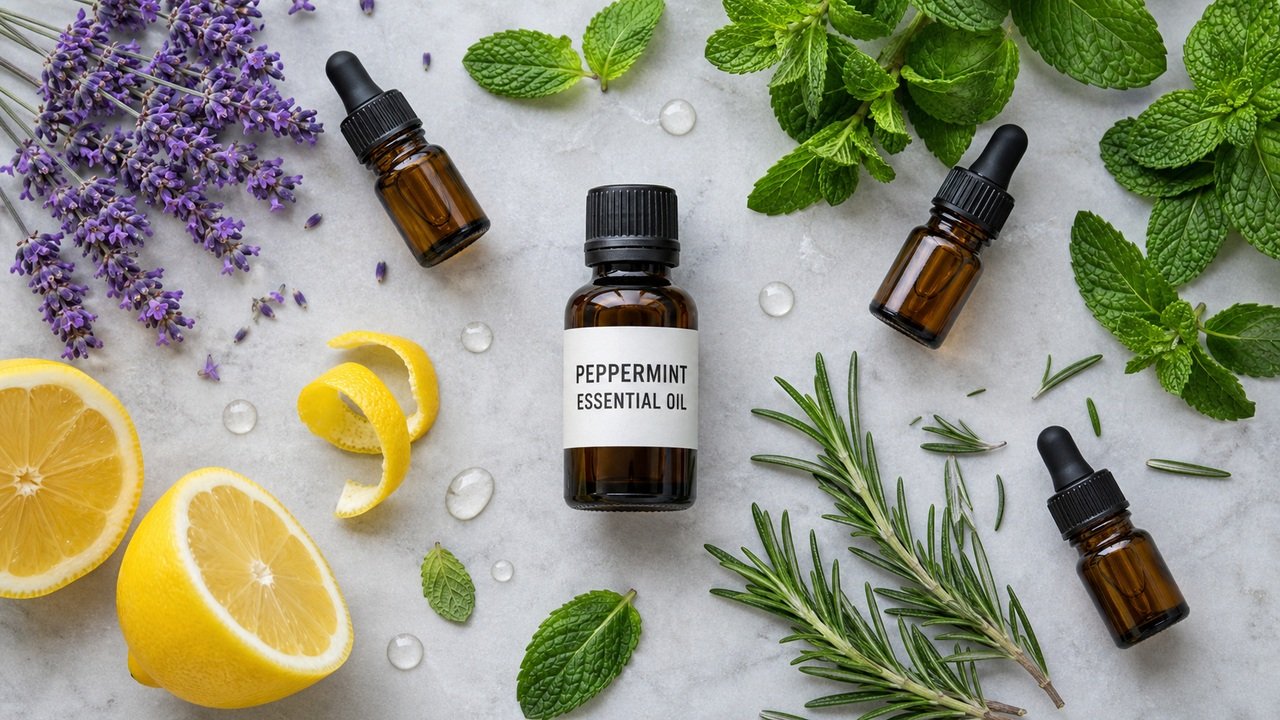
Common Blending Combinations of Peppermint Essential Oils
Lavender + Peppermint Essential Oil
This is the combination with the highest market acceptance and the most mature production process. Lavender has a gentle and soothing aroma characteristic, which can effectively neutralize the overly strong cooling stimulation from peppermint, making your products’ aroma layer more balanced and natural. And this can retain the refreshing and invigorating sensation of mint while also increasing its soothing and relaxing effect.
Lemon+ Peppermint Essential Oil
The lemon fruit aroma is fresh and bright, and it blends well with the peppermints’ cooling and herbal scent. The overall smell will be more refreshing, transparent, and have a very high recognition degree for you. It mainly focuses on two directions: refreshing the skin and cleaning the skin, and creating a fresh atmosphere, which is mostly used in hair care products, oil for controlling oil, car interior fragrance, and space diffusion essential oils.
In addition, their combination is stable and has a flexible addition ratio, allowing you to extend product development. However, it should be noted that some citrus raw materials have certain photosensitive risks, so please be careful to control the addition ratio in facial care and daytime skincare products.
Rosemary+ Peppermint Essential Oil
Rosemary has strong herbal characteristics and functional properties. When combined with peppermint essential oil, the overall smell becomes more refreshing and layered, and the cooling sensation lasts longer.
This combination is widely used in sports hygiene products, scalp care essential oils, vitality and skin-awakening skincare products, and sports recovery products.
Suggestions for adding Peppermint Essential Oil
Since peppermint essential oil has relatively strong cooling and stimulating properties, it is usually not recommended for you to use it in high proportions in combination with highly active acids or highly concentrated spicy essential oils.
If too many stimulating components are added together, it is likely to further amplify the risk of skin irritation, resulting in redness, stinging, or skin discomfort. Different products usually have different requirements for the additional proportion.
- For example, in skin care lotion products, it is generally recommended to control the additional proportion within 0.5% – 1.5%.
- For soap-based products, it can generally be controlled within 2% – 3%.
- For oral care products, it is usually recommended to control the additional proportion within 0.3% – 0.6%.
- For scented, diffusing, and fragrance candle products, since they do not directly contact the skin, there is usually a higher usage space.
The above are more industry-wide reference ranges. During actual development, you still need to adjust based on the overall formula system, target market regulations, and consumer usage habits. For new product development projects, we usually recommend that you conduct small sample tests, stability tests, and skin sensation evaluations first, and then gradually determine the final commercial addition proportion. This reduces the risks associated with subsequent mass production, and helps you maintain more consistent control over the final product quality and the consumer experience.