
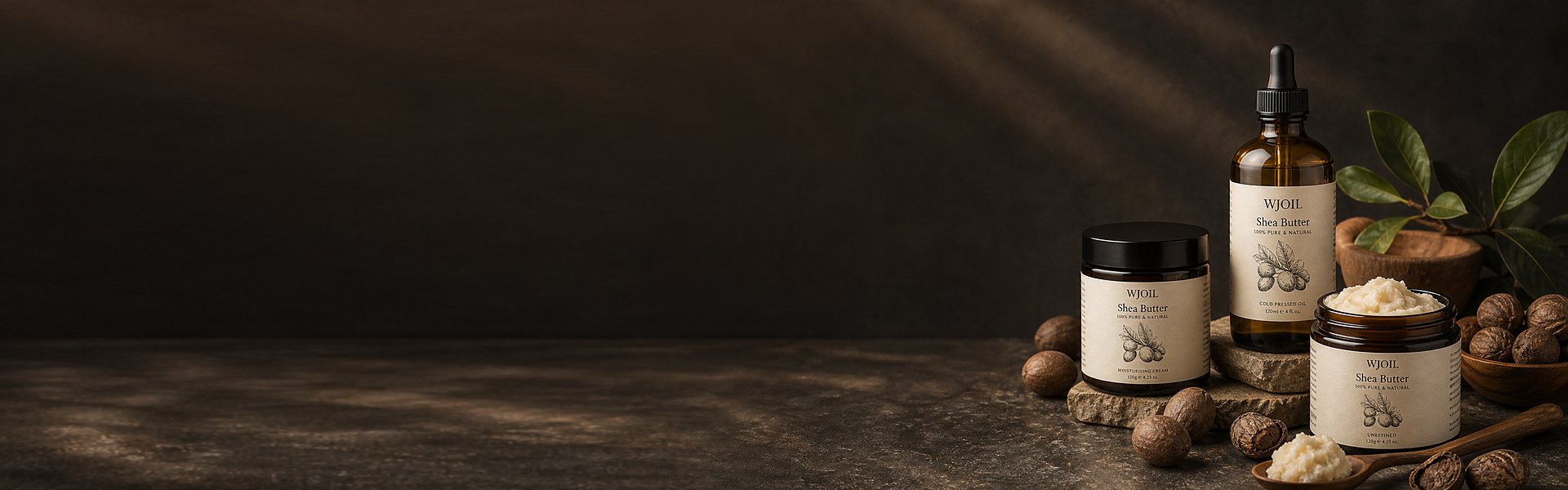
WJOIL—Your Reliable Shea Butter Manufacturer in China
The Shea Butter by WJOIL is naturally rich in unsaponifiables, so it stays nourishing and somehow also anti-inflammatory in a pretty steady way. It also has strong emulsifying properties, a delicate texture, and you can really use it all year round.
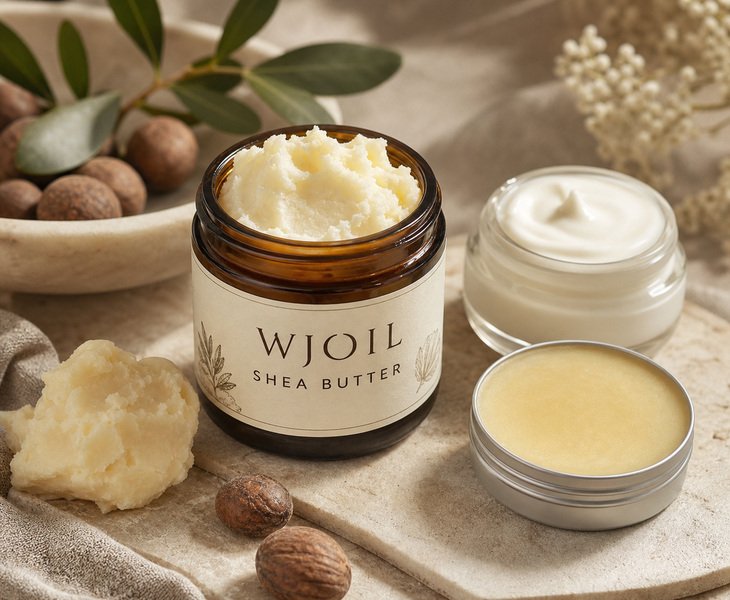
You can apply it in a face cream or lip balm, and in general, it mixes well with all different formulas.
The raw materials of WJOIL are directly sourced from the original production areas in West Africa. We have established a sustainable agreement with the local community. For each batch of goods, there is an SGS or third-party inspection report to ensure that the products you receive are 100% pure natural.
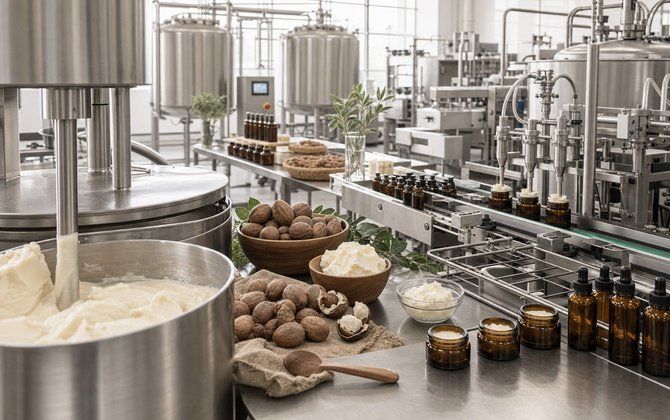
We have a fully automated production line that can accommodate your customization of various specifications and formulas. You can come for a free consultation right now. We are available 24/7 to reply to you.
Products By Types
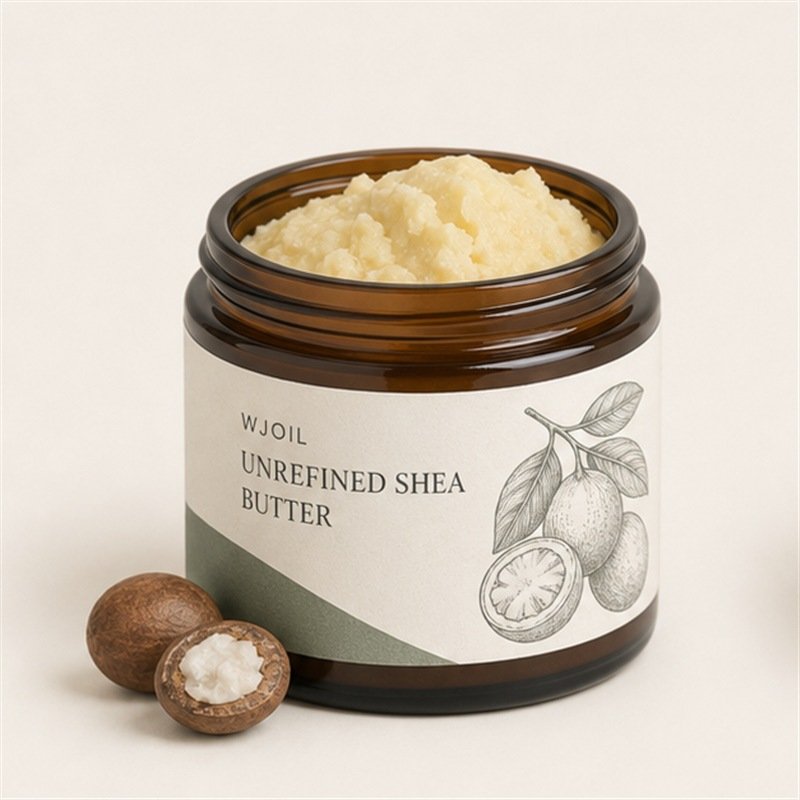
Raw shea butter comes with a naturally yellowish hue and a strong aroma, so if you’re after something natural and barely touched by processing, then pick this one.
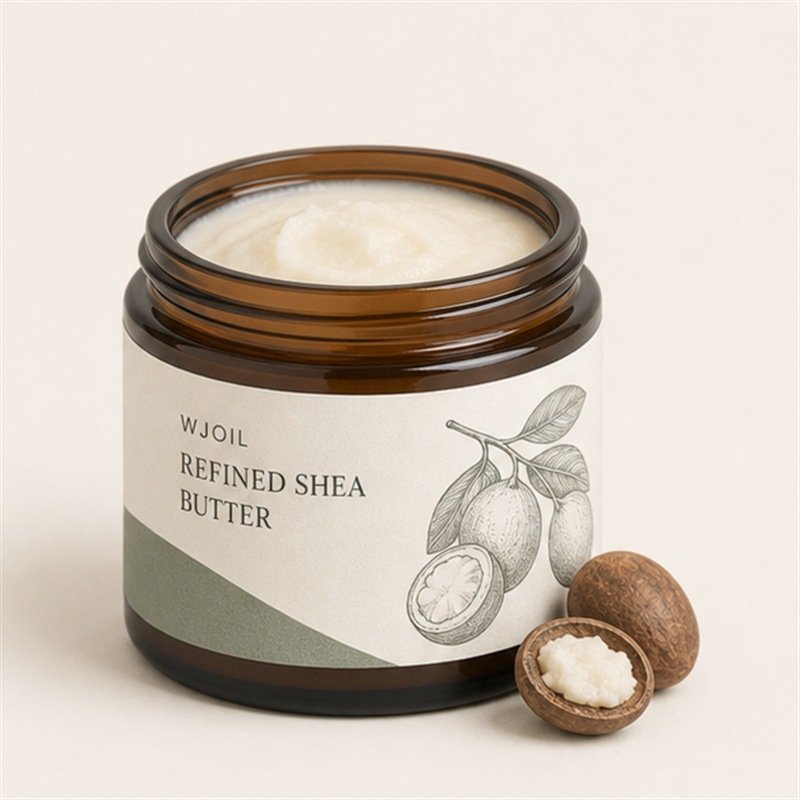
It has been through a bit more purification, and it stays really good at moisturizing; color and odor are less noticeable. People often add it to everyday skin care formulas.
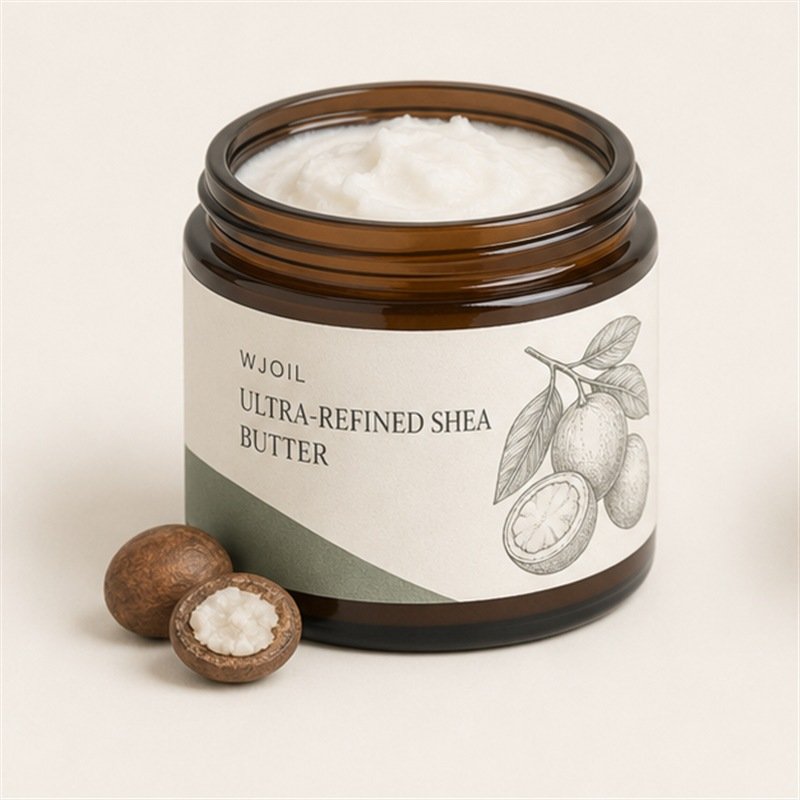
Its color is completely pure white, and its smell has completely dissipated. You can use it not only to make high-end skin care products but also to add it to food production.
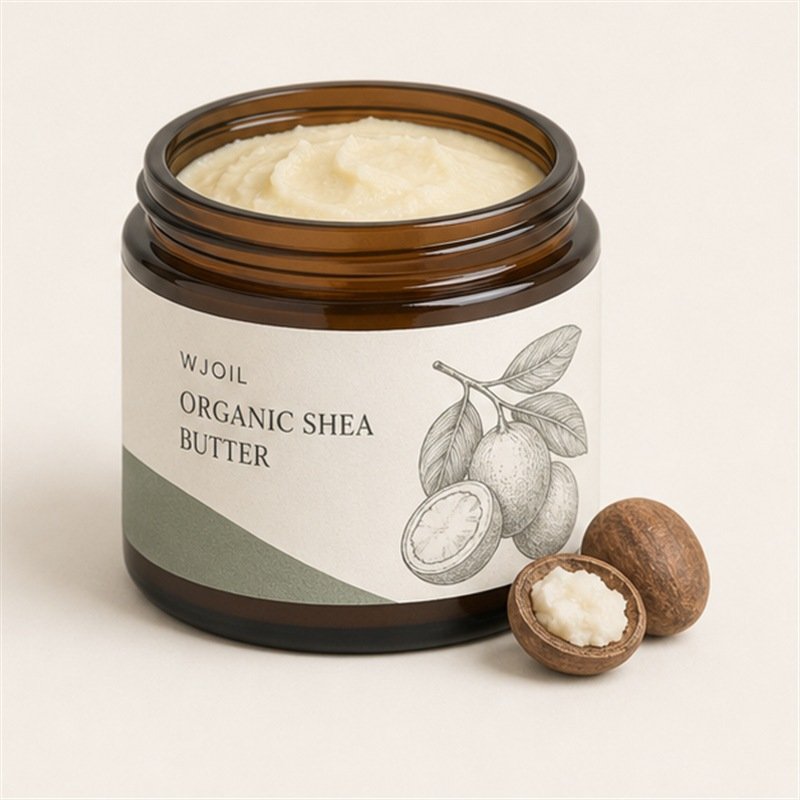
Its raw materials are not treated with pesticides or fertilizers during the cultivation process. The original source has been certified through USDA Organic and also by ECOCERT.
Features of Shea Butter

The high melting point and the low peroxide value of shea butter can give the formula very good oxidative stability, which can really help to extend its shelf life on your store shelves.

It has a lot of non-saponifiable stuff, and it shows film-forming moisturizing as well as skin-repairing abilities. Meet your dual needs for natural ingredients and moisturization.

Shea butter shows up in a few types: unrefined, refined, ultra-refined, and organic grades, so it can work for your different product positioning and market segmentation.

WJOIL has put in place a long-term agreement across West Africa. This can help to secure a continuous inflow of raw materials and support your long-term production plan.
Wide Application Compatibility
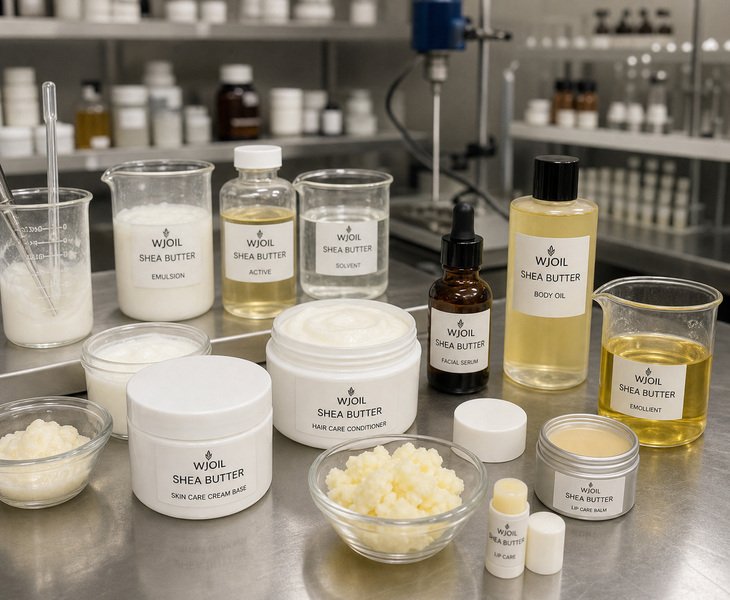
It comes with pretty good compatibility across a range of emulsification systems, active ingredients, and solvents. You can blend it into several use cases like skin care, hair care, lip care, and more, depending on what you need. It is a really versatile base oil that can help you handle the development needs for several product lines with just a single raw material.
Dual Value of Skincare and Food
We offer raw shea butter oil and refined shea butter oil, which can meet your diverse needs in the fields of food and cosmetics.
For skin care, the non-saponifiable parts it has, for example, sterols and vitamin E, tend to moisturize and make a protective film while also helping with skin repair, and they are often a go-to, star component in natural skin care mixes.
In the food industry, the extra components are tightly linked with fats, and they are frequently used as a natural alternative to margarine in chocolate, sweets, and baked items.
Why Choose WJOIL as Your Shea Butter Supplier?
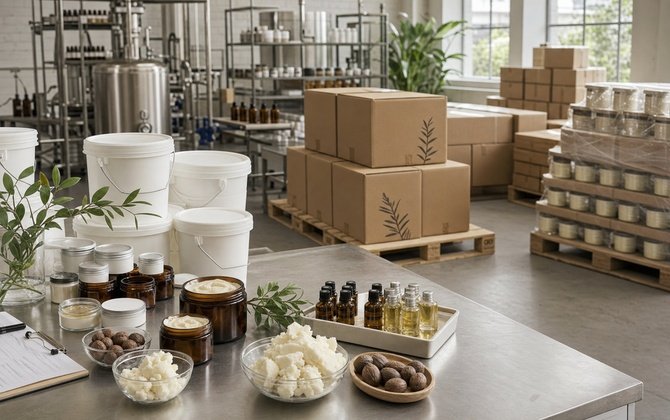
- WJOIL has more than 50 years of processing experience, and over time, they got ISO, HACCP, and organic certifications, along with a Kosher certification too.
- WJOIL’s yearly output can go beyond 3,000 tons. Whether it’s a big order or a smaller one, we still manage to give you flexible supply, depending on what you need.
- The essential oil products from WJOIL have been sent to more than thirty countries worldwide. We know the local customs clearance steps, along with those rather efficient trading processes, in each market.
Applications of Shea Butter
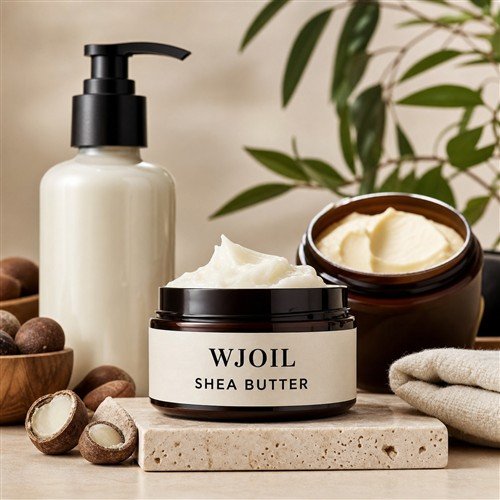
It can work as a natural moisturizing base, and it gets used pretty often in face creams, body lotions, and even massage oils.
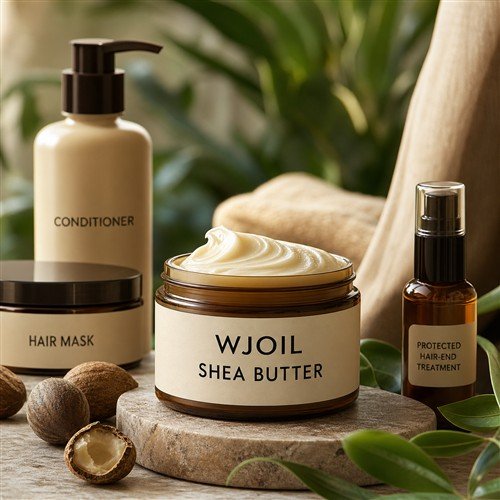
Shea butter conditioner can help to moisturize the hair, lower the frizz a bit, and also give a kind of protection for the hair ends.
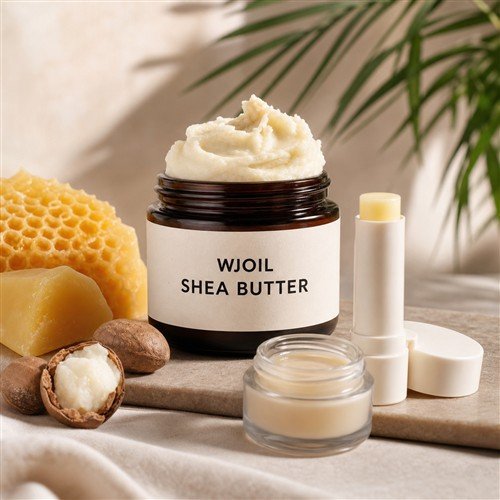
Its texture is pretty smooth and supple, so it works as a kind of ideal base material for lip balms and lip creams.
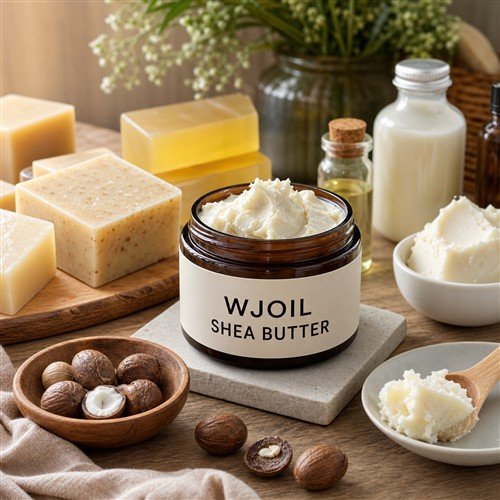
Shea butter, when used in melt-and-pour soap bases, can enhance the skin’s luster.
- The Fatty Acid Composition of Shea Butter
| FattyAcid | Type | Function |
| StearicAcid | Saturated | Solid texture, occlusive barrier, skin softening |
| Oleic Acid | Omega-9MUFA | Emolliency, skin penetration, moisturization |
| LinoleicAcid | Omega-6PUFA | Barrier repair, anti-inflammatory support |
| PalmiticAcid | Saturated | Emollient, texture stabilizer |
| Linolenic Acid | Omega-3PUFA | Minor anti-inflammatory support |
| ArachidicAcid | Saturated | Texture and stability contribution |
Shea butter includes unsaponifiable substances. These parts can reduce inflammation in a real way, help the skin make collagen, and also reinforce the skin barrier.
But petrolatum, or those silicone-based products, are basically straightforward synthetic moisturizers that are kinda limited. They mostly work as sealing agents or as something that fills in, so they don’t form biologically active interactions with the skin tissue.
So, if you’re aiming to get into the high-end cosmetics market, then a natural and high-quality shea butter will naturally be more welcomed by consumers than petrolatum.
- Fatty acids: They are mainly stearic acid plus oleic acid. These can slip into the intercellular lipid matrix in the stratum corneum, and that leads to less transepidermal water loss, TEWL.
- Triterpenols: They help prevent further damage to barrier integrity.
- Phytosterols: they promote ceramide synthesis for a properly functioning barrier.
- Vitamin E: It can meanwhile neutralize free radicals.
One is the food-grade shea butter oil, and that one follows the safety standards that apply to edible oils. It goes through tighter checks, then it’s refined and deodorized so the taste and smell stay more or less neutral.
The cosmetic-grade shea butter oil is mostly concerned with skin compatibility. So we pay more attention to the content of free fatt88y acids, which works to bring down the peroxide value.
This could be more about crystallization happening because of repeated temperature shifts during transport or while it sits in storage, and not really a raw material issue itself. We can set up a temperature-controlled transportation plan. You just need to keep the right storage conditions on the warehouse side, and that should be plenty to prevent it.
If what you received already turned crystals, you can fully melt the shea butter when it is above 50°C, then cool it down quickly. That usually brings back the smooth and exquisite feel.
The shelf life of unrefined shea butter usually sits around 12-24 months, while refined shea butter (the one that has had the compounds filtered out that help oxidation) can last 24 months or more. You can keep it in a cool dark place, ideally under 25°C, and try to use sealed packaging; bulk packaging is better when it’s filled with nitrogen.
Another option is to add about 0.1–0.5% of antioxidants, like vitamin E ( tocopherol ), and that can also slow down the oxidation quite a lot.
First, you need to figure out how to position your product. For the natural/organic product line, select unrefined A-grade raw materials so you can keep the complete active ingredients.
If it’s your own brand or a mass-market product, then choose refined or even super-refined raw materials; that way, you’ll get a more neutral color and a calmer odor.
If you’re ordering in big volumes, you can request samples from WJOIL. Check the quality, color, melting point, etc. of the sample you received.
The key difference is basically this: cocoa butter’s palmitic acid level is way higher than shea butter’s, and that’s why it tends to be harder, and it gets more brittle too—not as forgiving. It’s often picked for chocolate and lip formulations, because it melts quickly and gives a shiny look.
Meanwhile, shea butter’s higher oleic acid portion leads to a gentler feel; it is more pliable, more skin-friendly, and it fits better for moisturizing and for supporting the skin barrier repair, somehow.
For the temperature range of 32-45°C. If your product is going to be shipped to tropical or higher temperature summer regions for sale, it is a good idea to reach out to us about your target market.
We can suggest batches with higher melting points, or we can help formulate a recipe with hardening agents, so the item does not soften and start to lose shape while in transit and during storage.
The key indicators that sort out the quality of shea butter are like FFA (free fatty acid) content and the peroxide value.
Then you have the unsaponifiable substances content. When buying, it’s a good idea to go through each batch’s COA with care, pay attention to these few data points, and then take into account both the origin and the refining process for a more rounded judgment.