
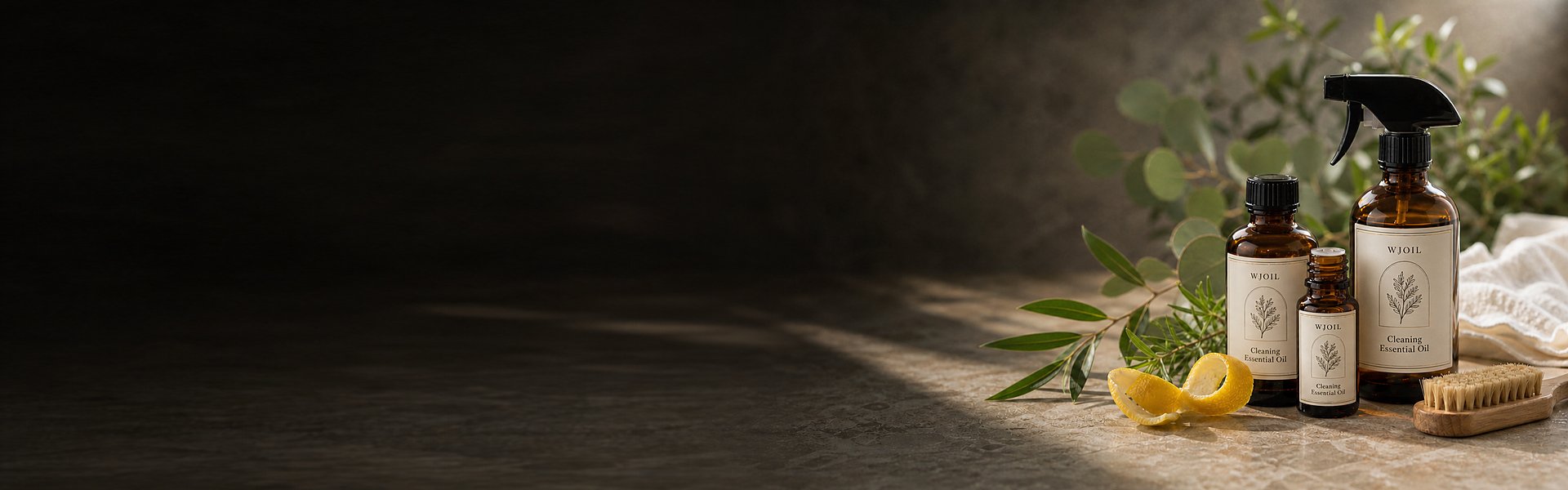
WJOIL—Your Reliable Cleaning Essential Oils Manufacturer in China
WJOIL’s cleaning essential oil is basically a pure, natural plant extract, packed with natural antibacterial components like lemon and tea tree. It helps split up oil stains and annoying odors, so your customers get a clean, airy scent after they finish.
It has no harmful additives, and it is gentle enough that it won’t irritate skin. Whether you are dealing with the kitchen, bathroom, or even the floor, just one tiny drop will return everything to how it was before.
WJOIL is a professional essential oil production factory that uses a full raw material traceability system, along with modern distillation extraction equipment. We strictly manage the quality consistency plus the purity of every batch of essential oils from the very source, so we can keep a stable and dependable supply over the long term.
And we have the capability to develop flexible formulas, we can quickly tune the fragrance character and product use direction based on different market demands. Order now and take advantage of the latest discount!
Products By Types
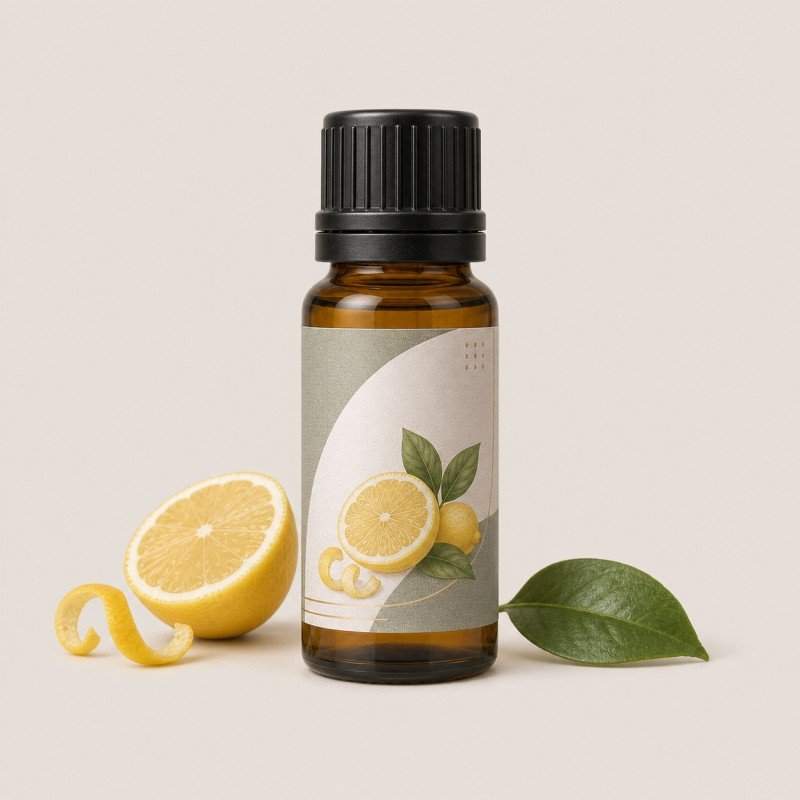
Lemon has a fresh citrus smell that helps to counteract odors and works really well in wiping them out. It is made for everyday use, like in kitchens, restaurant back kitchens, and more.
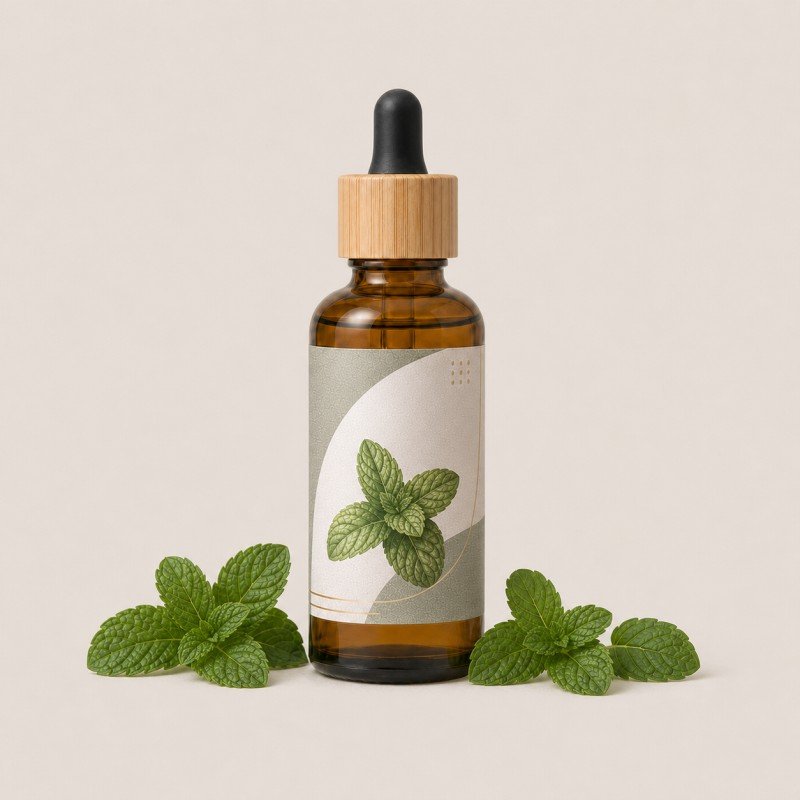
It can bring a bit of a refreshing and cold sensation. When your customers use it, they can right away sense the pleasant feedback of the cleaning work being finished.
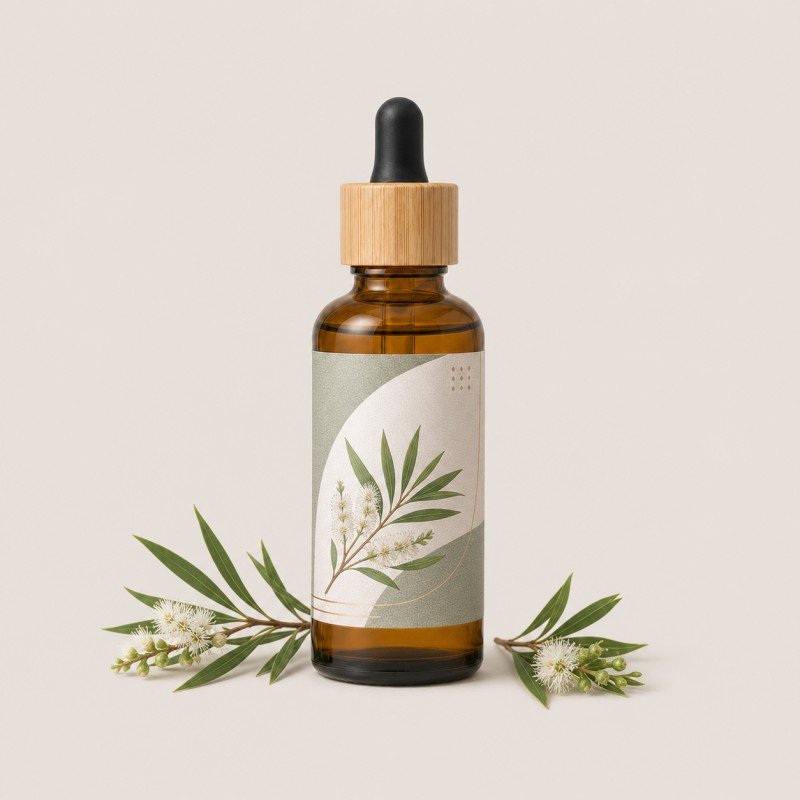
It has antibacterial properties, and it’s especially good when “sterilization” really comes into play, like when your clients need to keep mold from setting up in bathrooms.
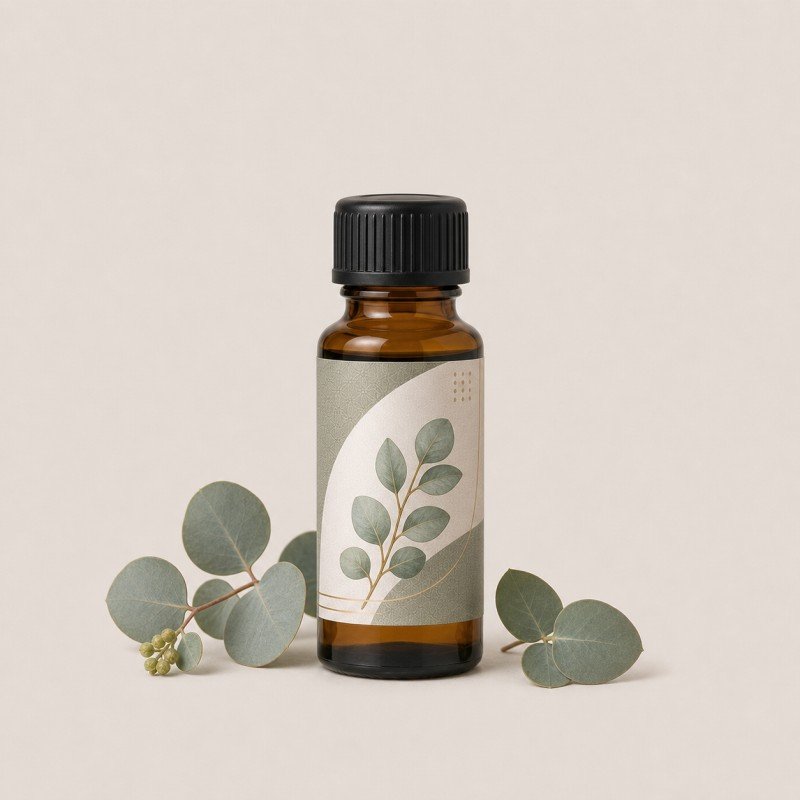
Its smell has an extremely penetrative quality, which helps to eliminate any tough smells like those from smoke, pets, etc. It also acts as a bactericide to some extent.
Features of Cleaning Essential Oils

It can help you craft plant-based cleaning products, it lessens dependence on irritating synthetic additives, and it also gives your brand better market competitiveness.

Unlike the usual spice-type ingredients, this cleaning essential oil not only has that cleansing action, but it can also release a pleasant, natural aroma.

There are many uses for the cleaning essential oil because it can be used in a variety of products, such as multi-purpose cleaners, floor cleaners, etc.

The addition of essential oils in cleaning products is going to help you create a place for yourself in the natural cleaning product market segment.
Natural and Effective at the Same Time
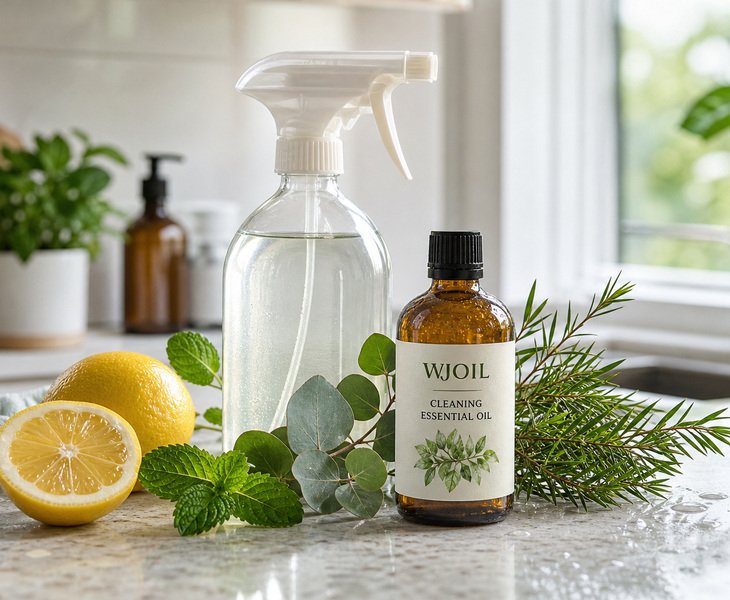
WJOIL cleaning essential oil is extracted from herbs, and it comes from natural plants like lemon, mint, tea tree, and eucalyptus, following the market trend of “non-toxic cleaning, green household cleaning”. It has decontamination, antibacterial, and deodorizing effects, so it is not just a marketing notion.
In a real sense, it can be turned into a proper and tangible user experience. With this kind of profile, it helps your product build a distinct positioning and carve out a more premium space inside that same old homogeneous market.
High Purity
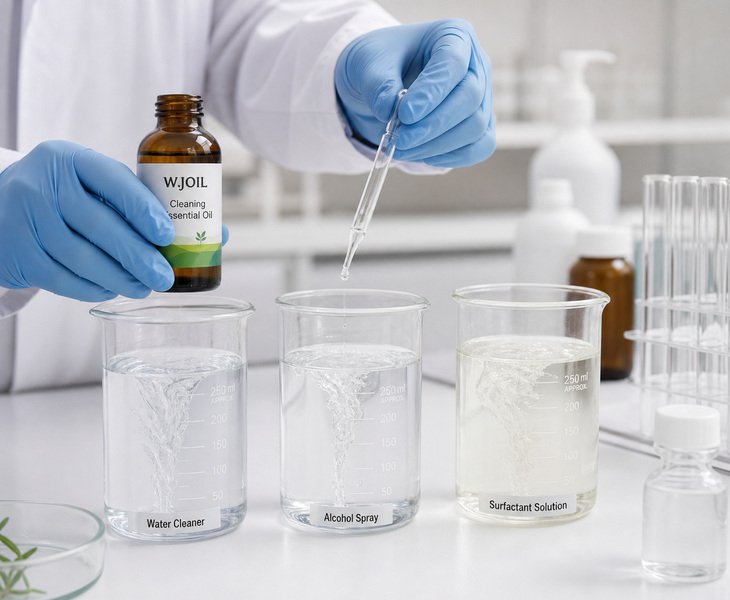
Our essential oil for cleaning is manufactured by using a high refining method to ensure it is highly pure and stable. It makes the essential oil easily mixed in different formulation systems like aqueous cleaners, alcohol sprays, and solutions with a high surfactant level.
It will save you production time. In addition, all batches of our essential oils have the same aroma intensity and performance. It provides you with consistency in your production.
Why Choose WJOIL as Your Essential Oils Manufacturer?

- We’ve got more than 50 years of experience in essential oil making and natural raw material processing, to serve global cleaning and home care brands.
- Our cleaning essential oil products have been sent out to 28 countries and regions, such as Southeast Asia, Europe, North America, and the Middle East. The money from abroad is still more than 40% of the total.
- WJOIL has gotten the ISO 9001 certification for quality management. And our items are fitted with different international compliance test reports, like MSDS, REACH, and IFRA, plus we can also hand over COA test certificates for every single batch.
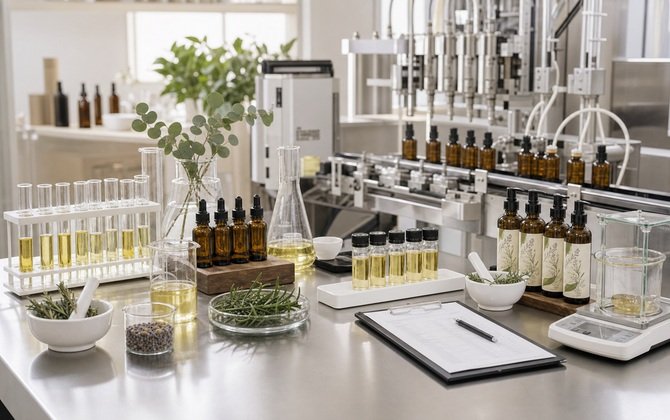
- WJOIL is equipped with an automated filling line plus a separate quality inspection laboratory. Here it uses a three-tier quality control routine, like first there’s the raw material entry check, then the production process observation, and finally a finished product exit examination… all for making sure each batch stays steady and consistent.
Applications of Cleaning Essential Oils
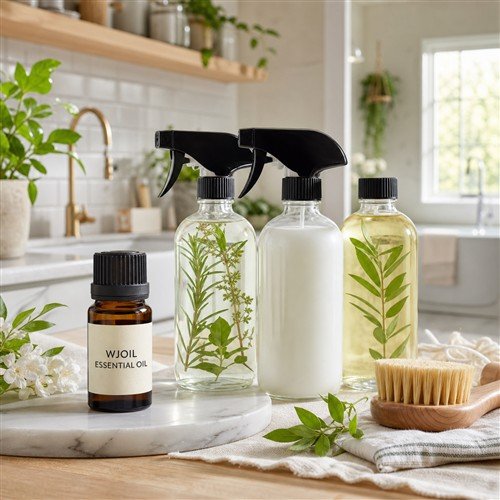
The usage of essential oils for cleaning in the production of home care products is intended to enhance the basic cleaning products into higher-quality products. You can mix them into daily stuff such as kitchen degreasing agents, bathroom sprays, and floor cleaners.
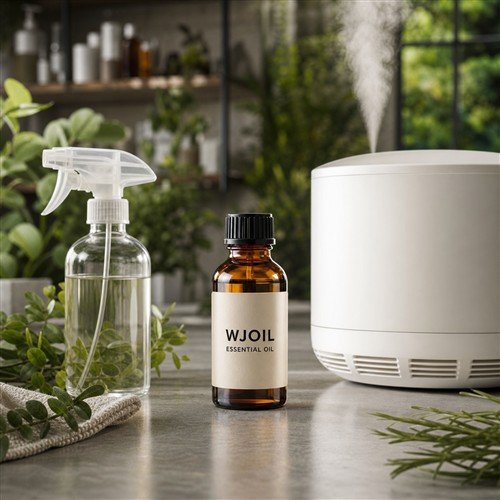
In the field of air purification, they are commonly used in deodorizing sprays, commercial air purification systems, and continuous diffusion products, providing long-lasting fragrance stability and masking odors.
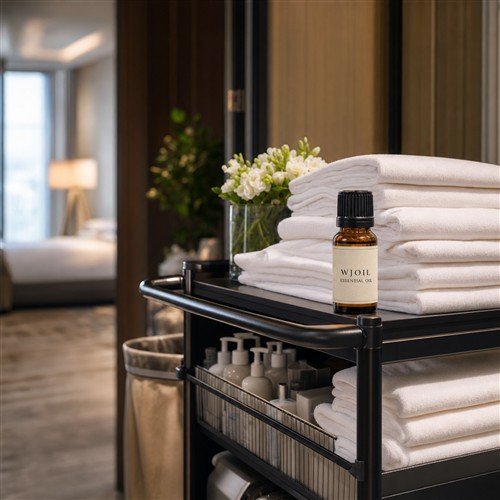
The use of such oils is common in the formulation of room cleaning solutions, linen fragrances, and lobby cleaning solutions, helping them position their brands in the mid- to high-range hotel industry.
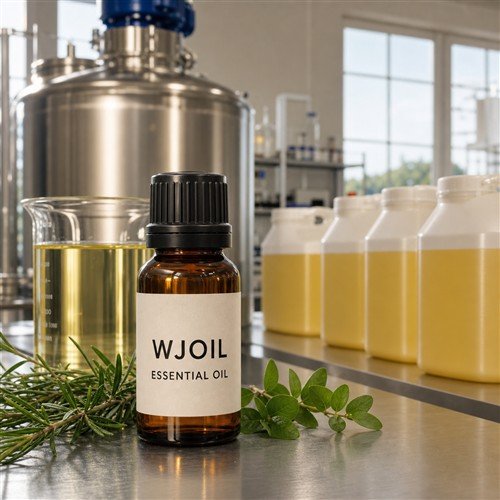
The cleaning essential oil goes well with the powerful chemical system, and it does not break down in extreme conditions. For that reason, it can be used as an additive in such formulations.
Essential oils are natural elements isolated from plants using distillation or cold pressing processes that include active constituents from the plant. Fragrance essential oils, on the other hand, are artificially manufactured or blended aromatic compounds that are primarily incorporated to introduce a fragrance.
Essential oils can perform other functions in cleaners, like eliminating odors, while fragrant oils do not. Therefore, if your budget is limited and you have no functional requirements, choose essential fragrances. If not, choose cleaning essential oils.
Properly diluted essential oils are normally regarded as being safe when applied to cleaning processes. Nevertheless, this safety depends on the amount, the surroundings where they are used, and interaction with skin or surfaces.
Certain essential oils might be irritating when applied in higher amounts; thus, dose control is necessary when preparing such products industrially.
If the formulation remains stable, essential oils used in the cleaning formulation will remain active for about 6 to 12 months, depending on the emulsification system and preservatives employed by your formulation.
With prolonged exposure to sunlight and elevated temperature, the volatile substances will be depleted more quickly. You are advised to undertake a stability test in order to establish how long the formulation will last instead of making an assumption based on your experience.
It is considered that one of the best cleaning essential oils available with regard to its antibacterial and disinfection effects is the tea tree oil, as it contains terpinen-4-ol.
Although plants such as eucalyptus and lavender also feature certain antibacterial qualities, from the point of view of efficiency of disinfection effects and acceptability of the odor produced, tea tree essential oil is more preferable.
The essential oils have natural antibacterial characteristics, but when compared with alcohol and other disinfectants based on chlorine chemicals, they tend to lack in terms of germ-killing range and effectiveness.
They cannot substitute for the needs of pharmaceutical disinfection. The better classification for them would be “natural + auxiliary antimicrobial” products, as supplements of chemical disinfectants.
Regarding cleaning for the kitchen, we advise you to use lemon essential oil. It not only effectively removes grease but also offers an excellent odor-eliminating action. With regard to cleaning the bathroom, we advise you to use tea tree essential oil, which is great for preventing bacteria formation due to its antiseptic qualities.
The suggested regular amount of essential oil addition in cleaning agents lies within the range of 0.1% – 1%. The required exact amount depends on the type of essential oil and the positioning of the product. Essential oils in cleaning solutions do not dissolve in water; therefore, in order to ensure proper mixing, an emulsifier such as polysorbate should be used. You are advised to determine the final amount after performing stability tests.