WJOIL—Your Trustworthy Manufacturer of Essential Oil for Candle Making in China
Each of WJOIL’s essential oils is made under the kind of conditions that meet cGMP standards, and they also get batch-specific GC-MS analysis verification so the overall quality of each batch stays completely stable and consistent.
This essential oil exhibits both cold fragrance and hot fragrance characteristics, which will attract customers on the shelves and maintain a long-lasting fragrance when used.
The essential oils you ordered from us all come along with batch-specific analysis certificates, verified flash point data, and traceable raw material sources as well. Choosing our essential oils means choosing quality and assurance. Come to the homepage now and contact us for a free consultation!
Products By Types
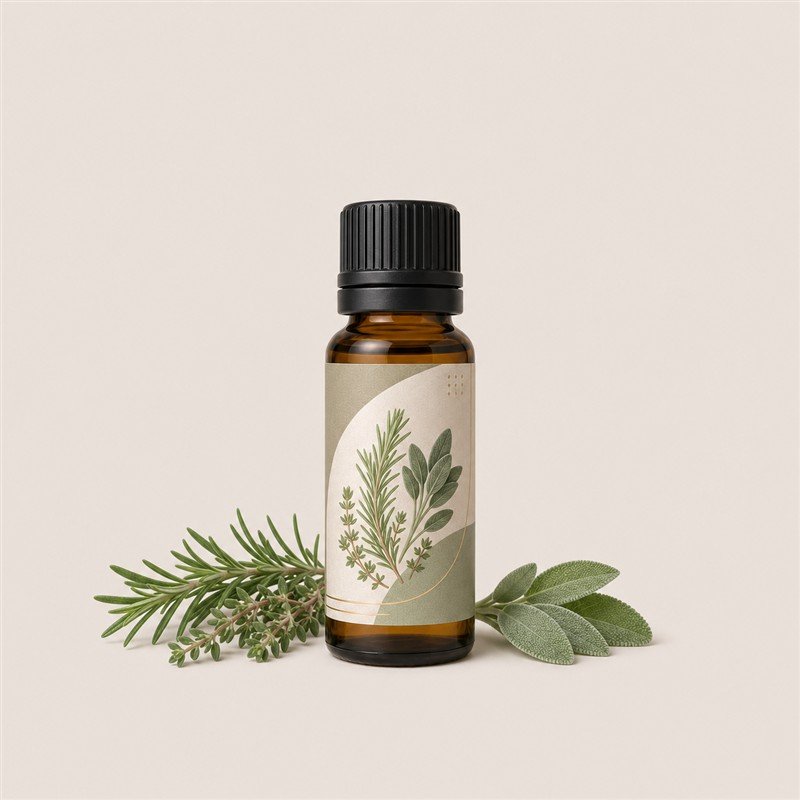
Herbal essential oils are specially made for products that put health first, somehow. It mixes a fresh, pleasant aroma with great flexibility for blending.
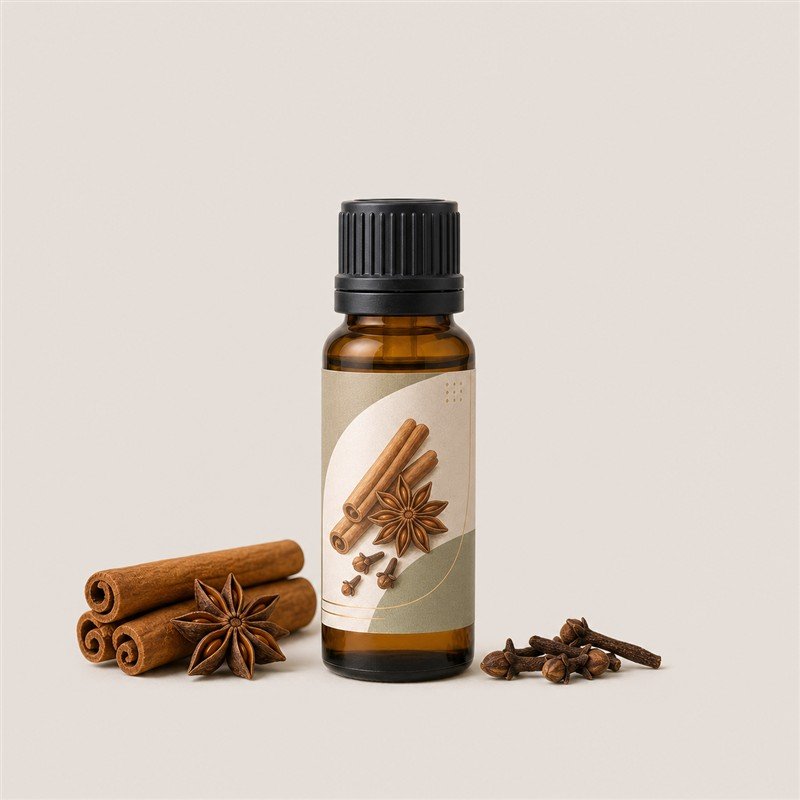
It delivers a full, lingering fragrance, and that warm scent quietly creates a feeling of coziness and festivity. So, it fits autumn collections nicely, plus holiday product lines too.
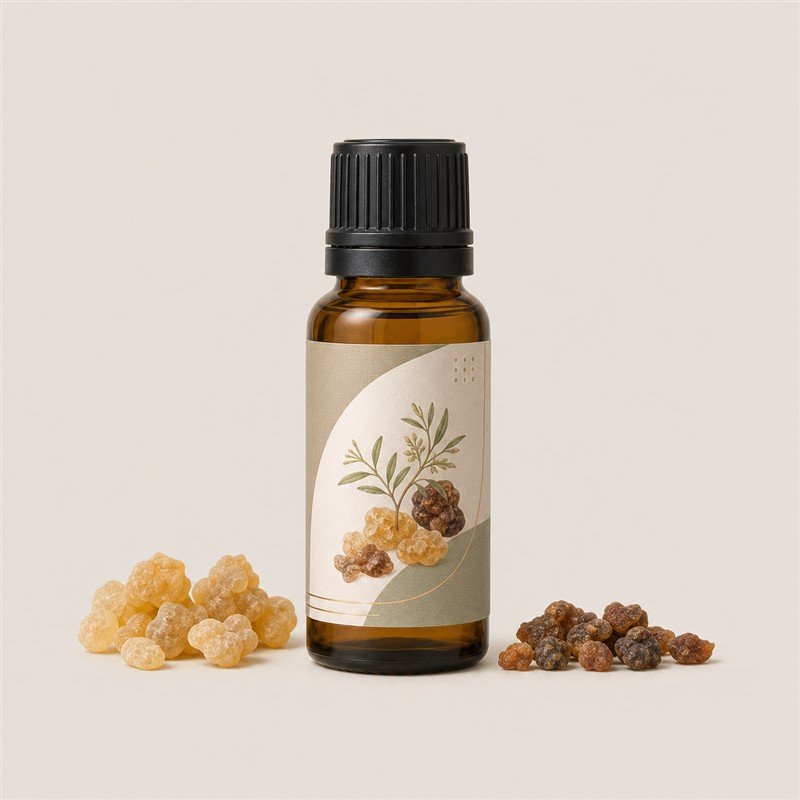
Its lasting fragrance stays around for a very long time, so it is often used as the base note. It can add a layer of fragrance to your product while prolonging the duration of the fragrance.
Features of Essential Oils for Candle Making

The essential oil raw material sources for WJOIL all come from plants. They contain no synthetic compounds, and they are not blended with any carrier oils.

For each of WJOIL’s essential oils, there is detailed data, including the genus, species, chemical type, country of origin, and the extraction method for the plant.

Each batch of products made by WJOIL is manufactured in line with cGMP standards and is put through GC-MS testing to make sure the chemical composition stays accurate.

WJOIL can offer personalized pre-mixing formulas, where the fragrances are already pre-blended to match your exact needs.
Natural and Long-lasting Aroma
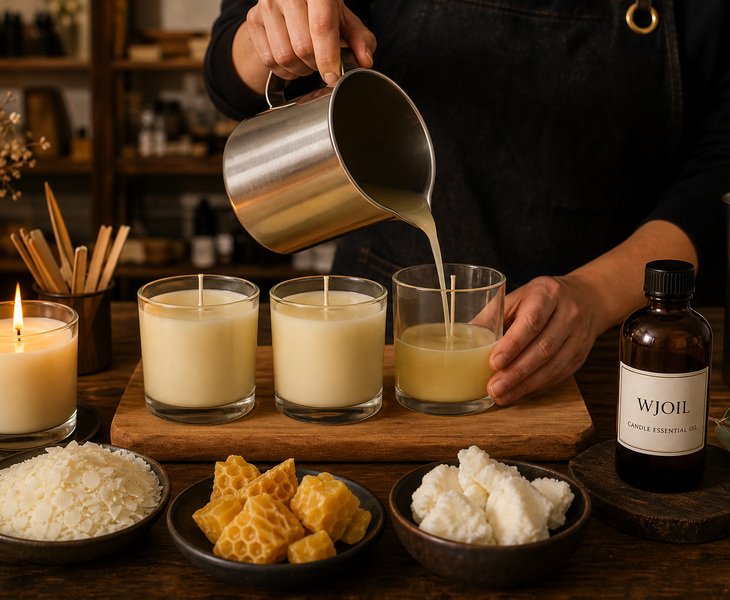
Our essential oils for candle making are taken straight from natural botanical sources. And it’s different from those simpler fragrances that can end up smelling kind of flat, but essential oils usually have several scent notes that slowly open up while the candle is burning, giving a more dimensional and more authentic fragrance moment.
When you pick oils with a strong fragrant profile and then tune the blend ratios just right, they can often improve the hot throw results and keep that scent perception going longer across the burn cycle. This means you can craft candles that leave a stronger impression with customers, which can lead to better satisfaction and more repeat buying.
Stable Formula
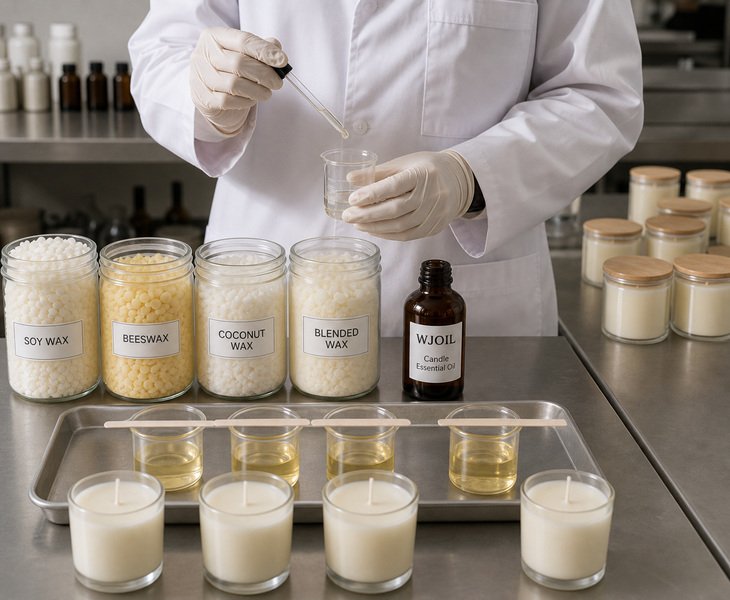
We carefully selected and tested how essential oils for candle making match up with soy wax, beeswax, coconut wax, and even mixed wax systems. There is strict batch-to-batch quality control, which helps keep the uniformity of the fragrance components, so the same vibe shows up every time.
Stable components can also help limit issues like fragrance variations, oil-water separation, and unstable performance, which is, honestly. So for candle manufacturers, this really translates into a smoother run and more dependable fragrance results for each batch of candles.
Rich Ability to Develop Fragrance Types
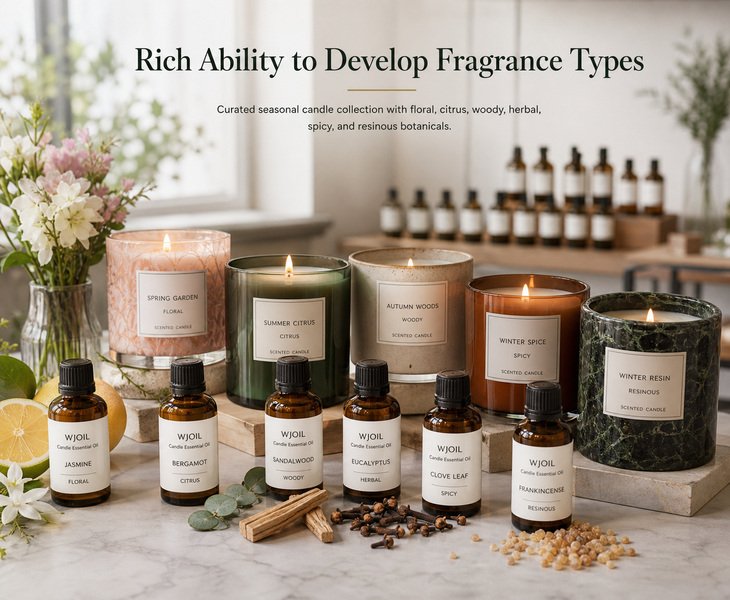
Our essential oils for candle making have a fairly wide palette of aromas, like floral, citrus, woody, herbal, spicy, and resinous vibes, so you get real flexibility when you’re building fragrances. WJOIL can easily put together signature fragrances, plus seasonal collections, health products, or even a candle series.
That kind of adaptability means you can keep rolling out fresh items, remain noticeable versus the competition, react fast when consumer tastes start shifting, and also design one-of-a-kind fragrance collections.
Applications of Essential Oils for Candle Making
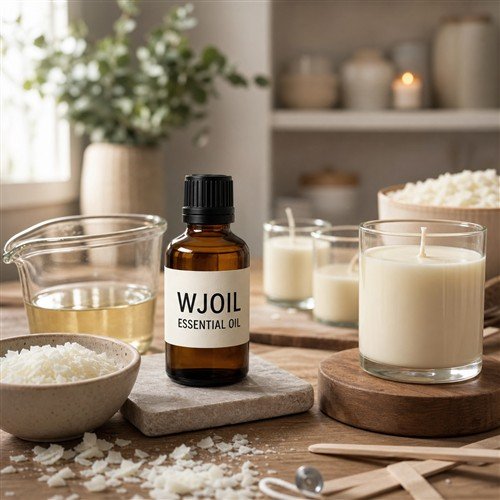
You can use essential oils to put together a whole range of home scent products that fit different consumers’ preferences and their day-to-day lifestyle needs, in a way that feels more tailored, more grounded.
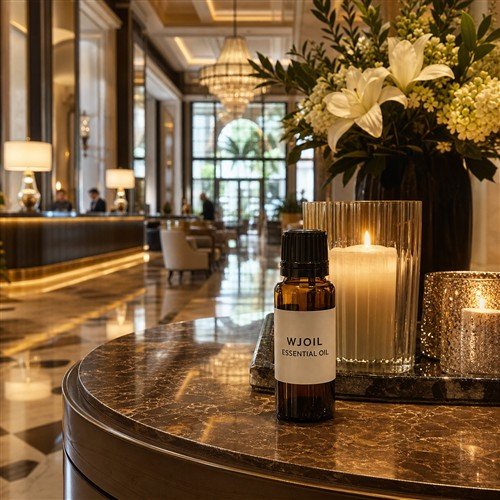
The essential oils that are used for crafting fragrance candles can help hotel brands to build a kind of unique scent signature, which also helps them show off their brand image a bit more. And honestly, it can improve the guest experience too, like a soft kind of atmosphere.
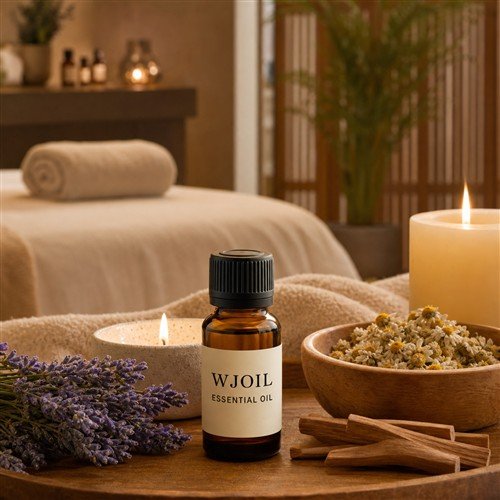
Essential oils like lavender, chamomile, and sandalwood, when blended with massage treatments, can sort of build a calm ambience in your spa, so your clients get to feel relaxed and kind of sink into the moment, immersion too.
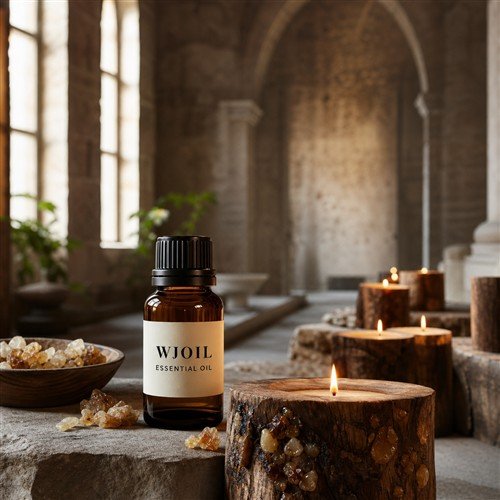
The scent of resin, along with wood-based essential oils, is kind of rich and profound. It works to shape a calmer and more contemplative atmosphere, and it also upgrades the whole vibe of ritual, meditation, or prayer places.
The industry standard is usually to place essential oils under the flash point of the wax by about 10-15°C, and also make sure the temperature doesn’t go over 85°C. For soy wax, the suggested addition window is around 55-65°C.
For paraffin wax, the addition temperature range depends on the specific grade, so it may sit somewhere in 65-75°C. When you’re adding them, it’s kind of like a stepwise order: first, those high flash point base notes, then the middle notes, and last, the low flash point citrus oils.
A bunch of the top-performing spices kinda have both high flash points and, somehow, very long-lasting presence in fragrance. For example, Cedar (with an earthy aroma, is an excellent fixative agent), Bergamot (the best natural fixing essential oil), Lavender (pretty much the most popular in the market), Frankincense (works as a luxurious/meditative sort of note), and Cinnamon Bark (emitting rich spicy aroma).
Citrus fruits are also good and very popular. However, it would be better for you to use cedar or other fixative agents in combination. Because it has a high volatility.
You can look for the reasons among the following three common causes:
- The proportion of the fragrance agent is low. If you add too much of the mixed spices, there won’t be much fixative agent left, and the fragrance will quickly fade away.
- The fragrance concentration seems too low. When the fragrance concentration in soy wax is lower than 6%, it becomes hard to create enough aroma.
- The curing time isn’t long enough. Candles with insufficient curing will release surface fragrance immediately, but they won’t develop that deeper wax aroma.
- Patchouli: with its high molecular weight and a flash point that sits above 95°C, is really very heat-resistant. And once it is finally turned into candles, whether you smell it while it’s still cold or you light it up, the scent kind of slowly and steadily spreads out.
- Cedarwood Atlas: As a base note, it can help stabilize the full fragrance profile of the formula.
- Cinnamon bark: If you want to craft seasonal candles, like for Christmas or Thanksgiving, or you simply want to create a warm atmosphere line, then you really should give this one a try. Out of all natural essential oils, cinnamon bark has one of the most powerful fragrance bursts once burned.
Yeah, especially if your brand is selling white or light-colored candles. Dark essential oils, like patchouli, vetiver, or myrrh, even when they’re used at normal fragrance strengths, can make the wax go brown or have an amber tone.
And those resin-based essential oils, such as frankincense, will make the white soy wax gradually shift toward yellow, later on. That can really mess with the whole display look on the shelves. If your product line needs strict color consistency, then please ask us for pure white or a depigmented grade wax first, before you place a bulk order.
Here’s how your production team can fix that a bit: just blend in around 20–30% cedarwood or patchouli into every citrus formula as a fixative anchor (so the smell kind of clings). Then add your citrus oils last, when the wax is at its coolest point, ideally keep it under 45°C.
After that, push the fragrance level to the wax maximum, for paraffin, that’s roughly 8–10% total. If you do all three, your citrus candles should keep scent through multiple burns instead of popping strongly on the very first one and then fading.
These high viscosity resin compounds can’t be fully burned with just the candle temperature. They tend to pile up on the carbon layer of the wick, and then the flame goes out while it’s burning continuously.
In the production mix formula, the share of resin-based oils should stay under 5% of the entire amount of fragrances. To deal with the thicker fuel viscosity, you may also increase the wick diameter a bit, or so.
Yes. If you already have a signature scent formula, send us the spec, and we’ll manufacture it to GMP standard as a ready-to-use pre-blend. But if you are still shaping your scent identity, our technical team can align with your brief — target market, scent family, wax type, positioning — and then propose blend directions for your sign off.
After opening, the essential oil really ought to be kept in a sealed container, so it does not get hit by direct sunlight or sit near high temperatures, humidity, or prolonged exposure to the air.
A cool, stable place to store it helps limit oxidation and keeps the aroma quality more intact. Good storage doesn’t just help extend the shelf life; it also supports the uniformity of the scent profile, which in turn makes candle production more reliable and makes long-term inventory management easier to handle.
Woody and grounding— cedarwood, sandalwood, vetiver—are still the most consistent year-round performers across home, lifestyle, and gifting channels, with broad appeal too, really gender neutral, and pretty easy to position. Lavender is still the single highest volume essential oil in the candle category globally.
That spice blend (cinnamon, cloves, patchouli) really clocks high sales volume during winter. Meanwhile, frankincense and myrrh are the quickest rising fragrance scents in the high end and meditation niche markets.
Wax Type Compatibility Guide for Essential Oils
Soy Wax
It generally plays nicely with most mid and high-flash-point oils. The limitation is a bit annoying, though: the fragrance retention is lower, so citrus oils tend to underperform unless you pair them with a cedarwood or patchouli fixative.
Coconut Wax
It has the highest natural fragrance retention of any wax type. It releases scent efficiently even at lower burn temperatures. So if you’re building luxury SKUs or going for premium wholesale positioning, this is usually the right choice. Sure, it costs more, but the performance makes sense.
Soy-Coconut Blend
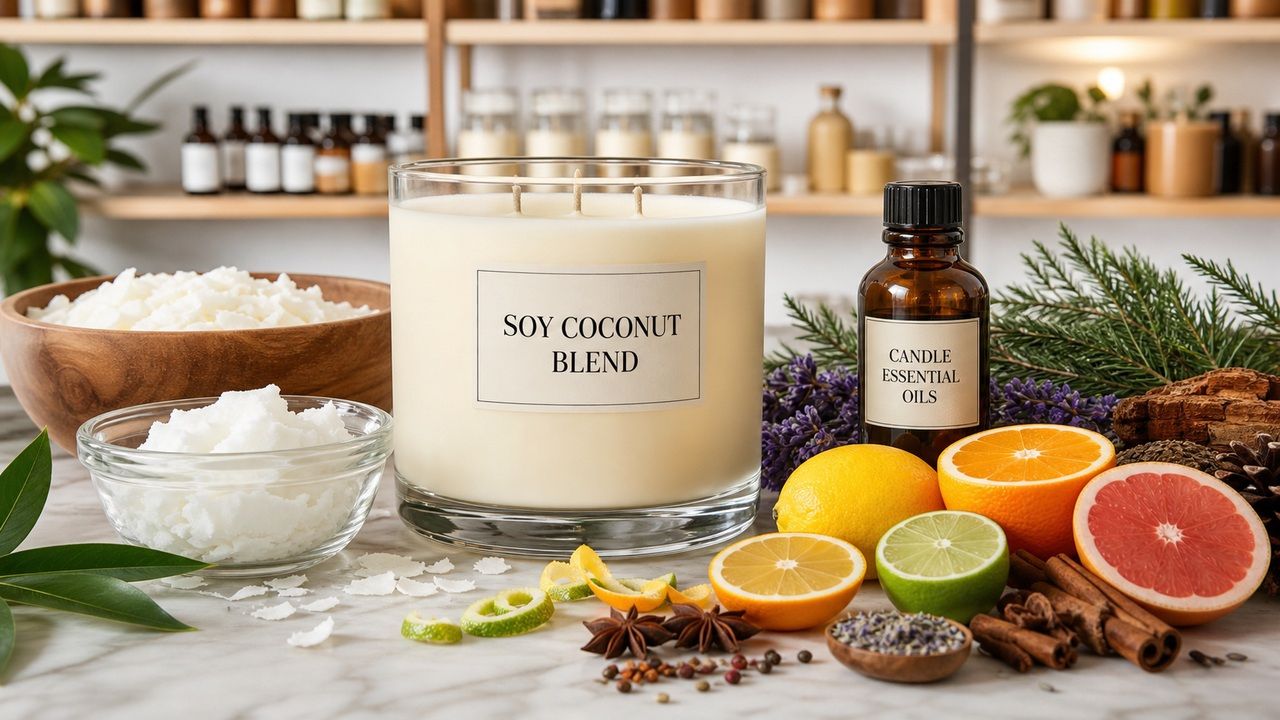
It is the versatile all-round choice for commercial natural candle brands; it kind of covers the most ground. It brings soy’s clean-label vibe together with coconut’s stronger fragrance retention, handles loads up to 10%, and stays consistent across basically all scent families. If your catalog covers multiple scent categories under one production process, this is the default wax you want.
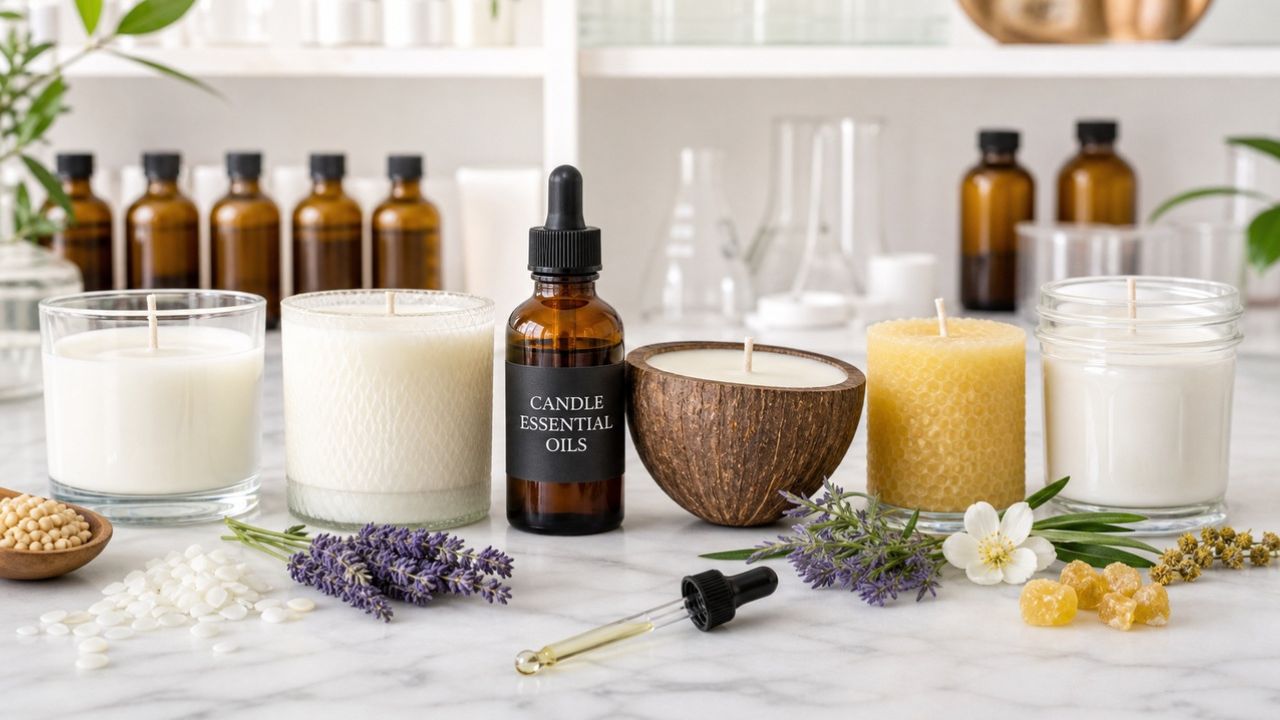
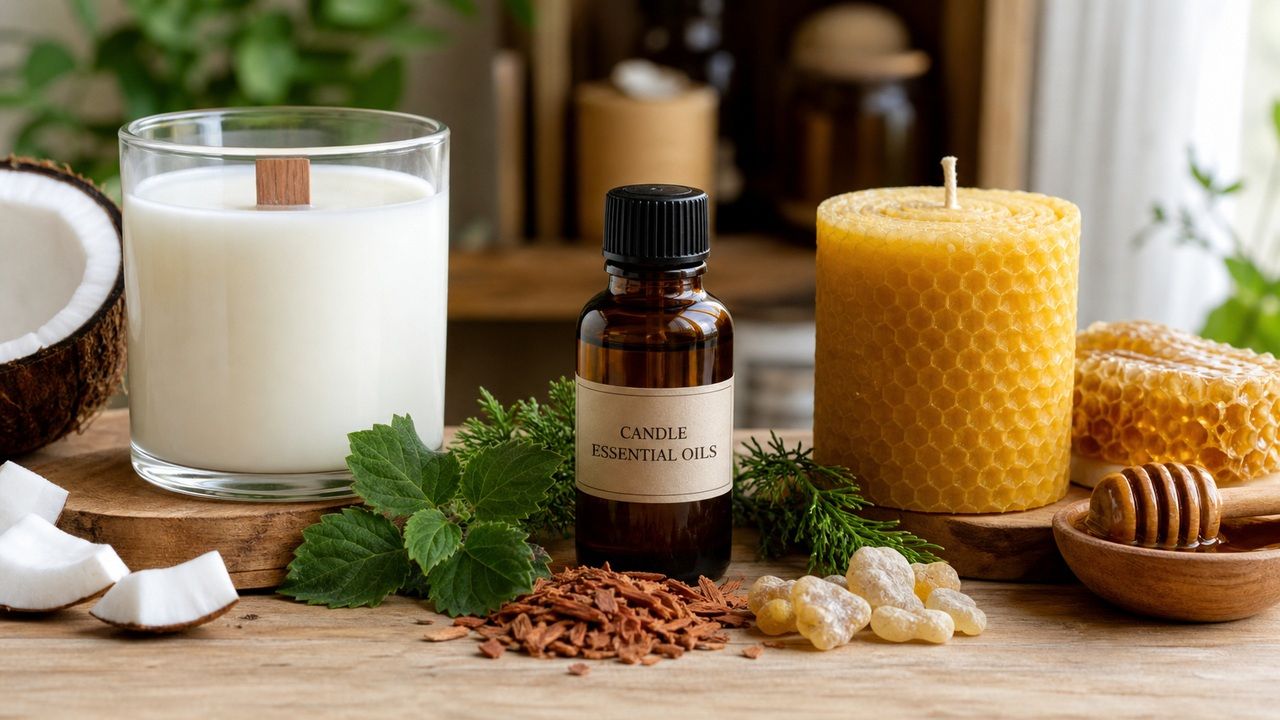
Paraffin Wax
Paraffin Wax gives you the strongest hot throw and the widest fragrance load tolerance, up to 10%. It is also the most forgiving when you’re working with low-flash citrus oils, no drama there. But it doesn’t really support “natural” or “clean” label claims, which then reduces your premium retail channel access.
Beeswax
Beeswax is more restrictive, you’re basically limited to high-flash-point oils only (cedarwood, patchouli, frankincense) at a maximum 3–6% load. Think of it as specialized wax for artisan and heritage-positioned lines, don’t try citrus or herbal blends at production scale, unless you enjoy rework.